












































Photography can seem incredibly simple. Point a camera at an object or subject, hit the shutter button, and that’s it. Job done. And in a way, there’s some truth to that. Photography is, at its core, wonderfully straightforward, and that’s the beauty of it.
You don’t need thousands of hours of practice to produce something you’re proud of. You just need passion and, at times, a little patience.
However, all that being said, photography is also an art that people spend their entire lives perfecting.
Photography is indeed simple, but the magic behind what marks a truly exceptional photo doesn't often come by chance.
This Photography 101 guide has everything you need to master photography and shoot the images that really stand out.
What Is Photography?
We’ll begin with a little Ancient Greek.
The word photography comes from the Greek phōs (light) and graphé (drawing), which gives it a rather poetic-sounding, “drawing (or writing) with light.”
And, really, that’s how it all works. Whether it’s an image of a vast landscape at sunset or a street scene with dozens of people rushing to work, every photo is light that’s captured by the camera’s sensor.
Each time you hit that shutter, your camera records how light interacts with the world around you, motion, color, contrast, and brightness. The photographer’s job is to harness all of these factors together and produce a compelling image.
Photography has come a long way since the earliest cameras appeared in the 19th century, with modern cameras like Insta360 Ace Pro 2 capable of producing outstanding images while being small enough to slip into your pocket between shots.
Welcome to the golden age of Photography.
The Basics You Must Know
Photography is simple, straightforward, and relatively effortless, but if you really want to make your mark, you need to understand the basics first.
Exposure Triangle (ISO/Shutter Speed/Aperture)
These three factors, referred to as the exposure triangle, determine everything in photography.
| Feature | What It Means | Explanation |
| ISO | How sensitive your camera is to light. | A low ISO, say ISO 100, will produce a beautiful, clean image, but you can only use it when there’s bright light. The higher the ISO goes, the more capable it is in darker settings. However, image quality begins to decline. |
| Shutter Speed | How long the sensor is exposed to light. | A quick shutter speed freezes action, great for action shots or anything fast-moving. A slow shutter speed captures movement with blurring, good for moving water and traffic. |
| Aperture | The opening in the lens that allows light to enter and is measured in f-stops. | The smaller the f-stop (say, F2.0), the larger the aperture hole is, which means more light and a shallower depth of field. This creates those lovely blurred backgrounds known as bokeh. A larger f-stop (like F10.0 or above) will leave more of the image in focus, great for landscape shots. |
It’s easy enough to keep automatic mode on and never have to even think about them, but there’s only so much you can get from automatic. And also, where’s the fun in always playing it safe?
White Balance
Not all light is the same color. Sunlight, indoor bulbs, and cloudy skies each cast different tones, which can make images appear too blue or too warm if your camera doesn’t adjust properly.
White balance corrects these color shifts so that whites appear natural and other colors remain accurate.
Most modern cameras automatically handle this adjustment, but understanding it gives you more creative control when shooting in mixed-lighting environments.
Lighting Basics
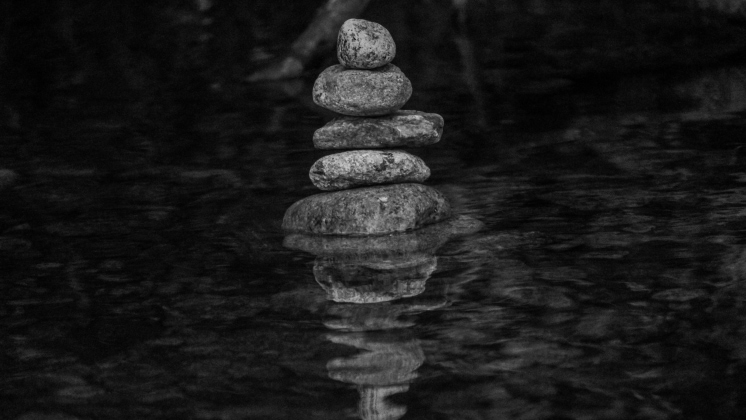
Light is much more complex than you think, but let’s start with these basics: direction, intensity, and quality.
- Direction — Determines how shadows fall across a subject. Side lighting reveals texture, while backlighting can create dramatic silhouettes.
- Intensity — Refers to brightness. Harsh midday sun produces strong contrast, while softer light in the early morning or evening is more flattering for most scenes.
- Quality — Describes whether the light is hard or soft. Hard light creates sharp shadows, while soft light spreads evenly across a subject.
Composition Essentials
Once you’ve got the basics under your belt, you can turn to what you see in the shot and how to arrange elements within the frame.
Rule of Thirds
One of the most widely used composition techniques is the rule of thirds.
Imagine dividing your image into a 3×3 grid, so you have 9 squares on your image.
Now, look at where the lines intersect. There are four, two to the left, two to the right, and it’s generally thought that the human eye is naturally drawn to these points.
So, if you can, place something important on one of them.
Note: Don’t try to put something on each of the four intersections, as an image can become crowded and unappealing.
Leading Lines
Leading lines are natural lines we see all around us (roads, street markings, railings, ridges, hills…), and they create movement, depth, and a natural visual pathway toward your subject.
So, if you want to shoot a photo of a beautiful tree, is there anything around it that can be used as a leading line that draws the viewer to it?
Framing & Symmetry
Humans like something nicely framed, and we’re suckers for symmetry. Framing involves using elements within a scene to naturally, well, frame your subject. This could be a doorway or an arch. It adds depth and context while directing attention to the most important part of the image.
Symmetry is another powerful composition technique. Human eyes are naturally drawn to balanced patterns, reflections, and mirrored shapes. Symmetry works particularly well in architecture, landscapes, and reflections in water.
And as with a lot of these techniques, they have a clear crossover with videography. What looks good in a still also looks good in motion.
Golden Hour & Lighting Composition Tips
Light shapes composition just as much as objects do. One of the best times to shoot is during golden hour, the short window just after sunrise and before sunset, when the sun sits low on the horizon.
During this time, sunlight becomes softer and warmer, producing long shadows and rich colors that make scenes appear more dramatic. The low-angle sunlight during golden hour reduces harsh contrast and enhances natural tones in photographs.

Photography for Beginners: Get Inspired
Landscape Photography
Landscape photography captures the beauty of the natural world, whether that’s from a hilltop with a sweeping vista as far as you can see, or an image taken in a forest at dawn with a thick mist hanging in the air.
Street Photography
Street photography is all about movement, drama, and contrast. It encompasses capturing those little mundane things we see all the time but never consider, but also those moments of true beauty on an otherwise dull-looking city street.
Macro Photography
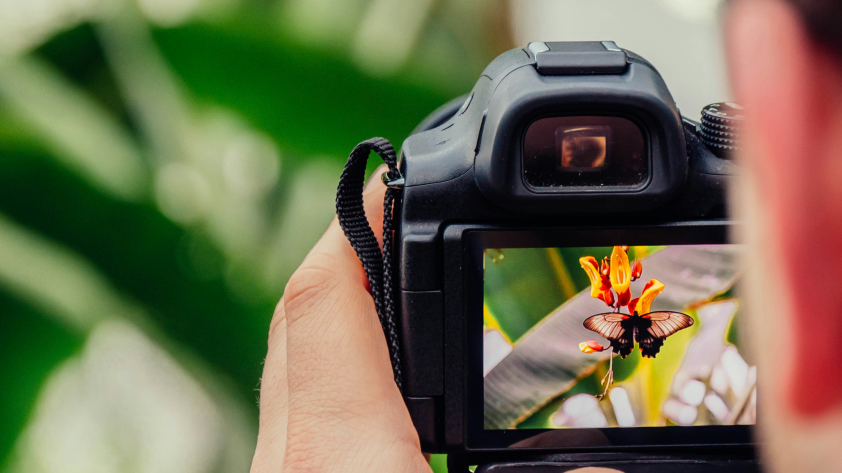
Macro photography gets up close and personal with things we usually can’t even see. The dew on a leaf, the texture of a butterfly wing, or intricate patterns inside a flower.
Because macro photography focuses on tiny subjects, photographers often work at an extremely shallow depth of field. Even small adjustments to focus or camera position can dramatically change the image.
Underwater Photography
Who says you need to stay on dry land? Underwater photography is about capturing all the wonder that lives underwater, and rugged action cameras like Insta360 Ace Pro 2 are built precisely for these environments, allowing creators to capture vibrant underwater scenes while maintaining image stability.
.jpg)
Sports/Action Photography
Sports and action photography are all about timing. Whether you're capturing a skateboard trick, a mountain biker descending a trail, or a runner crossing the finish line, every moment happens fast.
Wildlife Photography
Wildlife photography combines adventure with a healthy dose of patience. Animals are rarely as cooperative as human models, which means long hours waiting, often in harsh weather, for the perfect shot.
Not for everybody, but for those who love it, there’s nothing better.
Panoramic/360 Photography
Panoramic and 360 cameras, like Insta360 X5, expand the traditional frame. Instead of capturing a single direction, these cameras record an entire environment at once.
This opens up unique creative possibilities, and photographers can later reframe shots, create immersive perspectives, or explore angles that would normally require multiple cameras.
Photography Gear & Tools
Camera 101
Your camera is at the heart of everything you do, but with so many options available, it’s worth taking some time before making a purchase.
- Action cameras, like Insta360 Ace Pro 2, are built for dynamic environments, capturing sharp images even in fast-moving situations.
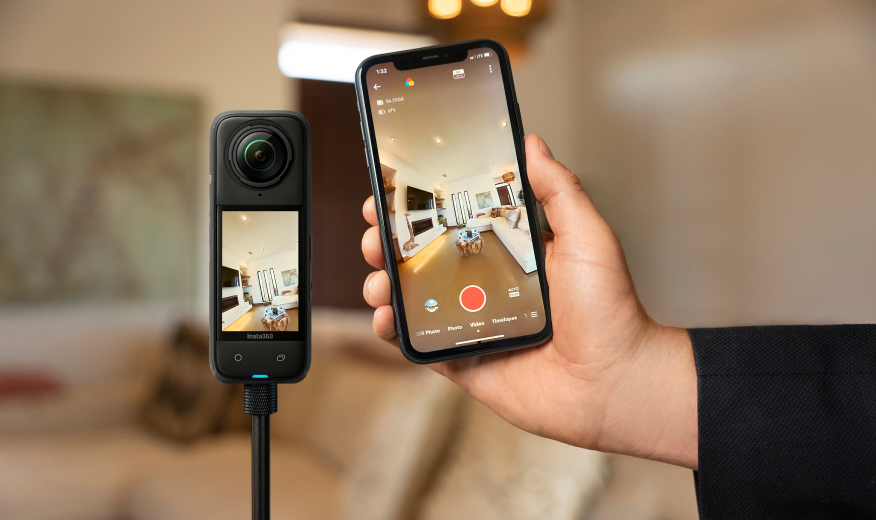
- 360 cameras, such as Insta360 X5 and Insta360 X4, allow photographers to capture entire scenes in 360, giving the freedom to reframe shots later and experiment with unique perspectives.
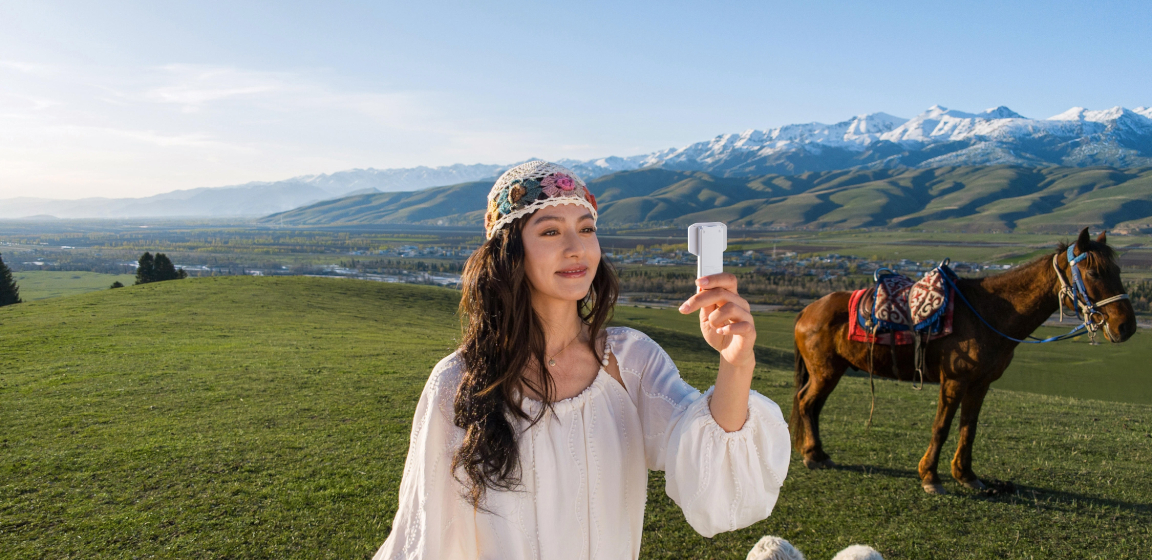
- Thumb-sized cameras, like Insta360 GO 3S and Insta360 GO Ultra, are designed for portability. Small enough to fit in your pocket, they allow creators to capture moments spontaneously without carrying bulky equipment.
Editing & Post-Processing
The best photos don’t usually come off the camera looking like the finished article, and most photographers have a careful process that they work through to add the finishing touches.
Cropping is probably one of the first things to think about:
- What space around the image isn’t needed?
- And would the image be more effective if you tightened up those spaces?
It’s definitely worth studying your image carefully and cutting anything that detracts or distracts.
Post-processing can be a long and sometimes tedious process to get an image just right, but think about exposure adjustment, color adjustment, highlights, shadows, contrast, sharpening, and texture.
If you’re new to all of this, you’ll probably make plenty of mistakes, but that’s the point. Trial and error. And see what works well for particular images.
Frequently Asked Questions
How Can I Teach Myself Photography?
First, practice regularly and study the techniques of some photographers that you admire. Secondly, be bold and be adventurous, and that’s the only way you’ll learn. And thirdly, be patient. Great technique can take time.
What Is the Golden Rule of Photography?
There are plenty of rules in photography, but two of the key ones to grasp quickly are light and composition. Learn about what good and bad light is, and how to use both, but also learn about framing, leading lines, and symmetry to make your photos stand out.
Final Thoughts
Photography is a bug. Once you’re bitten, you can be hooked for life. But the real joy comes from the slow and steady improvement over time. It comes when you look at a new image and see how you’ve improved it compared to what you produced a month ago.
Whether you’re swimming with turtles, hiking to the top of mountains, or roaming the big city streets, few mediums can capture a time and a place like photography.
Yes, video is popular, but an image is a snapshot of time that will never be repeated. A fraction of a second. A fleeting memory.
With modern cameras from Insta360, wherever you go, whatever you do, and whatever you see, that perfect snapshot is always just a hand’s reach away.
Keen to keep up to date on Insta360 stories? Keep an eye on our blog and sign up for our mailing list. You can also contact our Enterprise team directly to see how 360 cameras can benefit your business.






%20(1).svg)


%20(1).svg)

.svg)