
























Shutter speed is a fundamental aspect of photography. It significantly influences the brightness of your photos, but can also add visual effects to make your pictures more engaging and visually appealing. Knowing how to use it is essential for capturing high-quality images.
Whether you’re shooting portraits, action shots or wildlife, shutter speed can significantly impact the final product's look. Learn what it is, why it's so important and how to implement it in your craft today.
Shutter Speed 101: The Basics
Shutter speed is the amount of time a camera’s shutter is open. The longer it’s open, the longer the light is exposed onto the camera’s sensor. It’s essentially how long your camera spends taking a photo and is measured in seconds. While it can take multiple full seconds to take a picture, it’s typically in fractions of a second.
The physical aspect of shutter speed is straightforward. There is a shutter curtain in front of the camera sensor, and when you press the shutter button, the curtain opens, exposing the sensor to light coming in through your lens. Once the curtain has been open for the set length, it closes immediately, stopping the light from hitting the sensor.
The Exposure Triangle
It’s essential to note that the longer the light is exposed onto the camera’s sensor, the brighter a photo will be. In bright conditions, you may use a fast shutter speed to avoid overexposure. In dark conditions, you may need a long setting to let enough light in. However, if you want to use a certain exposure time to achieve a desired effect, there are other ways to adjust exposure.
The exposure triangle is a handy tool to maintain proper exposure. It’s composed of three variables: shutter speed, aperture and ISO. If one of these variables changes, at least one other variable must change to maintain the correct exposure.
If you use a slow shutter speed, the aperture, ISO or both need to be adjusted to avoid overexposure. On the other hand, if you use a fast speed, one or both of the different variables must be adjusted to allow enough light to enter. Note that the actual brightness of the scene also impacts the amount of light that hits the sensor.
Most cameras handle shutter speed, as well as aperture and ISO, automatically. “Shutter Priority” mode allows you to select the exposure time, and the camera automatically chooses the aperture. However, you can adjust all settings manually if you wish.
Fast vs. Slow Shutter Speed
Adjusting the shutter speed has certain effects on pictures. A fast setting can be used to freeze objects in motion. This is useful for capturing action shots, such as a skateboarder midair, but exposure times can be so quick that you can capture a bird in flight without any blur.
A slow shutter speed creates motion blur. If a subject moves while the curtain is open, it will appear blurred in the direction of its movement. When used intentionally, this effect creates the sense of speed and motion. When used unintentionally, you can end up with a blurred mess. It’s worth noting that blur is not only caused by the subject’s movement but also by the photographer’s movement. A tripod should be used to eliminate the photographer’s motion.
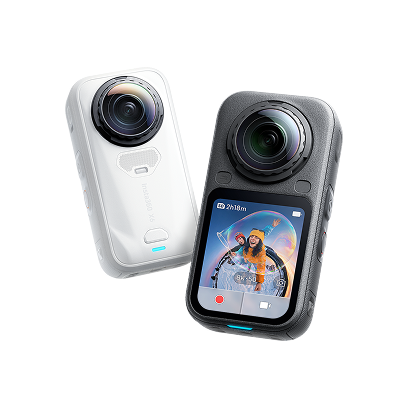
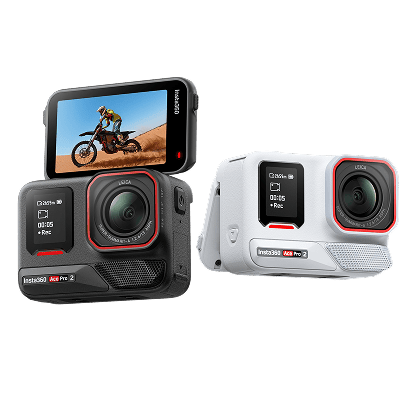
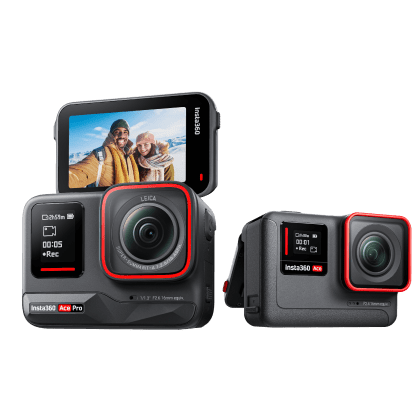
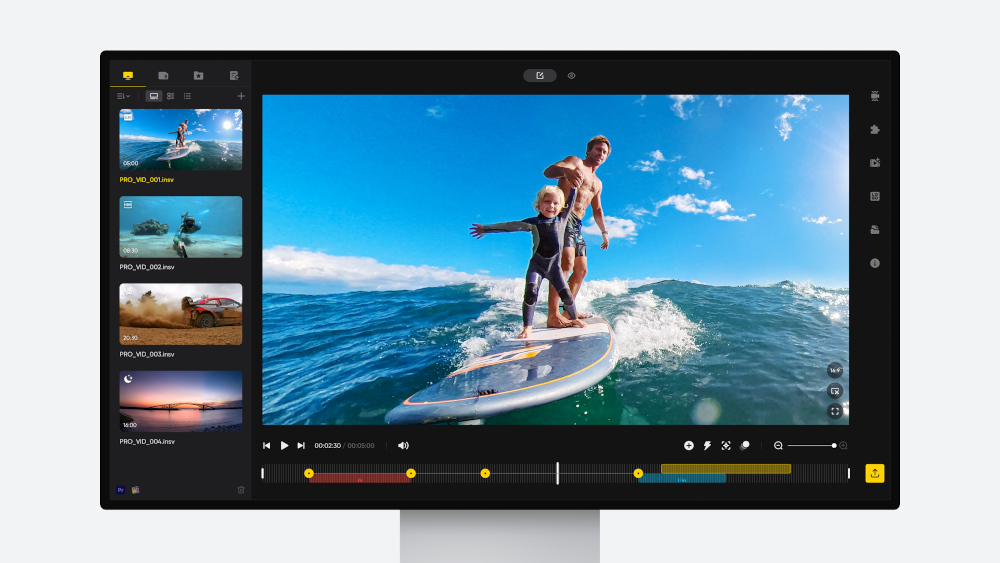
Adjust the exposure time for Insta360 Ace Pro 2 manually using Pro Mode. Fine-tune your settings to capture crisp action shots or thrilling motion blur.
Practical Scene Settings
Your desired finished product greatly influences shutter speeds, but so do your subjects and shooting environment. There are recommended guidelines to follow depending on the situation.
Sports
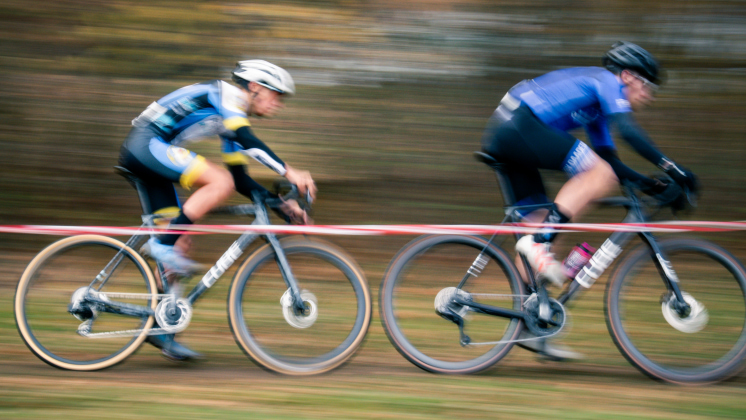
Sports are filled with lively moments and dynamic movements. Use a fast shutter speed of 1/500 to 1/1000 seconds to freeze action and capture motion without blur. You may need up to 1/2000 seconds for swift movements. Or, embrace the blur and use a slow speed of 1/60 to 1/125 seconds to capture the intensity of the moment. Consider the panning technique for captivating action shots.
Portrait
Shutter speeds of 1/60 to 1/125 seconds are ideal for portrait photos. These slower settings capture sharp details without blurring. If part of the subject is moving, such as their hair or clothes, 1/250 seconds is ideal to avoid blurring.
Birds
Birds require a very short exposure window to capture their images. Perched birds can typically be captured with a shutter speed of 1/250 to 1/500 seconds, but flying birds require 1/1000 to 1/2000 seconds to freeze the flapping wings.
Panning for Dynamic Movement
While a slow shutter speed can create the sense of movement, you can still capture a clear image of your subject by panning. By shooting while tracking the subject in motion, you can keep your subject in focus while blurring the background. This technique creates a dynamic effect, and the exposure time will depend on how fast your subject is moving. Panning requires some practice to capture your subject in sharp detail, but mastering this technique can elevate your action shots.
Long Exposures & Low Light
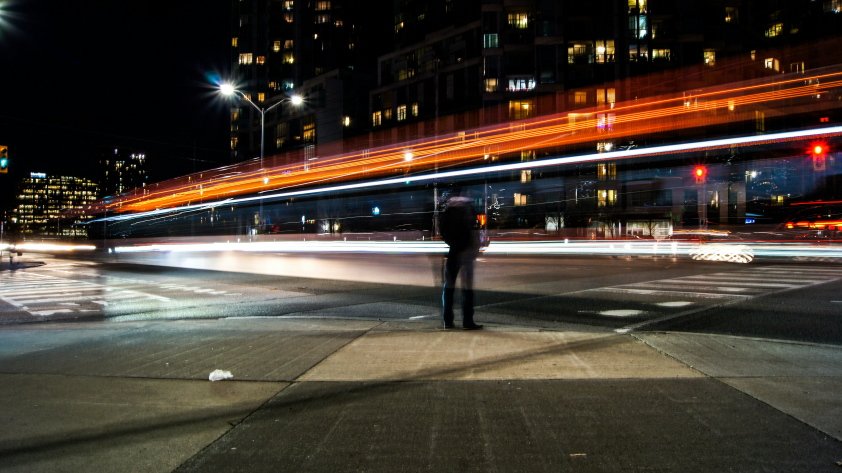
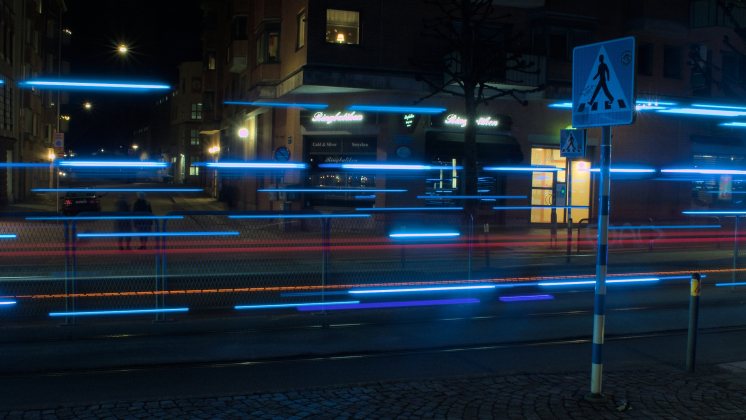
In low-light conditions, long exposure times are essential for sharp images. Long exposures allow you to capture the glow of streetlights and headlights at night. A tripod may be necessary for these longer exposure times of up to 30 seconds, though in situations where a tripod is inconvenient, handheld shooting may be the only option. In these cases, a shutter speed of 1/15 to 1/60 should be manageable, though you’ll need to increase the ISO sensitivity for proper exposure.
Capturing stars in the night sky can be achieved with a shutter speed of 10 to 30 seconds. Exposure times longer than this can capture star trails as the Earth rotates.
Quick Tips to Improve Your Shutter Speed Skills
- Follow the inverse focal length rule, where your minimum shutter speed is set at the reciprocal of your focal length.
- Use Shutter Priority mode to focus on shutter speed while still capturing enough light.
- Experiment with panning for creative motion blur images.
- Use a tripod for especially slow exposure times.
Frequently Asked Questions
Is It Better to Use Low ISO or Fast Shutter Speed?
Your camera’s ISO and shutter speed require balance. A fast speed can prevent blur, but requires a high ISO for proper exposure. A high ISO can introduce unwanted noise. A low ISO keeps an image sharp, but requires a slow speed, which can introduce blurriness due to camera shake.
What Is the Golden Rule for Shutter Speed?
The golden rule for shutter speed is to set it to the reciprocal of your focal length. For example, if you’re using a lens with a focal length of 100mm, use a minimum shutter speed of 1/100.
What Is a Good Shutter Speed for Photography?
A good shutter speed will depend on the type of photography you engage in, but here are some guidelines. For portraits and motion-blurred action shots, 1/60 to 1/125 seconds. For freeze-frame action shots, 1/500 to 1/1000 seconds. For birds in motion, 1/1000 to 1/2000.
Capture with Intention and Creative Motion
Shutter speed requires a lot of trial and error to master. Effectively using it in your photography is not only essential to capturing sharp images but also for creating captivating moments. From freezing fast-flying birds in the sky to capturing crisp detail in a portrait, this setting greatly influences the tone of your pictures.
Capture footage from all around you and create thrilling moments with Insta360.
Got a story to share? Email yours to communitystories@insta360.com and win up to US$50.




%20(1).svg)


%20(1).svg)

.svg)