







































Despite what some may think, photography is far more than simply pointing a camera or smartphone at an object and pressing the shutter button. That might be the absolute bare basics of photography, but if you want to take your skills beyond the fundamentals, you're going to want to read on.
The rule of thirds is something you may have heard in passing at some point—a semi-mythical-sounding term that you always thought you should probably look into but never quite get around to. This is where photography, psychology, and geometry meet—where a good photo can become an outstanding one.
But before you're scared off by any thought of mathematical equations, don't worry, the rule of thirds is absurdly easy, and this guide will explain everything clearly, give you some basic framing logic to lean on, and practical tools that help you shape each scene with confidence.
What is the Rule of Thirds?
The rule of thirds is based on the notion—backed by scientific research—that the human eye, and indeed the brain, is instinctively drawn to certain parts of a photograph first, which helps us place essential components of a picture to create atmosphere and movement.
Let's say you want to take a picture of a person overlooking a grand, sweeping vista. The temptation is to put the person at the center of the image, but in fact, that tends to dominate the image and can feel a little unnatural to the human eye. What about the sweeping vista?
Now picture a frame sliced into nine equal rectangles—clean, simple, and surprisingly powerful. Think to yourself, which of these nine areas would you naturally look at first when you look at a photograph? The human eye won't look at the edge of an image first; it'll either go straight to the centre or the four points around the centre where the rectangle lines intersect. Photographers lean on those intersections because they anchor attention with natural pull.
How the Grid Works
The whole system is so easy, you'll undoubtedly wonder why it's taken you so long to dive into the rules of thirds. Once you divide the image into nine rectangles, you can, essentially, forget about the rectangles themselves. Instead, you'll want to focus on the lines and the intersections of those lines.
Every line in that 3×3 layout steers movement. Vertical guides influence how the viewer travels through the frame, creating a natural path that either tightens or widens attention. Horizontal guides shape weight distribution, giving you a quick way to steady a horizon or lift the eye toward action. Shift a subject toward one of those guides, and the scene gains movement.
Viewers sense intention immediately because the placement adds tension, clarity, or calm. Want a horizon that feels grounded? Drop it along a horizontal guide. Need a face to stand out? Position the eyes near an upper intersection, and the entire portrait settles into balance. Each choice provides a quick way to set the mood without clutter or guesswork.
How to Use the Rule of Thirds in Popular Photography Styles
The rule of thirds is one of those simple tricks that quietly transforms your photos. It gives your composition structure without boxing in your creativity, helping you build images that feel balanced, intentional, and easy on the eye.
Now, there are times to break this rule, which we'll be coming to shortly, but the vast majority of the greatest photographs ever taken follow the rule of thirds to some degree or another. Whether you're shooting wide-open landscapes, close portraits, or fast-moving action, it works for everything, but it does take a bit of practice.
Landscape
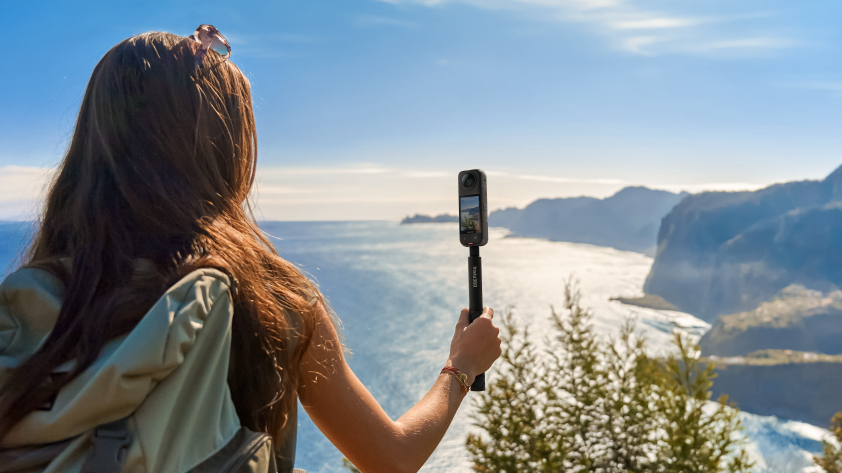
One of the most important points to remember in landscape photography is allowing for breathing room. Place the horizon along the top or bottom third rather than slicing the frame in half.
Let the sky dominate when the clouds are dramatic, or shift lower when the terrain is more interesting. Anchor a mountain peak, lone tree, or winding river along a vertical third, and the scene instantly feels more intentional—almost like a painting.
Portrait
Whether you're taking a picture up close, say from the shoulder up, or further back with a full-length image and the same background, the rule of thirds will make a huge difference. If you're up close, position the subject’s eyes on the upper third to create a natural focal point—humans are wired to land there first.
If you're shooting a little further back, shift your subject slightly off-center along a vertical third, and the frame feels more candid, less posed. And don't be afraid to incorporate some of the surroundings as well. An old clock on the wall or a battered guitar can speak as loudly as the human element, and combining the two can create wonderful photography.
Street
Street photography is notoriously unpredictable, but also thrilling when something falls into place by pure chance. It's all about tension and timing, so you'll need to be on your toes at all times. Use the rule of thirds to structure the chaos, for example, frame a passerby along one of the vertical thirds and let the environment fill the rest—storefronts, shadows, traffic, whatever the city throws at you.

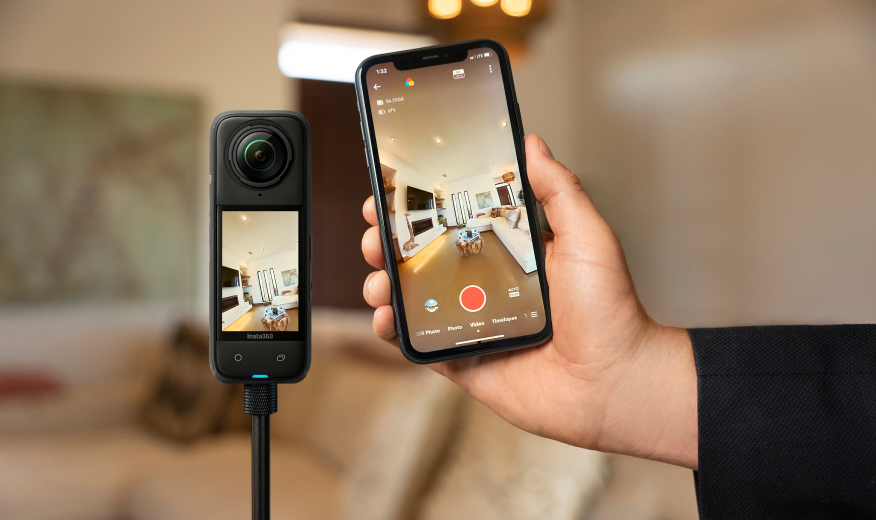
Align leading lines on horizontal thirds to subtly guide the viewer deeper into the scene, which tends to keep the energy raw but the composition grounded. Small, discreet, yet remarkably punchy, Insta360 X4 is your perfect street photography companion, one that you can slip into a pocket one second and line up the perfect chaotic scene the next.
Action
Like street photography, action shots can be unpredictable, but you should at least have a rough idea of what's going to happen. Place your subject—skier, surfer, rider—on one of the intersecting points and leave space in front of them for motion. And that's an important one to remember. The difference between a subject entering a frame with lots of room in front and leaving a frame with space behind is surprisingly apparent.
The first gives the viewer the impression that they are watching the movement about to happen, creating anticipation, while the second almost feels like they've just missed it. Insta360 Ace 2 Pro features a F2.6 aperture lens from the legendary camera manufacturer Leica, ensuring action shots of exceptional quality that few others can match.
Using Tools to Apply the Rule Easily
A framing grid turns quick choices into clean placements, especially when scenes shift without warning. Insta360 cameras, such as the powerful 360-degree titan Insta360 X5, or Insta360 GO 3S, which redefines the phrase ‘tiny but mighty’, provide you with that layout instantly through the Pro Framing Grid. It allows you to recognize balance before you press the shutter. You gain steady reference points that help you push a horizon upward, lower a subject, or slide key elements toward intersections that guide attention with purpose.
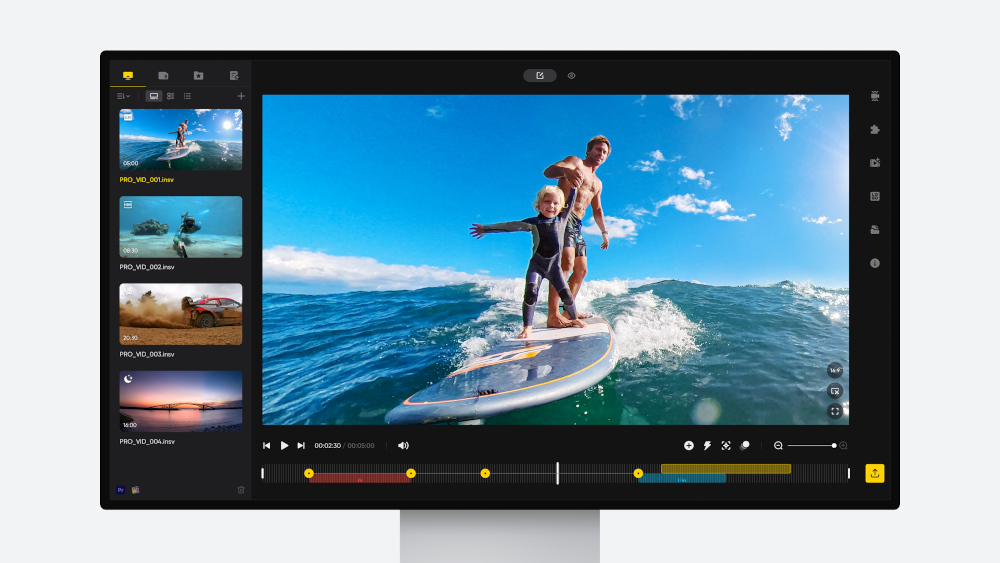
Editing provides another opportunity to refine alignment. A slight crop can realign a drifting horizon or nudge a subject closer to a guide without harming image quality. You can refine spacing, correct tilt, and keep each frame tight through simple adjustments.
When to Break the Rule
After spending all this time telling you why you should follow the rule of thirds, we're now going to explain when and why you should sometimes do the exact opposite and break the rules.
Firstly, the rule of thirds should be viewed more as a convention, rather than a rule. You can do whatever you want, and it's essential to maintain that independence. Most photographs may look better in this way, but certainly not all of them. Some require a little difference. Some require a little rebellion.
Not all scenes fit the rule of thirds. Some scenes beg for perfect balance, and when that's the case, it would be foolish to go any other way. Centered placement can create symmetry that feels calm, strong, or even dramatic when the surroundings echo that structure.
Reflections, architecture, and still subjects can sometimes carry more weight when everything lines up through the middle. Other moments feel sharper when you push a subject far from any guide.
Empty space can introduce tension or a sense of quiet isolation, especially in minimal scenes. This can create a pause, even an awkwardness, that the viewer must then lean into and explore to get a proper sense of what's going on. These kinds of photos can be just as effective—sometimes even more—than a pleasingly balanced photo following the rule of thirds.
Quick Practice Tips (Beginner Friendly)
For those who are just starting the rule of thirds journey or are new to photography in general, it can feel like a steep learning curve. But here are quick tips to get you started.
- Test, Test, Test - Grab your camera and test small shifts in placement before chasing bigger scenes. A simple tilt or step gives you fresh angles to judge spacing along the guides.
- Compare - Try framing a horizon near the lower line, then push it upward to compare how each version feels. You’ll notice how weight moves through the frame as you adjust your stance.
- Alterations - Check how a subject reacts when you place them near a side guide. You can turn their gaze toward open space or tighten the shot to add pressure.
- Practice Makes Perfect - Run a few drills indoors if the light outside fades. Everyday objects—cups, plants, doorways—give you fast practice as you refine instinct and speed.
Frequently Asked Questions
Why Is Framing So Important?
Strong framing guides the viewer’s eye with intent. It shapes attention, creates balance, and helps you point toward the detail that matters most. A clear structure also gives every scene a sense of purpose, whether you’re shooting motion, portraits, or wide spaces.
How Do I Turn On Grid Lines In My Camera?
Most cameras offer a simple toggle inside the display settings. Look for options related to guides or grids, then activate the 3×3 layout. Insta360 devices keep that switch easy to reach, so you can bring the Pro Framing Grid into your workflow without slowing down your pace.
When Should You Not Use the Rule of Thirds?
Scenes built around symmetry often look stronger with centered placement. Clean architecture, reflections, and minimal setups fall into this category. Some shots also benefit from bold negative space, where placing a subject far from the guides adds a sharper sense of isolation or intensity.
Your Next Photo: Try the Rule of Thirds
Photography is simple, and there's no reason to overcomplicate things. While the rule of thirds might sound complex when you're thinking of lines, rectangles, and subject placement, you'll be surprised how quickly it becomes second nature.
For photographers with many years of experience, they instinctively shift subjects to one of the four intersecting points because that's what feels right. It won't happen overnight, but if you do it long enough, it becomes automatic—the frame starts coming together before you even lift the camera.
Now that you've got the technical aspects under your belt, or at least in process, the next step is to ensure that what you're shooting with provides the quality you see in real life. Insta360 cameras offer outstanding photography capabilities as well as video that feels like it's coming back to you from a future generation.
Small, simple to use, but ferociously powerful, this is photography as it was meant to be.
The Insta360 Vision Awards supported by Leica are now open. Join creators worldwide for a chance to win from an US$80,000+ prize pool, including Leica cameras and Insta360 gear.
Got a story to share? Email yours to communitystories@insta360.com and win up to US$50.






%20(1).svg)


%20(1).svg)

.svg)