















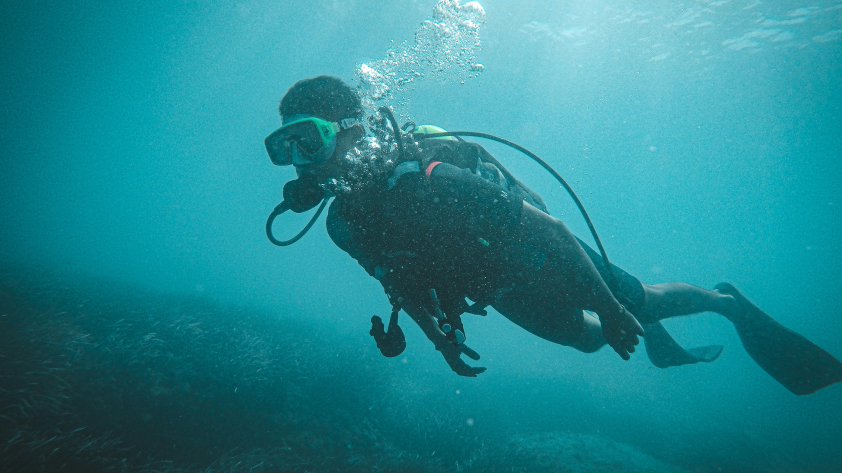


Thinking about diving into the underwater world but not sure where to start? Scuba diving opens up a stunning realm beneath the waves, letting you explore vibrant reefs, mysterious shipwrecks, and diverse marine life up close. Whether you’re curious about gear, safety, certification, or techniques, these 25 beginner FAQs cover everything you need to know to take the plunge with confidence.
Getting Started
1. What is scuba diving?
Scuba diving is all about underwater exploration using a tank-based breathing system. This allows you to stay below the surface longer than free diving or snorkeling. It opens access to marine ecosystems, shipwrecks, and submerged environments without relying on surface air. You can move freely in three dimensions, weightless and immersed.
2. Who invented scuba diving?
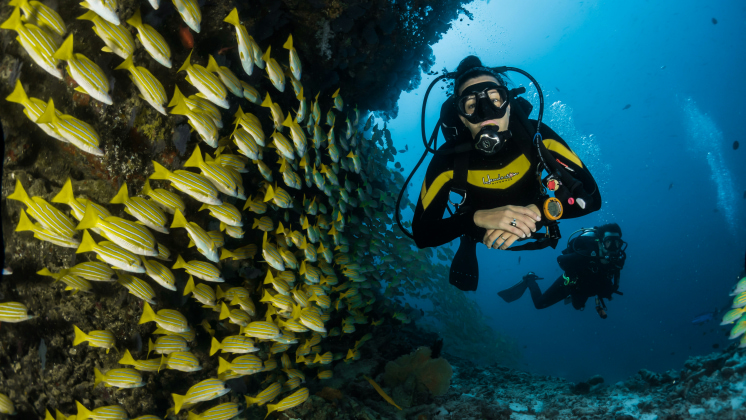
What we think of as scuba diving today began in 1943 when Jacques Cousteau and Emile Gagnan introduced the Aqua-Lung. This open-circuit regulator allowed divers to breathe compressed air from a tank. Earlier diving bells and surface supplied air systems existed before that, but the Aqua-Lung was the turning point for self-contained exploration.
3. What's the difference between snorkeling and scuba diving?
Scuba diving involves carrying your own air supply, allowing you to explore deep and stay underwater longer. Snorkeling uses a surface-based breathing tube and keeps you close to the top. Scuba gear is heavier, but the access it provides—deeper reefs, wrecks, caves—is unmatched.
4. How old do you have to be to go scuba diving?
Most entry-level scuba programs allow children to begin at 10 years old, usually under a Junior Open Water certification. At 15, they can upgrade to full adult certification. Programs are designed to fit different maturity levels.
5. Do I need to be a strong swimmer to scuba dive?
You don’t need to be a pro-level swimmer, but comfort in water is essential. Certification courses usually require a 200-meter swim and a 10-minute float test. It’s about being relaxed, not fast.
6. How do you get certified for scuba diving?
You sign up with a recognized training agency like PADI, NAUI, or SSI. Courses combine online or classroom theory, pool-based practice, and open water dives under instructor supervision. You earn certification once you've demonstrated competence in key skills.
7. How much does a scuba diving certification cost?
Expect to pay between US$350 and US$600 for an Open Water certification. The cost usually covers study materials, instructor time, pool sessions, and check-out dives. Some resorts bundle certification with gear rental and lodging.
8. Is scuba diving hard to learn?
Scuba diving is accessible to most people with basic fitness. The learning curve is front-loaded—once you grasp breathing techniques, buoyancy control, and safety protocols, it becomes intuitive. Instructors tailor the pace to your comfort.
-tuya.jpg)
Costs and Gear
9. How much does it cost to scuba dive?
A single dive can cost US$40 to US$1,50 depending on location, equipment rental, and whether it includes a boat trip. Dive packages offer better value. Factor in extra for gear hire if you’re not using your own.
10. What gear do you need to start scuba diving?
Standard kit includes a mask, snorkel, fins, wetsuit, regulator, buoyancy control device (BCD), dive computer, and tank. While dive shops rent gear, many divers eventually buy personal items like masks and wetsuits for comfort and hygiene.
11. Can you scuba dive if you wear glasses or contacts?
Yes. Many divers use soft contact lenses successfully. Another option is a prescription dive mask, custom-built or pre-configured for common prescriptions.
Safety and Health
12. Is scuba diving dangerous?
Scuba diving has risks, but proper training, equipment, and decision-making keep them low. Situational awareness and following procedures are more important than strength. Serious incidents are rare in recreational diving.
13. Can you scuba dive with medical conditions?
Yes, you can scuba dive with medical conditions, but certain conditions—like asthma, epilepsy, or cardiovascular disease—may require medical clearance. You must always talk to your doctor before planning any such activity if you have any pre-existing conditions. Some are contraindications, but others can be managed with guidance. Always disclose your health history honestly before enrolling for a course or signing up for a dive tour.
14. What are the bends in scuba diving?
The bends, or decompression sickness, occur when dissolved nitrogen leaves the bloodstream too quickly after ascent, forming bubbles in joints, tissues, or the nervous system. Symptoms can range from joint pain to paralysis.
15. How do you treat the bends?
Immediate treatment involves 100% oxygen and transfer to a hyperbaric chamber. Recompression therapy restores safe pressure levels and flushes nitrogen. Delayed treatment can lead to lasting damage.
16. What should you avoid doing after scuba diving?
Avoid flying, mountain drives, or intense physical exertion for at least 12–24 hours post-dive. These activities lower ambient pressure and can accelerate nitrogen release in unsafe ways.
17. How soon can you fly after scuba diving?
Wait at least 12 hours after one dive and 18–24 hours after multiple or decompression dives. Flight altitude reduces atmospheric pressure, increasing the risk of decompression sickness if residual nitrogen remains.
Techniques and Skills
18. Do you need to dive with a buddy?
Yes, the buddy system is a safety standard in recreational diving. A dive partner provides backup in case of gear malfunction, disorientation, or out-of-air emergencies. Solo diving exists but requires advanced certification and additional gear.
19. How do you control buoyancy while diving?
Buoyancy is managed using your BCD and breath control. Adding or releasing air from your BCD adjusts your position in the water. Fine-tuning your buoyancy helps reduce air consumption and avoids disturbing marine life.
20. What is the rule of thirds in scuba diving gas planning?
The rule of thirds splits your air supply into three parts: one-third for descending and exploring, one-third for returning, and one-third as an emergency reserve. It’s commonly used in cave or wreck diving where direct ascent isn’t an option.
21. How deep can you scuba dive?
The recreational diving limit is 130 feet (40 meters). Beginner divers usually stay shallower—around 60 feet (18 meters). Deeper dives require more planning, training, and attention to nitrogen exposure.
22. How long can you stay underwater while scuba diving?
Dive time depends on your depth, breathing rate, and tank size. Most dives range from 30 to 60 minutes. Dive computers or tables help track nitrogen buildup and determine safe limits.
Special Types of Diving
23. What is night diving, and is it safe?
Night diving uses waterproof lights to explore after dark. It’s safe when done with preparation—carry two lights, stay close to your buddy, and follow a known route. Marine life behaves differently at night, offering new experiences.
24. What flag indicates scuba diving is in progress?
A red flag with a diagonal white stripe is used in North America, while international waters may use the blue-and-white "Alpha" flag. Both signal that divers are below, and boats should steer clear.
Cameras and Filming
25. What is the best camera for diving?
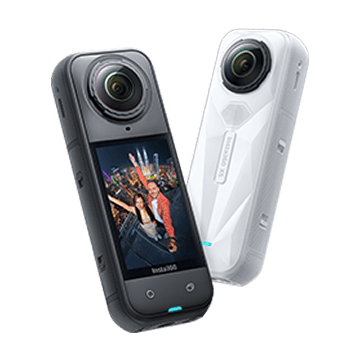
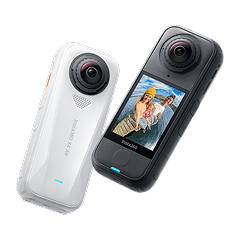
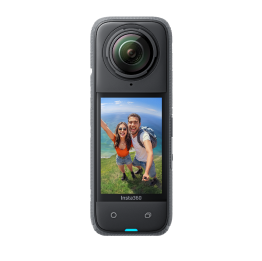
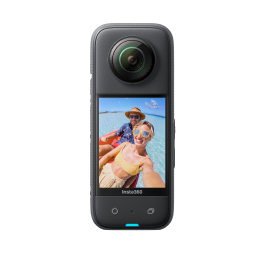
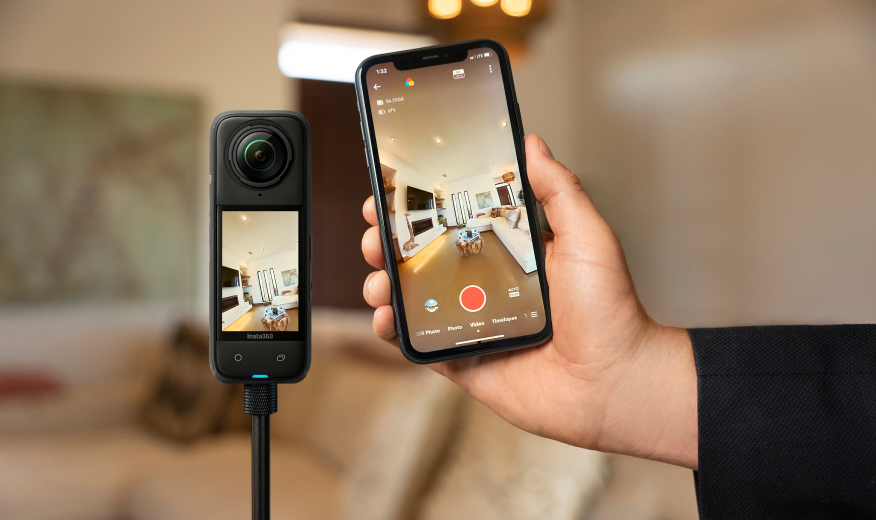
Insta360 X5 captures immersive 8K 360 video and is waterproof to 49 feet (15 meters) without a dive case. It’s ideal for reframing content after the dive, letting you highlight every angle.
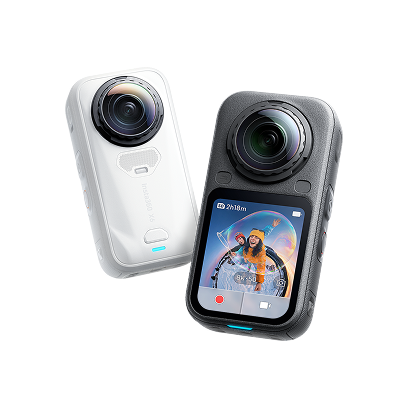
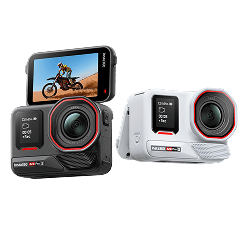
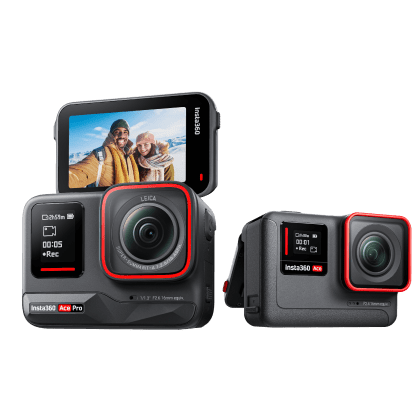
Insta360 Ace Pro 2 delivers stunning 8K detail, has Active HDR for dynamic underwater scenes, and includes a Mic Cap for better audio while submerged. Natively waterproof to 39 feet (12 meters), it’s perfect for creators who prefer directional shooting and pro-level results.
With the official dive accessories, both cameras go deeper:
| Camera | Without Dive Case | With Dive Case |
| Insta360 X5 | 49 feet (15 meters) | 197 feet (60 meters) - Buy |
| Insta360 Ace Pro 2 | 39 feet (12 meters) | 197 feet (60 meters) - Buy |
Both are rugged, high-performance cameras that handle saltwater, pressure, and movement, giving you a polished look straight from the ocean or reef floor. Both cameras have a specialized PureVideo Mode for low-light environments, including ocean depths, and a dedicated underwater color filter, AquaVision, available in the Insta360 mobile app and Studio desktop software to restore natural and accurate colors.
Explore the Depths
Scuba diving is an incredible adventure that combines skill, safety, and discovery. With the right training, equipment, and respect for the ocean, beginners can enjoy this thrilling activity while exploring some of the most beautiful places on Earth. And with advanced scuba diving cameras like Insta360 X5 and Insta360 Ace Pro 2, you can effortlessly capture stunning, high-quality footage of your dives, preserving those unforgettable underwater moments forever. Armed with answers to these common questions, you’re now better prepared to embark on your underwater journey and create memories that last a lifetime.
Keen to keep up to date on Insta360 stories? Keep an eye on our blog and sign up for our mailing list. Got a story to share? Email yours to communitystories@insta360.com and win up to US$50.




%20(1).svg)


%20(1).svg)

.svg)