
























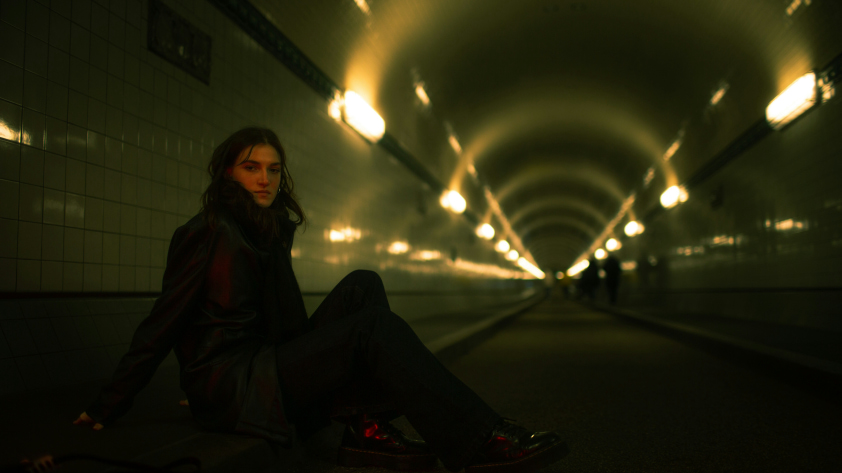


For something we rarely think about, lighting is tricky. Too much of it casts a harsh glare, with deep pockets of shadow. Not enough, and you’re peering at a screen, wondering what’s happening. Diffused light is light that has been scattered or softened, spreading evenly across a scene and reducing shadows and glare. In photography and filmmaking, it’s the key to balanced exposure, healthy-looking skin tones, and an overall aesthetic that looks professional and polished.
How Does Diffused Light Work?
Light travels in a straight line and typically creates strong highlights and sharply defined shadows, especially when it is harsh midday light coming straight down or light burning off a bare bulb. For photographers and filmmakers, this creates a problem.
However, diffused light is different. When light passes through or reflects off a translucent surface—such as clouds, frosted glass, fabric, or a diffusion panel—it scatters in multiple directions. Instead of one concentrated beam, the light spreads outward, or diffuses. The result is a gentler transition between highlights and shadows, with edges that become gradual rather than abrupt.
Diffused Light vs Direct Light: What’s the Difference?
To get the best sense of the difference, think about a burning hot, cloudless midday sun. Here, the light is coming from a single, direct source, and there’s a lot of it. When it’s directly over you, it creates hard-edged shadows, bright highlights, and high contrast. The light hits one side of your subject while the other side falls into deep shadow—it can look dramatic, but also harsh. Details can appear overly textured, reflections become stronger, and exposure becomes harder to balance across the frame.
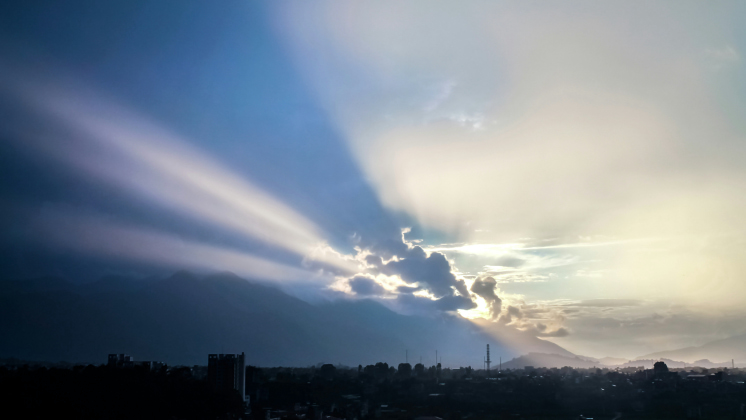
Now imagine the same day with cloud cover. When sunlight hits the clouds, it creates diffused light that is softened and spread out before it reaches the ground. That wider spread reduces harsh shadows and lowers contrast, creating smoother transitions between light and dark areas. The result feels more natural and balanced.
Why Diffused Light Matters in Photography and Video
In photography and video, diffused light reduces extreme contrast. That helps cameras capture detail in both highlights and shadows. Modern cameras like Insta360 Ace Pro 2 have incredible sensors that perform well in low-light photography, but even they benefit from diffused light on a bright day.
For portraits or interviews, this is particularly important. Diffused light smooths skin tones, reduces unflattering shadows, and minimizes harsh reflections. In short, you get a much more natural, dimensional look without exaggerating texture.
If you’re shooting at wide angles, especially with some sky, direct light can cause problems. You’ll often end up with a blown-out sky and a foreground that is nearly black. The result feels overly contrasted across a large area. Details in the foreground disappear into shadow, and the sky becomes a mass of bright white. Diffused light helps preserve detail in both areas, keeping definition in the sky and clarity in the foreground.
For video, extreme contrast can exaggerate brightness shifts during movement. Something as simple as a person walking across a garden can appear jumpy. Adding diffused light and movement makes the scene look smoother and more cinematic.
How to Create Diffused Light
This is all well and good, but what if there are no clouds in the sky and no conveniently placed glass or curtains to diffuse light? No worries. You don’t need a studio to soften lighting, and the solutions are often closer and easier than you think.
1. Use a Softbox or Dedicated Diffuser
Professional softboxes, diffusion panels, or clip-on light modifiers scatter light before it reaches your subject. These are often the best options. Even small portable diffusers can dramatically improve indoor shoots.
2. Bounce Light off a Surface
Instead of pointing a light directly at your subject, aim it at a white wall, ceiling, or reflector first. It sounds simple, but it works. The light spreads out before hitting your scene, creating a softer, more even result. Foam boards or collapsible reflectors also do a great job.
3. Shoot Through Curtains or Sheer Fabric
If natural light streaming through a window feels too harsh, hang sheer curtains or a similar translucent fabric in front of it. This scatters incoming sunlight, turning it into a broad, flattering light source.
4. Use Natural Conditions
You can’t create clouds, but you can choose when to use them. If you have cloud cover—even for a few hours—experiment outdoors. Sometimes the shot you imagined indoors looks better under a tree as clouds roll through on a summer's day.
5. Position Your Subject in Open Shade
If you’re outside, choose a place with open shade, such as under a tree, awning or building overhang. Avoid complete darkness. You still need light coming in, and open shade often provides perfectly diffused light.
Why Action Cameras Benefit from Diffused Light
Action cameras are built for fast movement, wide lenses, and rapidly changing environments. That also makes them sensitive to direct light. Because they use smaller sensors and ultra-wide fields of view, they often capture more of the sky, ground, and reflective surfaces in a single frame. Under harsh, direct sunlight, highlights can blow out while shadows lose detail.
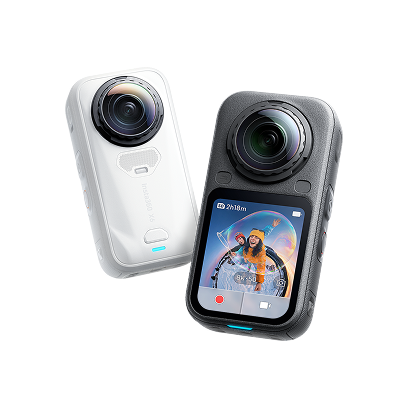
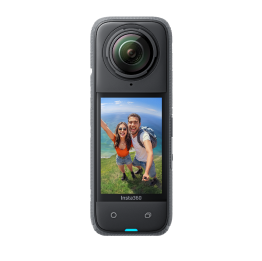
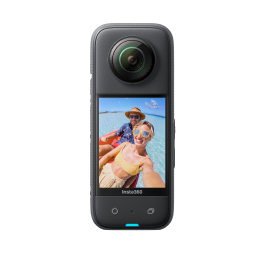
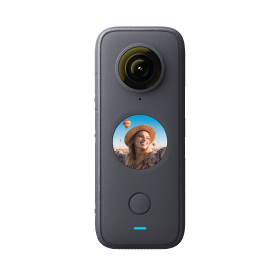
Cameras like Insta360 X5 and Insta360 X4 thrive in evenly lit outdoor conditions, capturing immersive 360 footage with more consistent exposure. Compact cameras such as Insta360 GO 3S and Insta360 GO Ultra benefit from softer light when filming close-up POV shots, where harsh glare can become distracting.
When lighting is softened, any camera—especially action cameras—will benefit.
Common Mistakes To Avoid When Using Diffused Light
Mistakes happen. Here are some common ones to watch for.
1. Over-Diffusing the Scene
It’s possible to go too far and over-diffuse a scene. That can create a flat image in which shadows disappear, and subjects lose depth and dimension. Take a few test shots before filming something important.
2. Ignoring Subject Separation
Even with diffused light, you don’t want your subject blending into the background. Add subtle backlight or adjust positioning to maintain contrast where it matters.
3. Mixing Color Temperatures
Aim for uniform color temperatures across your scene. A soft blue light from a window and a harsh orange bulb can create uneven skin tones.
4. Forgetting to Adjust Exposure
Just because light is softer doesn’t mean exposure is perfect. Always check your histogram or preview to prevent underexposed footage.
Frequently Asked Questions
What Is the Easiest Way to Create Diffused Light?
The easiest way is to bounce light off a white surface, use a window with a light curtain, or rely on cloud cover outdoors to act as a giant diffuser.
Does Diffused Light Impact Image Sharpness?
No. Diffused light doesn’t affect sharpness, which depends on your lens and focus. It does affect contrast. By reducing harsh shadows and bright hotspots, it makes textures appear smoother while retaining detail.
Can You Diffuse Sunlight Outdoors?
Yes. Cloud cover is the most common and accessible diffuser. You can also use shaded areas, such as under a tree or awning. If you must shoot in direct sunlight, use reflectors to help soften the light.
Balanced Lighting Creates More Professional and Cinematic Results
There’s a lot to learn about light. When you’re starting out in photography or filmmaking, it’s easy to focus on composition and technical settings. Over time, you realize lighting makes or breaks an image.
From small cameras that fit in your pocket to powerful models capable of cinema-worthy footage, Insta360 cameras like Insta360 Ace Pro 2 handle tricky lighting situations without compromising quality.




%20(1).svg)


%20(1).svg)

.svg)