














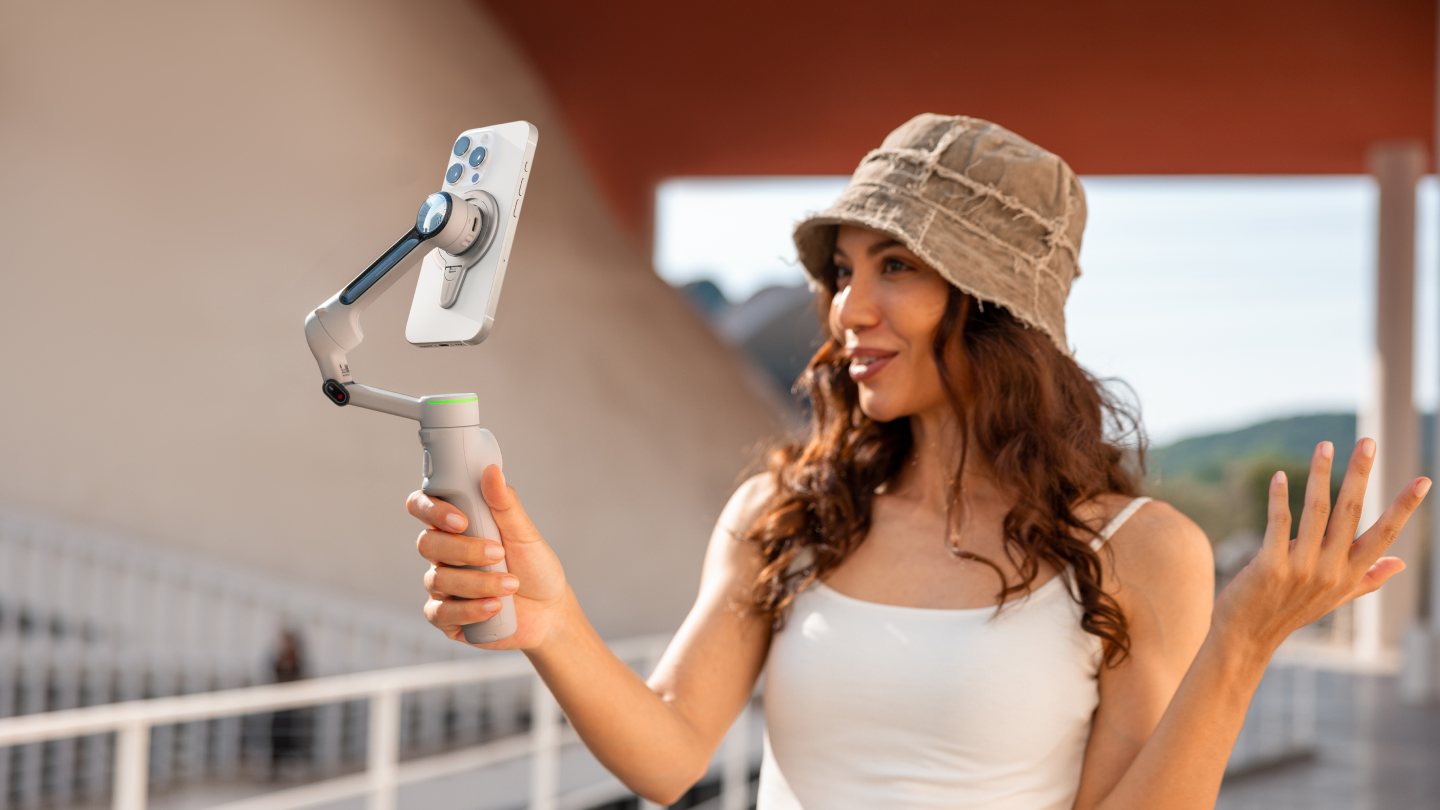


When your grandchildren ask in amazement how you ever shot footage without a gimbal, you'll have to be honest—shakily, awkwardly and imperfectly. Back then, every step, stumble and turn showed up in your videos, but thankfully, that’s now all behind us.
Whether you're filming a travel adventure, documenting family memories or creating content for social media, smooth camera movement instantly makes your videos feel more immersive and professional. There's no easier way to do it than with a gimbal.
Key Takeaways
- A gimbal is a motorized stabilization system that keeps your camera level while you move.
- Three-axis stabilization corrects pan, tilt, and roll movement for smoother video.
- Mechanical stabilization often delivers more natural results than software alone, especially during movement.
- From smartphone filmmakers to action sports creators, there's a gimbal designed for nearly every style of shooting.
What Is a Gimbal?
A gimbal is a motorized camera stabilizer designed to counteract small, unwanted movements in real time. Those jerks, shudders and twists might feel minor while you're filming, but they become much more noticeable once someone watches the finished video.
Using intelligent sensors and precision motors, the gimbal keeps your camera level even while you're walking, running or changing direction. The result is footage that feels fluid, controlled and cinematic instead of shaky and unpredictable.
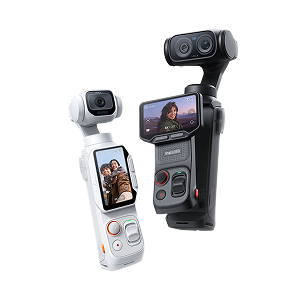
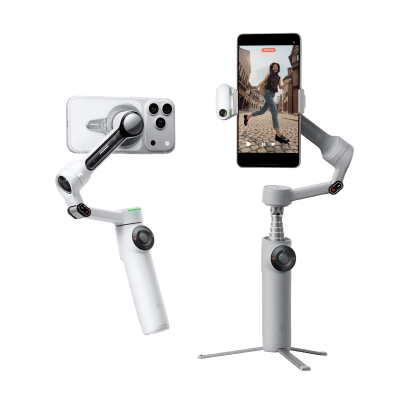
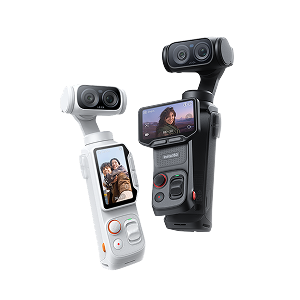
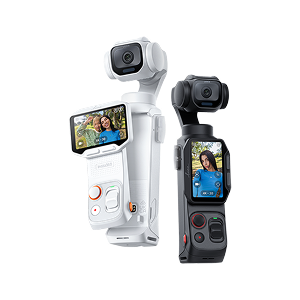
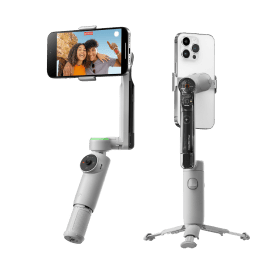
Modern stabilization systems have also become more intelligent. Devices like Insta360 Flow 2 Pro are excellent smartphone gimbals and combine mechanical stabilization with AI-powered subject tracking, helping creators maintain smooth movement while keeping their subject centered in the frame.
How Does a Gimbal Work?
The mechanics behind a gimbal are surprisingly simple. It constantly measures how your camera moves, then instantly compensates before those movements appear in your video.
This process happens hundreds or even thousands of times every second. As you walk, pivot, or raise your camera, motors make tiny adjustments that keep it level and stable. Instead of recording every bump and vibration, the camera appears to glide smoothly through the scene.
The Three Axes of Stabilization
A standard three-axis gimbal corrects movement across three different directions.
Each axis serves a different purpose, but they work together continuously. If you turn to follow a cyclist, walk down a flight of stairs, or angle your camera upward for a dramatic reveal, the stabilization system calculates corrections across all three axes simultaneously.
| Axis | Movement It Corrects | Example |
| Pan | Horizontal left and right rotation | Following someone walking across a street |
| Tilt | Vertical up and down movement | Tilting from the ground toward a mountain peak |
| Roll | Side-to-side rotation | Keeping the horizon level while walking over uneven terrain |
Motors and Sensors
At the center of this magic is a combination of intelligent sensors, powerful processors, and precision brushless motors.
Tiny gyroscopes and accelerometers—often combined into an Inertial Measurement Unit (IMU)—monitor how the camera moves in every direction. The processor instantly calculates how much correction is needed to keep the camera level, while high-precision motors rotate the camera in the opposite direction of unwanted movement.
These corrections happen almost instantly, and the resulting video appears smooth even while you're in motion. Most creators never notice it happening—they simply see footage that looks dramatically steadier than handheld video alone.
Types of Gimbals
Not every creator shoots the same way, and not every stabilizer is built for the same job. Whether you're filming with a smartphone, action camera or drone, choosing the right type of gimbal depends on how and where you create:
- Handheld Gimbal Stabilizers—A handheld smartphone gimbal is the easiest way to elevate everyday videos, smoothing out footage while walking, filming travel content, recording family moments, or producing social media videos.
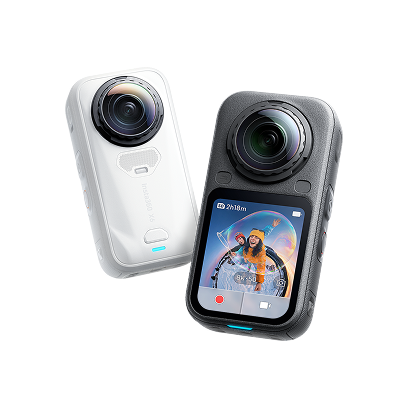
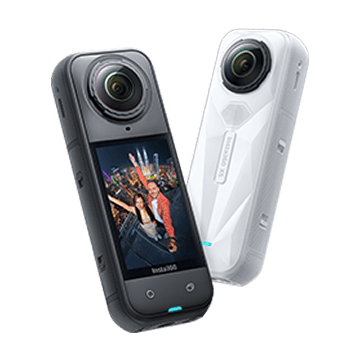
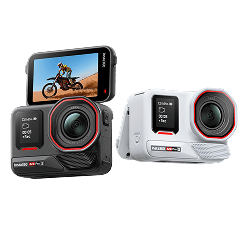
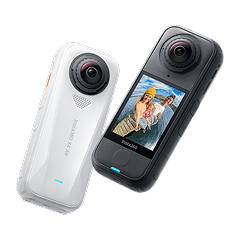
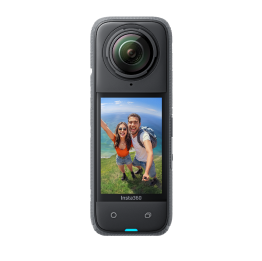
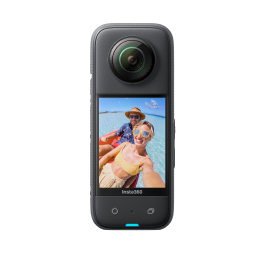
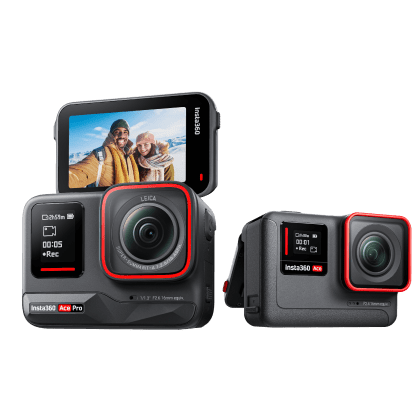
- Gimbal Cameras (Built-In Stabilization)—Some cameras achieve remarkably smooth footage without a separate handheld stabilizer, combining compact hardware with advanced stabilization algorithms. A gimbal camera for solo travelers like Insta360 Ace Pro 2 and Insta360 X5 delivers impressive stabilization straight out of the camera.
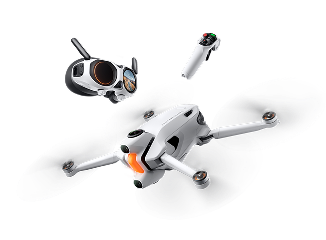
- Drone Gimbals—A drone's camera experiences constant movement from wind, acceleration, and rapid directional changes. Drone gimbals isolate the camera from the aircraft itself, allowing it to remain level while the drone pitches, rolls, and yaws.
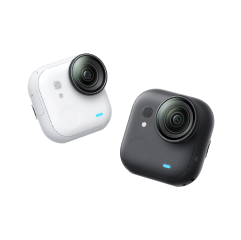
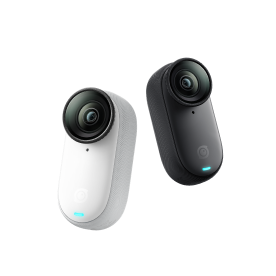
- Wearable and POV Stabilization—Wearable cameras and POV setups are designed for creators who want to stay fully immersed in the action while still capturing stable footage. Small cameras like Insta360 GO 3S and Insta360 GO Ultra are built for these moments, delivering stabilized first-person footage while keeping your hands free for the adventure ahead.
Electronic Stabilization vs Gimbal Stabilization
Today's cameras are smarter than ever, and many include electronic image stabilization (EIS) alongside mechanical stabilization. While both technologies aim to reduce shake, they work in fundamentally different ways.
| | Electronic Stabilization | Gimbal Stabilization |
| How It Works | Software analyzes footage and compensates digitally | Motors physically stabilize the camera during recording |
| Quality | Excellent for moderate movement but can introduce artifacts in demanding situations | Maintains consistently smooth footage with natural camera movement |
| Crop Factor | Often requires a slight crop to stabilize the image | No image crop required |
| Cost | Usually built into the camera | Requires dedicated hardware |
| Best For | Everyday shooting, action cameras and casual creators | Walking shots, cinematic movement, tracking and professional-looking video |
Electronic stabilization has improved dramatically in recent years, especially in action cameras and 360 cameras. Technologies like FlowState Stabilization help smooth footage without requiring additional equipment, ideal for fast-moving adventures where portability matters.
Why Every Creator Needs a Gimbal
Great storytelling isn't just about what you film; it's about how you move through the scene. Smooth camera movement naturally guides your audience's attention, making every shot feel more immersive and intentional.
That's where a gimbal earns its place. Beyond smoother footage, it opens up creative freedom; tracking shots, sweeping reveals, and smooth orbits become easier to capture, with less need for stabilization in post.
How Insta360 Approaches Gimbal Stabilization
No two creators work the same way, so stabilization shouldn't be one-size-fits-all. Instead of relying on a single approach, Insta360 builds stabilization into an ecosystem of products designed for different shooting styles and creative workflows.
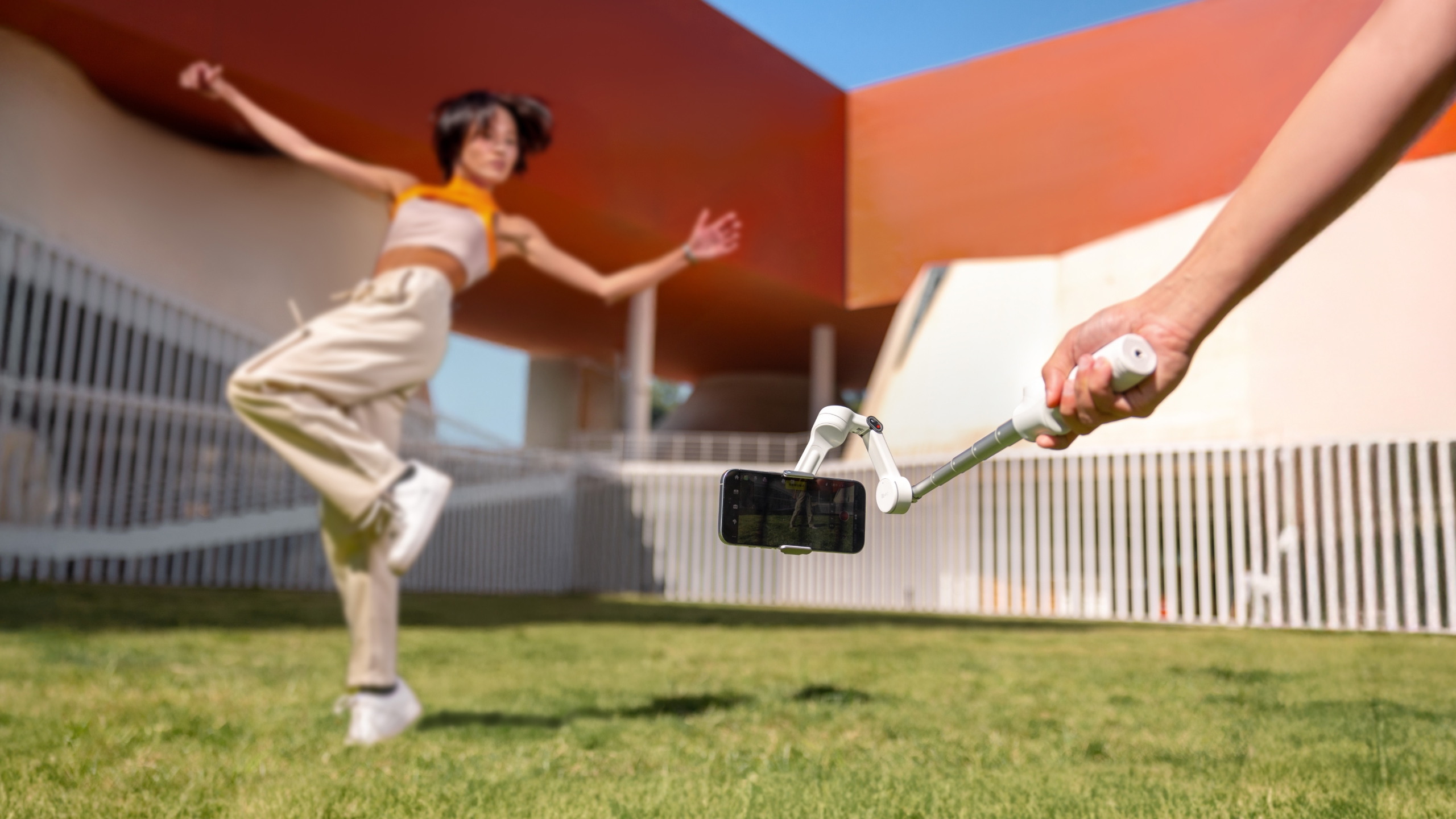
For smartphone creators, Insta360 Flow 2 Pro combines three-axis mechanical stabilization with AI-powered tracking, making it easier to capture smooth walking shots, follow moving subjects, and film solo without needing someone behind the camera.
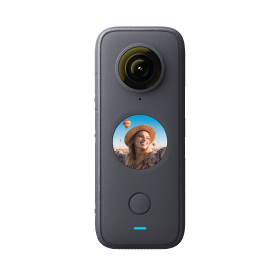
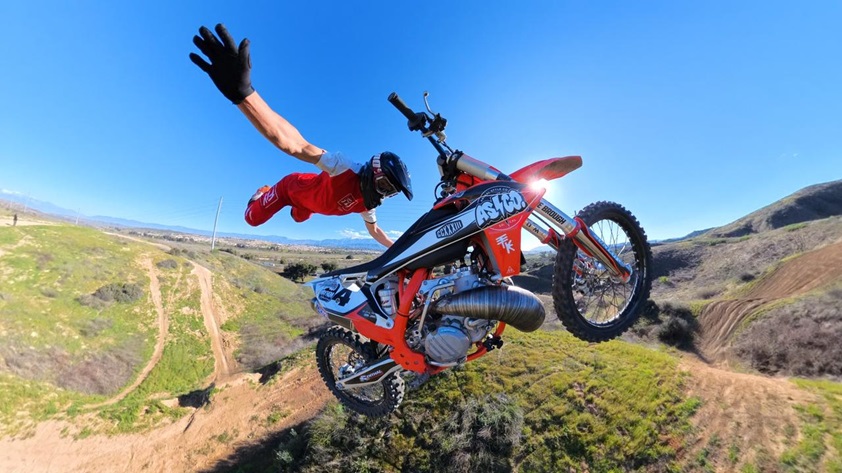
Adventure creators often prioritize portability over carrying extra gear. Cameras like Insta360 Ace Pro 2, Insta360 GO 3S, Insta360 X5, and Insta360 X4 use advanced stabilization technology to deliver remarkably smooth footage while remaining compact enough for hiking, cycling, travel, and everyday adventures.
Frequently Asked Questions
Is a Gimbal the Same as a Tripod?
Not quite. A tripod keeps your camera completely stationary, making it ideal for long exposures, interviews or time-lapse photography. A gimbal is designed for movement, actively stabilizing the camera while you walk, pan or track a subject.
Do I Need a Gimbal for Vlogging?
It depends. If most of your videos involve walking, traveling, or filming yourself on the move, a gimbal can dramatically improve the viewing experience by reducing distracting camera shake. For creators who primarily record indoors from a desk or tripod, it might not be needed.
Is Electronic Stabilization as Good as a Gimbal?
Electronic stabilization has become incredibly capable, especially in modern action cameras and 360 cameras, but mechanical stabilization still offers advantages when filming extended walking shots, tracking moving subjects, or creating deliberate cinematic camera movements.
Once You Shoot With a Gimbal, Handheld Footage Will Never Look the Same
Someday, shaky footage will probably feel as outdated as buffering videos or rewinding VHS tapes. Until then, a gimbal remains one of the simplest ways to make your videos feel smoother, more immersive, and more enjoyable to watch.
Explore Insta360's lineup of gimbals and stabilization devices and find the one that lets you capture the moment in all its glory, without those gloriously annoying shakes.
Keen to keep up to date on Insta360 stories? Keep an eye on our blog and sign up for our mailing list. Got a story to share? Email yours to communitystories@insta360.com and win up to US$50.
Your shot. Your world. The Insta360 Global Awards 2026 supported by Leica are officially open. Join creators worldwide and compete across six categories (Street, Travel, Life, Portrait, Sports, and Night) for your share of a US$150,000+ prize pool, including cash prizes and Insta360 gear. Submit your best video or photo at insta360.com/awards.




%20(1).svg)


%20(1).svg)

.svg)