













































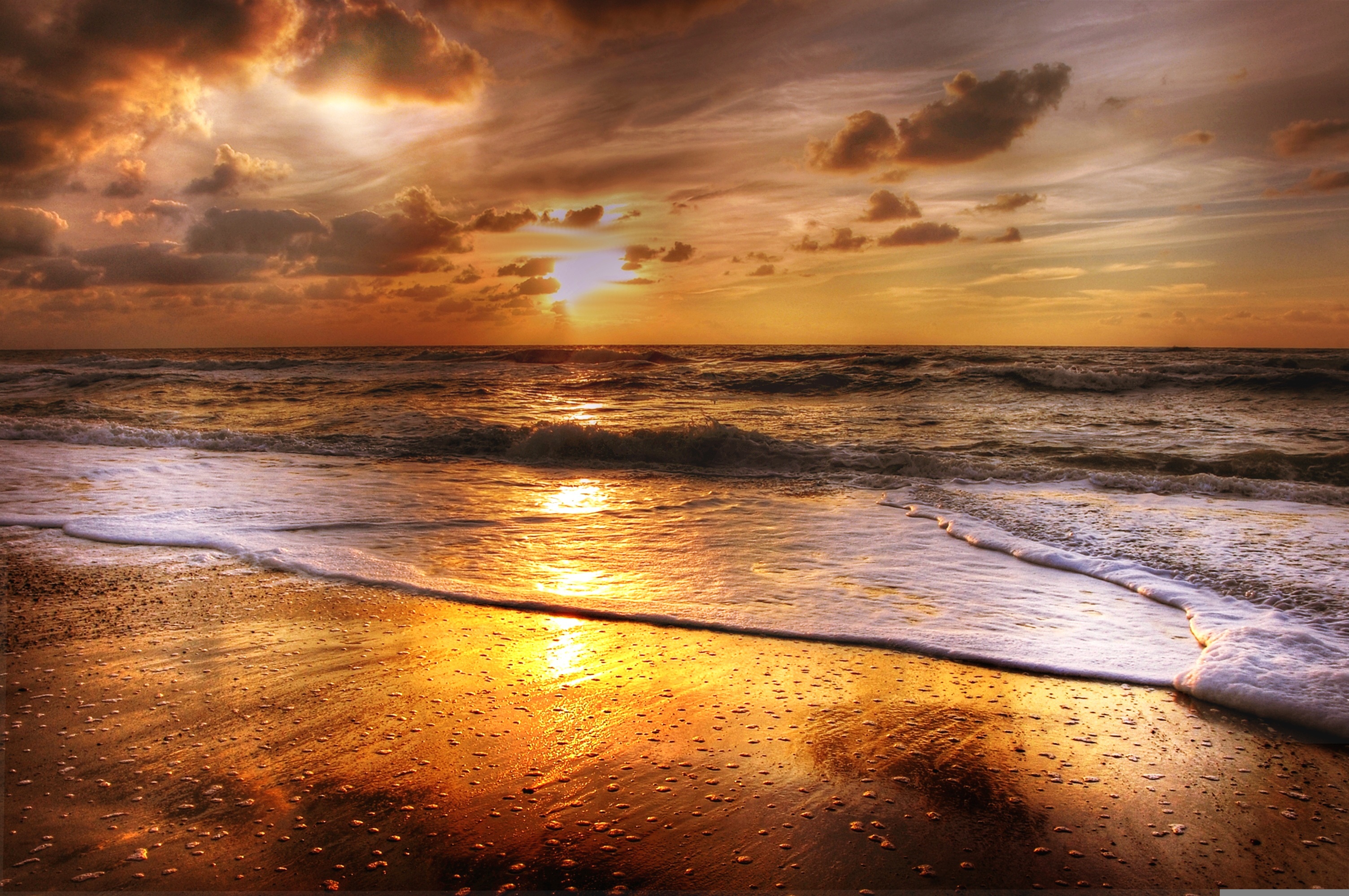
The sand rolls away—to the right, to the left—while the ocean stretches forward to the horizon where it meets the setting sun. The best beach photography doesn’t happen under the harsh midday sunlight when colors, highlights and shadows are all blown out. It comes early, or late, at that special time of day known as golden hour.
What Makes Golden Hour Perfect for Beach Photography?
Beach photography completely changes during golden hour. At other times of the day, with the baking sun directly above, shadows are harsher, colors lose their sparkle and highlights simply disappear into a ball of bright light.
However, make your way to the beach shortly after sunrise or shortly before sunset, and you’ll find a very different world. Colors appear much warmer, with yellows and oranges particularly noticeable. Wet sand and the ocean surface become beautifully reflective and shadows soften.
Golden hour works so well because the sun sits lower on the horizon, forcing light to travel through more of Earth’s atmosphere before reaching the subject. Shorter blue wavelengths scatter while warmer red and orange tones remain more visible, creating softer contrast, reduced glare and more flattering skin tones.
This is also the perfect time to experiment with movement and atmosphere. Backlit waves, wind-blown hair, silhouettes and reflections all become stronger visual elements during sunset shoots. Those standard vacation pictures from midday suddenly become something genuinely striking.
Essential Gear for Golden Hour Beach Photography
Beach photography doesn’t require a high-octane setup, although weather conditions can easily change, so always bear that in mind.
The main thing to remember is that the clock is ticking, and you’ll only have a very narrow window of time to get the shots that you need.
With this in mind, ideally, you want gear that is easily maneuverable, quick to set up and flexible so that you pivot to something new in the blink of an eye.
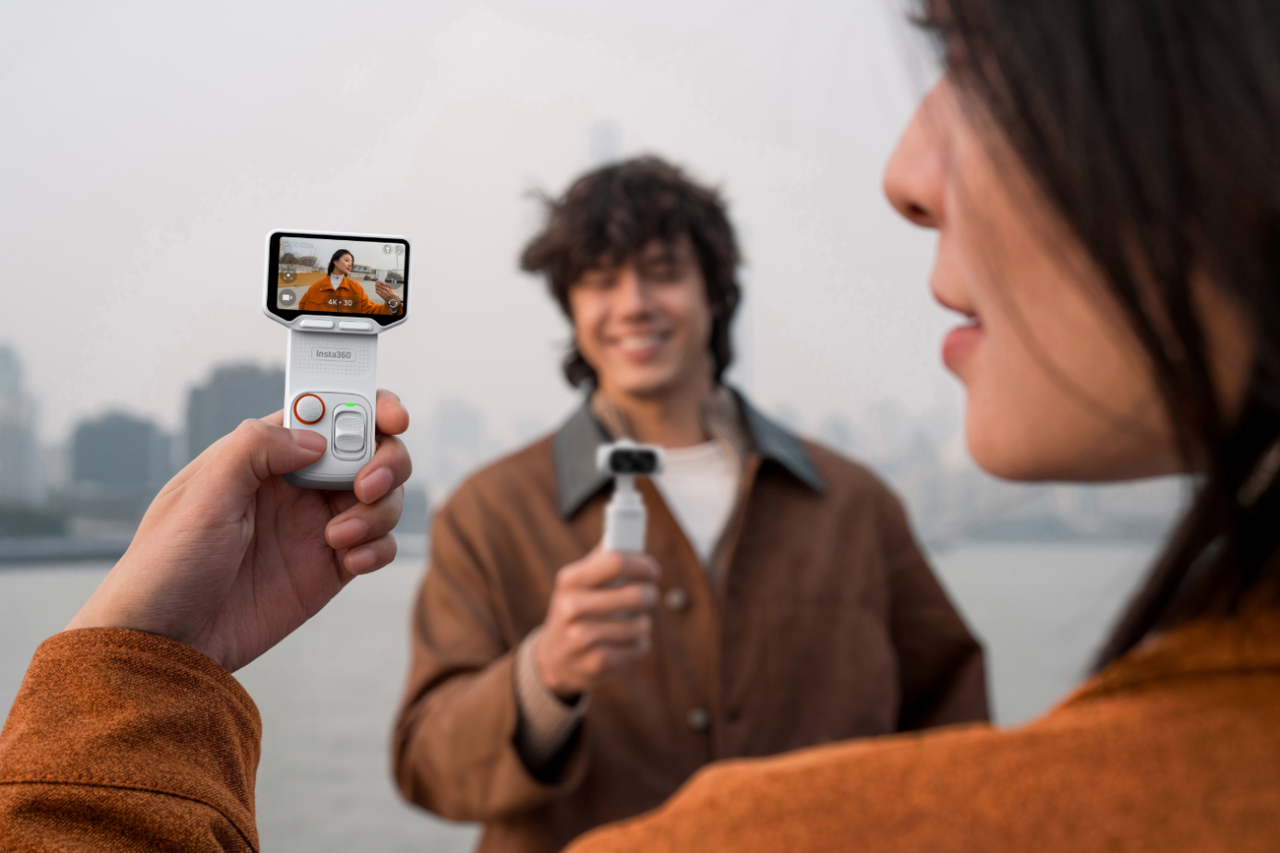
Compact action cameras thrive in these fast-changing conditions.
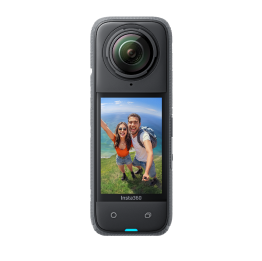
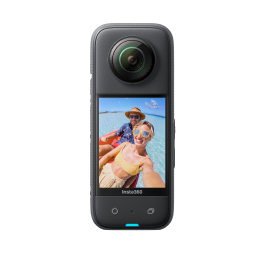
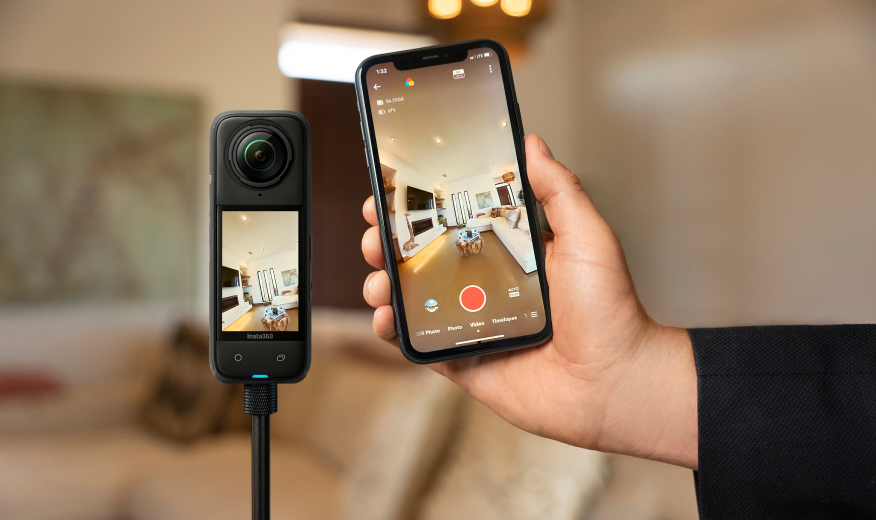
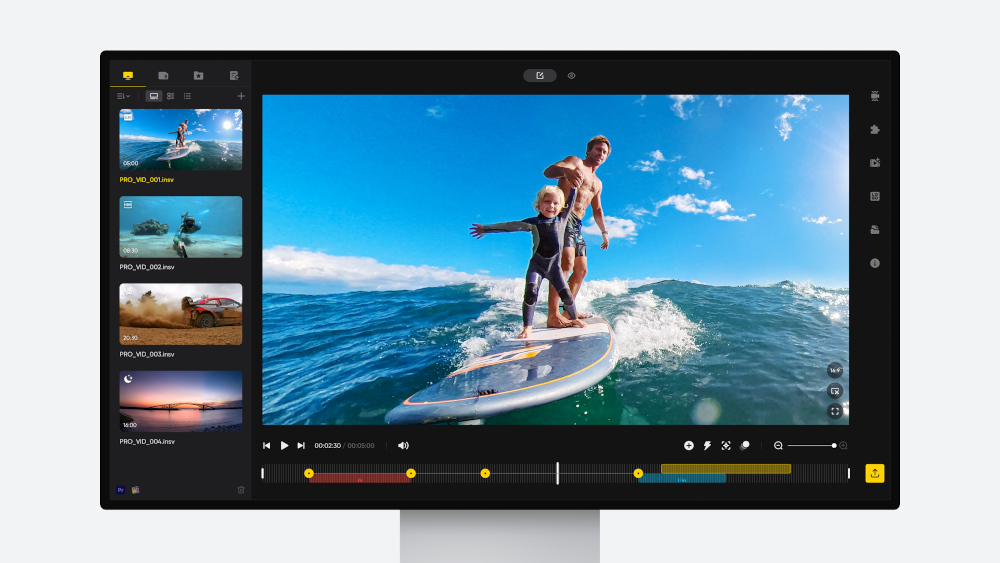
A 360 camera like Insta360 X5 makes it easy to capture immersive shoreline scenes from every angle, while Insta360 Ace Pro 2 handles shifting light beautifully during handheld beach sessions.
These are perfect companions when you’re not sure what’s coming next. One minute, you’re tracking a surfer carving through a barrel, and then the next, you’re stepping back for a wide 360 shot as the sky explodes with color.
A few small accessories can also make a huge difference:
- Microfiber cloths for salt spray and sand.
- Extra batteries since sunset sessions drain power quickly.
- A mini tripod for low-angle compositions.
- ND filters for smoother motion in brighter conditions.
- Waterproof grips for shooting near waves.
- Dry bags to protect gear between locations.
Camera Settings for Perfect Golden Hour Shots
Golden hour moves fast, so you need to keep up. But that being said, don’t run around manically trying to shoot everything from every angle. More often than not, you’ll review your images and realize that fewer pictures with higher overall quality are almost always best.
ISO
Start with a lower ISO whenever possible. Keeping ISO between 100 and 400 helps preserve detail and reduce grain in darker areas of the frame. Shutter speed depends on the mood you want.
Shutter Speed
Faster shutter speeds freeze splashing water and movement, while slower speeds can create silky waves and softer motion blur—but you might need to use a tripod. If you’re photographing action like running through the surf or beach sports, keep your shutter speed high enough to stay sharp.
White Balance
White balance also matters more during sunset sessions. Auto white balance can sometimes neutralize the warm tones that make golden hour special, so switching to a warmer preset helps preserve the atmosphere naturally.
Exposure
Also, think about slightly underexposing your images, which will preserve more of the color and detail in the sky.
Creative Golden Hour Beach Photography Ideas to Try
It’s easy to think of beach photography as simply pointing the camera out to the sea and hitting the shutter. That works, sometimes, but how many photos have you seen over the years of beaches that look exactly the same?
It’s time to get creative, so here are some ideas to try.
Silhouettes in the Surf
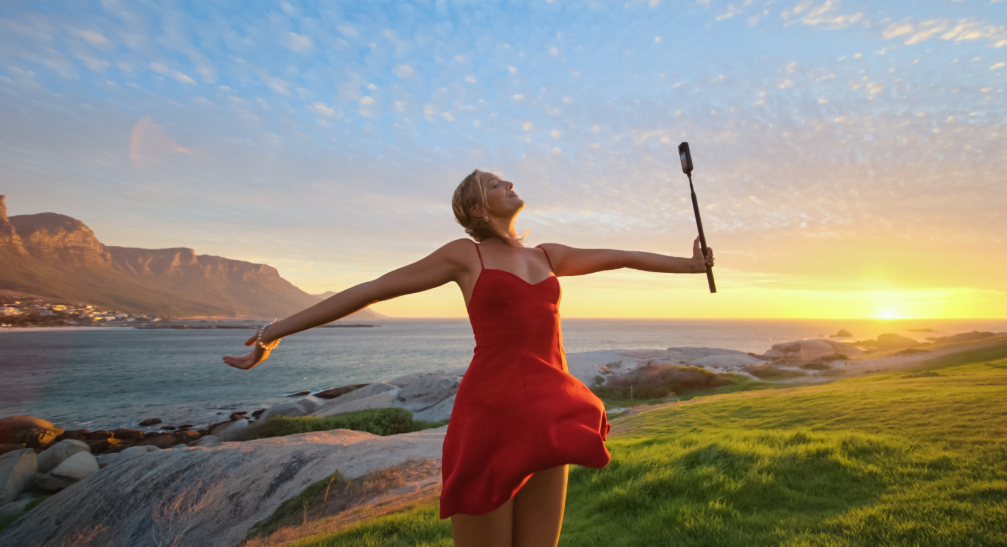
A classic. Silhouettes are one of the easiest ways to create dramatic sunset photos. Position your subject directly between the camera and the setting sun, then expose for the sky instead of the person.
The result is bold contrast and clean shapes against glowing color. Walking, jumping, running or tossing water into the air all work especially well.
Reflection Shots on Wet Sand
As waves pull back toward the ocean, they leave behind a thin reflective layer across the shoreline. Get low to the ground and use that reflection to mirror your subject or the sky. This works beautifully with wide-angle perspectives and symmetrical compositions.
Walking Into the Water
Some of the most cinematic beach photos happen right at the edge of the tide. Photograph someone walking into shallow surf as waves wrap around their legs and sunlight catches the spray. It’s a great combination of movement and texture.
Sun Flare Portraits
Instead of hiding the sun completely, partially block it with your subject to create natural lens flare. If you lean one way just enough, you should get a star shape of light appearing between your subject and the sun that looks great. Golden hour flare feels organic at the beach because the environment already has so much texture and haze in the air.
Action Shots at Sunset
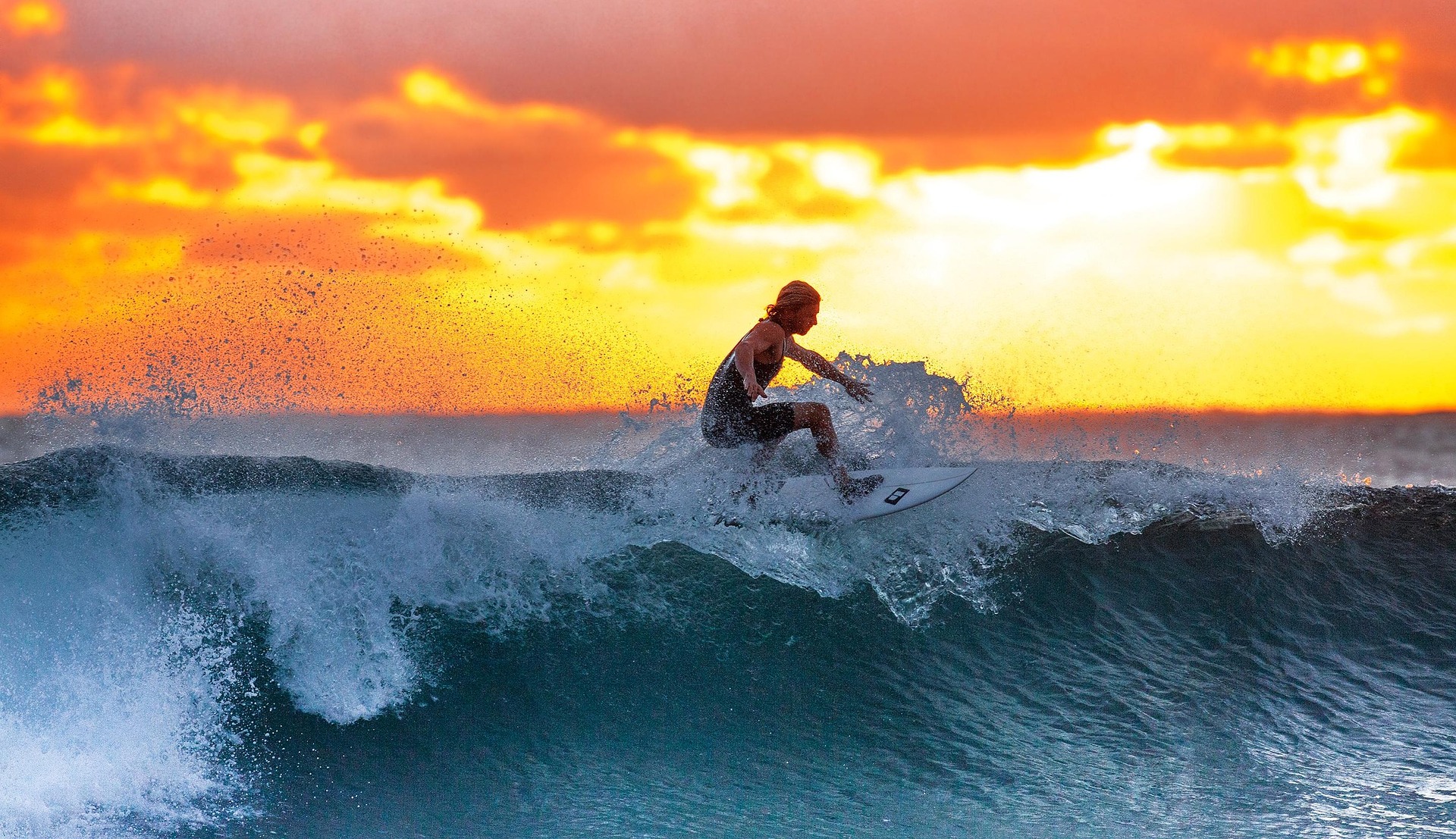
Beach volleyball, surfing, skating along the boardwalk, sprinting through waves—movement feels more dynamic during sunset because of the low directional light.
Insta360 Ace Pro 2 is especially effective for capturing handheld action near the shoreline, while Insta360 X5 allows for immersive 360 shots that pull viewers directly into the scene.
Wide Scenic Frames
Sometimes the scale of the environment tells the strongest story. Place a small subject against a massive glowing sky or stretch of coastline to create a sense of freedom and adventure.
Negative space works incredibly well during sunset because the sky becomes part of the composition itself.
Composition Techniques for Eye-Catching Beach Photos
The beauty of photography is that almost anything can work in the right situation, but there are a few tried-and-tested composition techniques to help your beach photos stand out.
The rule of thirds is the obvious starting point. Instead of placing the horizon directly in the center, position it higher or lower depending on what matters most. If the sky is dramatic, give it more space. If reflections and waves are the focus, lower the horizon line.
Leading lines also appear everywhere at the beach. Curving tide patterns, footprints in the sand, piers and shoreline edges all help guide the viewer’s eye through the image. Find a line of some kind and, if possible, place your subject somewhere along it.
Foreground elements can work really well, too, as they add some perspective to what can be a huge landscape. Shells, rocks, dunes or shallow water in the front of the frame make wide beach scenes feel more immersive.
And finally, low angles can completely transform a composition because shooting close to the sand emphasizes reflections and makes waves feel larger and more dynamic.
Editing Tips to Enhance Golden Hour Photos
Golden hour usually provides more than enough beauty and drama for a great photo, but even the pros use some delicate editing to finish the job.
Start by adjusting warmth carefully. A small increase in temperature can bring back the feeling of sunset without making skin tones look unnatural. If the sky is too bright, carefully dial down the highlights and lift the shadows to reveal more detail.
One of the biggest mistakes in sunset editing is pushing colors too far until the image stops looking believable—and there are plenty of examples of this out there. It’s tempting to want to bump the saturation up to bring out those reds, yellows and oranges even more, but there is definitely a line you don’t want to cross. Keep it natural.
Straightening the horizon is another simple but important fix. Crooked horizons become especially noticeable in ocean photography.
4 Common Mistakes to Avoid During a Golden Hour Shoot
Don’t just assume that golden hour equals perfect photography. Unfortunately, that’s not how it works, and things can go wrong. But here are some of the most common mistakes to avoid.
- Overexposing the sky is a common issue. Sunset colors disappear quickly when highlights are blown out, especially near reflections on the water.
- Many photographers also shoot everything from eye level. Beaches offer incredible opportunities for low angles, reflections and dynamic perspectives. Changing your position even slightly can completely transform a frame.
- Salt spray and sand are easy to overlook, too. A dirty lens can soften details and create unwanted haze in your photos. Keep a microfiber cloth nearby and clean your lens regularly throughout the session.
- Finally, don’t spend the entire shoot staring at your screen. Golden hour disappears fast, and constantly checking every frame can make you miss the best light entirely. Shoot deliberately, trust your settings and stay focused on the changing scene around you.
Capture Unforgettable Golden Hour Beach Photos This Summer
The best things in life are fleeting—ice cream on a hot day, cherry blossoms, a shooting star streaking across the sky, a breaking wave. And golden hour fits perfectly into this category, a time of day when colors warm, shadows lengthen, skin tones glow and the world feels magical.
Few places are as powerful for golden hour photography as the beach.
Whether you're chasing action or wide open shorelines, Insta360 X5 and Insta360 Ace Pro 2 are built for it — compact, fast and ready for wherever golden hour takes you.
Frequently Asked Questions
What Time Is Golden Hour at the Beach?
Golden hour usually happens during the first hour after sunrise and the last hour before sunset. Exact timing changes depending on the season, weather and location.
Do I Need Professional Gear for Beach Photography?
Not at all. Timing, composition and light matter far more than expensive equipment. Compact action cameras can produce incredible results during sunset, especially when paired with creative angles and movement.
How Do I Protect My Camera From Sand and Water?
Keep your gear in a dry bag when moving between locations and wipe down lenses regularly to remove salt spray. Avoid changing lenses in windy conditions since airborne sand can damage camera sensors and glass.
Can I Shoot Golden Hour Photos on Cloudy Days?
Absolutely. Thin clouds often diffuse sunlight beautifully and can create dramatic skies with layered color and texture. Overcast sunsets can sometimes feel moodier and more cinematic than completely clear conditions.
Keen to keep up to date on Insta360 stories? Keep an eye on our blog and sign up for our mailing list. You can also contact our Enterprise team directly to see how 360 cameras can benefit your business.




%20(1).svg)


%20(1).svg)

.svg)