


















Great visuals are what draw viewers in. Yet without high-quality sound, that world can all too easily vanish. Whether you're filming in the wild, shooting a fast-paced vlog or capturing an interview, audio quality is the difference between content that feels real and content that falls flat.
This is where digital wireless systems step in, capturing high-quality audio without limitations. Wherever your story takes you…
What Is a Digital Wireless Microphone System?
To say that traditional microphones could be difficult would be a glorious understatement. Long cables, booms falling into shot, tired arms, the simple process of recording audio suddenly became the most difficult part of the entire shoot.
Digital wireless microphones are different.
They are, essentially, a setup that captures sound and transmits it wirelessly using digital signals instead of physical connections.
You can walk, run, turn and shoot without worrying about tangled cables or restricted framing. For creators working in unpredictable environments, this flexibility changes what’s possible. It allows for an entirely different kind of end product.
How Digital Wireless Microphone Systems Work
Wireless microphone technology has been around for years, with small devices worn by baseball umpires as early as 1951, but it’s been a long slog to where we are today.
Even 10 or 20 years ago, wireless microphones were erratic and often suffered from similar issues, namely sound quality and operating distance.
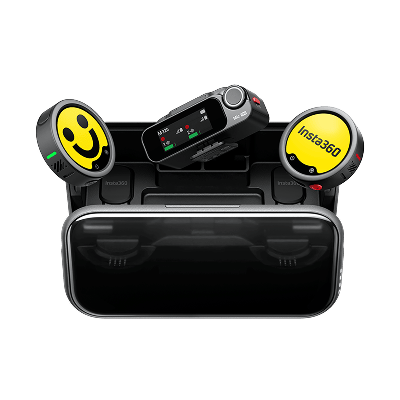
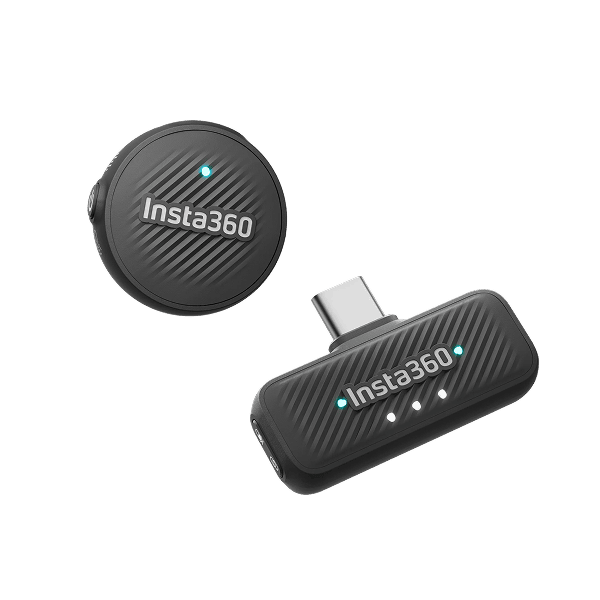
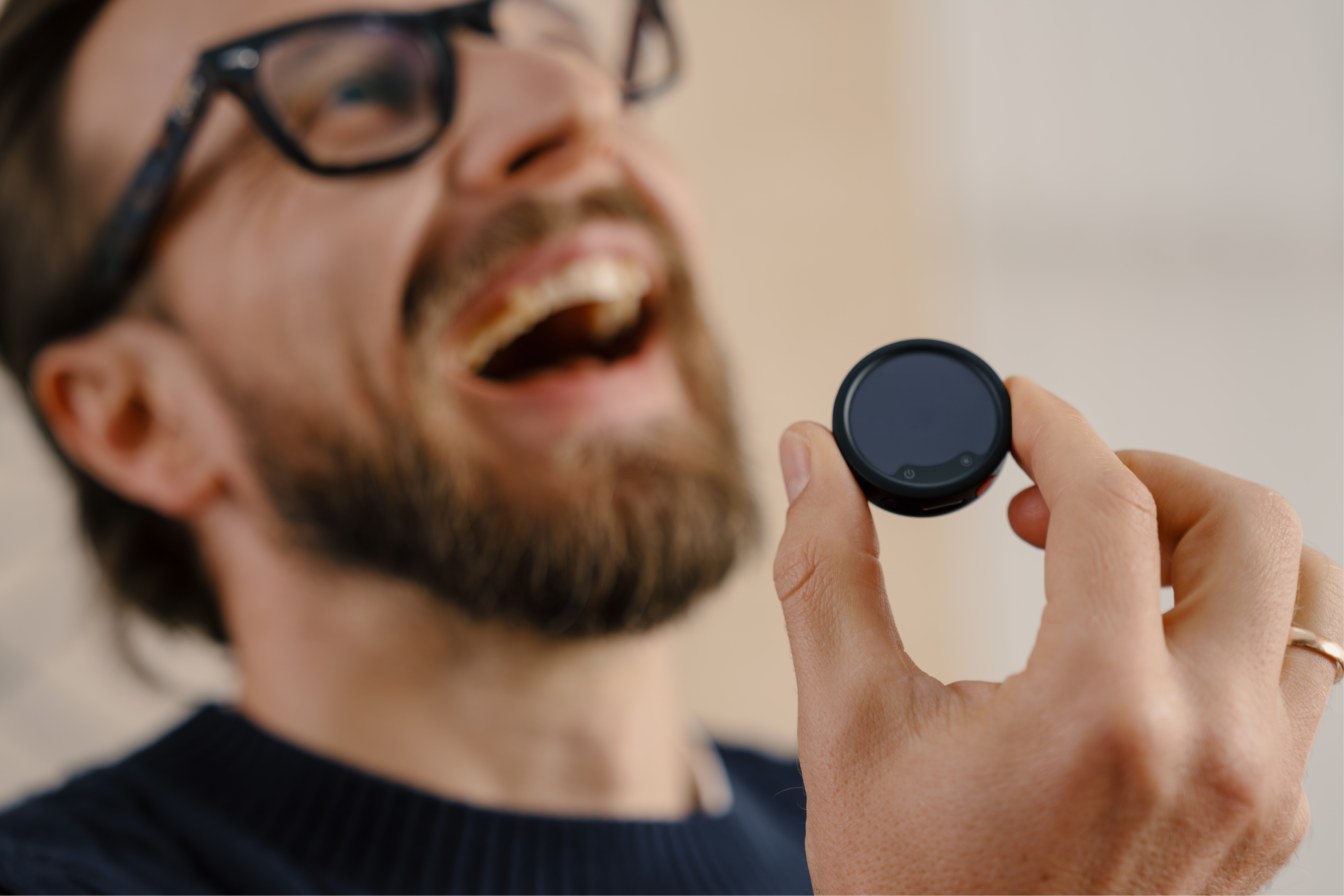
But modern systems, like Insta360 Mic Pro, are compact, intelligent, and designed for real-world use. They combine portability and precision to capture professional-grade audio efficiently.
When you speak, the microphone picks up your voice and sends it to a transmitter. That signal is converted into digital data, then wirelessly transmitted to a receiver connected to your recording device.
Within milliseconds, your audio is locked in. Clear, stable and synced to your footage.
Core Components
- Transmitter (TX): The transmitter is the starting point that takes the audio from your microphone and sends it wirelessly. Many modern transmitters are compact enough to clip directly onto your clothing, often with built-in mics for quick setups.
- Receiver (RX): This connects to your camera, smartphone or recording device. It receives the transmitted signal and converts it back into usable audio for your footage.
- Microphone: The piece that captures your voice. This can be a built-in mic on the transmitter or an external option (like a lavalier) for more discreet recording.
- Digital Signal Transmission: Instead of sending raw analog waves, the system converts audio into digital data. This allows for stronger resistance to interference, more stable connections, and cleaner sound overall.
What’s the Difference Between Digital and Analog Wireless Microphones?
If you’re thinking about making a microphone purchase, it probably comes down to two options: analog or digital. Let’s take a look at the two competitors head-to-head:
| Analog Systems | Digital Wireless System |
| Analog has done a perfectly acceptable job for decades, but it does have some limitations. While transmitting audio as continuous radio waves rather than digital is much simpler and avoids latency, you also run the risk of losing quality the further the distance between components. Radio waves also don’t much like large obstacles, which can also interfere with sound, leading to static or distortion. | Wireless, on the other hand, converts your voice into data and transmits it securely, before reconstructing it on the other end with minimal loss. The result is clean, consistent sound, even when you’re moving through signal-heavy environments. There’s less hiss, fewer dropouts and far more control over how your audio comes through. However, one slight downside is latency, but that can be minimized with the top-quality equipment. |
To sum up some of the main points:
- Sound Quality: Digital sound was once considered artificial compared to analog, but that’s no longer the case. Digital certainly now has the edge.
- Latency: Analog typically has zero latency (the time delay between sound and registration), while some digital devices have a slight delay. If in doubt, you can use a latency tester to find out how long.
- Interference: Digital devices often provide less interference and can also offer more security through encryption.
- Operating Distance: Analog systems will experience a degradation of quality the further the operating distance. Digital typically has a wide distance, but when it reaches its limit, you’ll experience a complete drop-off.
- Battery Life: Digital systems typically provide better battery life (sometimes up to 40% longer) because they require less power to transmit the signal.
For modern creators, the choice is less about preference and more about performance.
Digital wireless systems have become the standard because they deliver reliable audio in unpredictable conditions—whether you’re filming outdoors, navigating a crowded street, or capturing a one-take moment that can’t be repeated.
Wireless Microphone Systems: What Are They Used For?
Their versatility and adaptability make wireless microphone systems perfect for almost any situation, but here are some of the most common:
Filmmaking
Traditional filmmaking with complicated audio setups involving booms and sound engineers isn’t the only way to do things.
Increasingly, filmmakers use wireless microphones to record high-quality content without restricting movement. Whether it’s a scripted scene or a fast-moving documentary shot, they keep voices consistent and usable.
Vlogging & Content Creation
For many creators and vloggers who typically operate solo, wireless microphones aren’t just a nice idea. They’re an absolute must.
They allow you to move through environments without worrying about cables or bulky setups, keeping your workflow fast and flexible.
People often worry most about the visuals in the early days, but having the best wireless microphones for vlogging can be the difference between average content and viral content.

Live Streaming
Not too long ago, live-streaming meant studios and constraints.
Today, wireless microphones keep your setup clean and mobile, so you’re not stuck behind a desk. Whether you're presenting, demonstrating or interacting with your audience, your voice stays front and center without technical distractions.
Education & Presentations
Educators and presenters can now easily maintain a consistent volume and tone, whether that’s in lectures or workshops.
They help ensure every word reaches the audience, no matter the room size, but don’t shackle you to a lectern and an old-fashioned microphone.
Interviews & Journalism
The best interviews happen when people feel comfortable, as if they’re having a friendly catch-up with a friend. Bright lights and a boom mic inches from their face is pretty much the opposite.
With compact transmitters and dual-channel recording, you can capture both sides of a conversation clearly, even in unpredictable environments, while providing that all-important sense of ease.

Types of Wireless Microphone Systems
Lavalier (Clip-On)
Lavalier microphones are becoming increasingly popular and clip directly onto clothing, keeping the focus on the speaker while capturing clear, close-range audio.
They’re a go-to for interviews, talking-head videos and vlogs where clean dialogue matters most.
Handheld Wireless Microphones
Handheld microphones are often used in interviews, reporting and live events. They’re designed for direct voice capture, with a strong pickup pattern that isolates the speaker from surrounding noise.
Headset Microphones
Headset microphones wrap around the head, positioning the mic close to the mouth at all times. They’re perfect for high-energy scenarios like fitness instruction, stage performances or live presentations.
The Key Benefits of Digital Wireless Microphones
- Freedom of Movement: No cables. No limits. You can move naturally through a scene (walk, turn and react to everything) without ever thinking about your setup. It keeps your workflow fluid and what you’re doing authentic.
- Consistent Audio Quality: Digital transmission locks in clarity. Your voice stays crisp and balanced, even as you move through complex environments filled with potential interference.
- Compact, Creator-Ready Design: Modern systems are built small, and lightweight transmitters, pocket-sized receivers and streamlined controls make them easy to carry and faster to deploy when the moment hits.
- Multi-Device Compatibility: From action cameras to smartphones, digital wireless systems are designed to integrate seamlessly. That flexibility makes them a core part of any modern creator’s toolkit—especially when paired with a broader content creator starter kit built for mobility and speed.
What to Look for in a Digital Wireless Microphone System
Audio Quality
Without question, the most important. Look for systems that capture detail without introducing noise or distortion.
Features like built-in noise reduction and stable digital transmission make a noticeable difference, especially in outdoor or high-traffic environments.
Range & Signal Stability
Not all wireless systems are the same, and range and signal stability can vary.
A reliable system should maintain a strong connection even as you move away from the camera or encounter obstacles like walls or crowds.
Battery Life
One that people often overlook, but 12 hours into a shoot, you’ll wish that you hadn’t.
Again, variability across models is significant, but look for systems that offer extended recording time, along with fast recharging or charging cases that keep you ready between takes.
Ease of Use
You don’t want something with a complicated setup. You want to be able to hit record and go with the flow immediately.
Plug-and-play functionality, intuitive controls and automatic pairing can make all the difference.
Portability
And finally, look for a system that doesn’t hold you back. The whole point of wireless microphones is portability, and a portable system slips into your pocket or bag without adding bulk, ready whenever inspiration strikes.
Reliable Sound Starts with the Right Wireless Microphone System
People come for the moving image, but it's the audio that really brings content to life.
It doesn’t matter how engaging your interview subject or how majestic your travel video is. If the audio sounds like the entire piece was filmed inside a washing machine, people are simply not going to watch.
With Insta360 Mic Pro, you’ve got a wireless microphone system that means audio is a box that you know is checked and stays checked.
With AI-powered noise reduction, a three-mic array, 10 hours of standalone battery life, 32GB of memory, a 1,312ft (400m) range and phenomenal audio quality supported by a 32-bit float, this will be the last microphone you ever need.
Frequently Asked Questions
Are Digital Wireless Mics Worth It?
Yes, they absolutely can be. Digital wireless systems give you consistency, clarity and freedom in one package. You’re no longer tied to a fixed position or battling cable noise. Instead, you get clean audio that follows you. Easy.
Do I Need a Speaker To Use a Wireless Microphone?
Not necessarily. Wireless microphones are primarily used for recording audio directly into a camera, smartphone, or other device. In this case, no external speaker is required. Your audio is captured and synced with your footage, ready for editing or publishing.
Keen to keep up to date on Insta360 stories? Keep an eye on our blog and sign up for our mailing list. You can also contact our Enterprise team directly to see how 360 cameras can benefit your business.







%20(1).svg)


%20(1).svg)

.svg)