















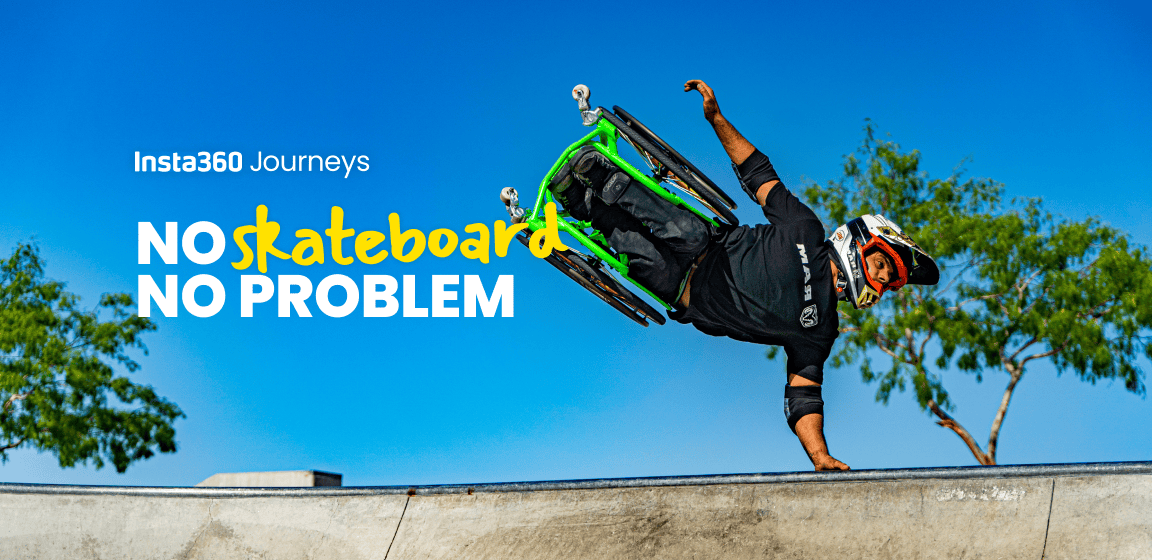


Aaron "Wheelz" Fotheringham didn't set out to create a new sport.
He grew up watching his friends at skateparks, learning tricks, falling, getting back up, and doing it again. He didn't have a bike or a board. But he did have a wheelchair.
At 14, he was the first person ever to land a backflip in one. At 18, it was a double. Now, he performs with Nitro Circus across the world and competes in WCMX—a sport that didn't exist until he made it real.
Finding his own way in
Born with spina bifida, Aaron couldn't join in the same way as his friends. Walking was painful, and by eight, he was using a wheelchair full-time. But that wasn't what held him back. Other people did—assuming what he could and couldn't do, or leaving him out entirely.
So he found his own way in. Learning how to move through the same spaces, carry speed, and make something built for everyday life handle ramps and gaps. There was nothing to follow, so everything came down to trial and error. Tricks didn't exist until he tried them, which also meant there was no one to show him how to land them. But he kept going back, pushing a little further each time, and working things out the hard way until they worked.
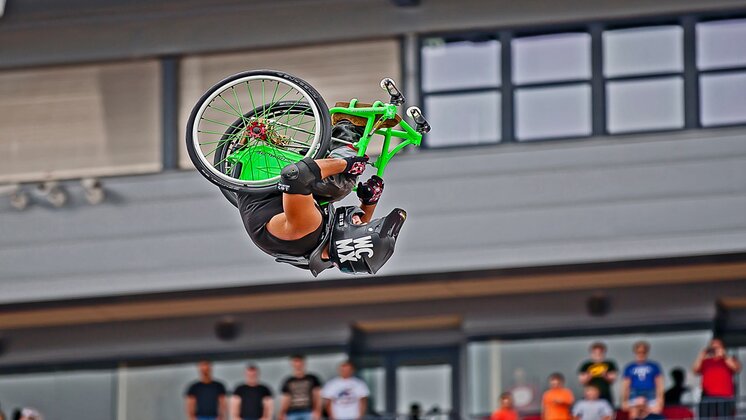
Along the way, his wheelchair stopped being a medical device. It became, as he calls it, a "shredical device."
Changing what was possible
Landing that first backflip changed everything. Not just because it was a world first, but because it shifted what felt possible. A lot of the limits around him turned out to be assumptions. If no one had done something before, it didn't mean it couldn't be done—just that no one had figured it out yet.
That mindset took him far beyond local skateparks, chasing bigger tricks. But even then, he was still watching from the sidelines. No one wanted to take the risk. Insurance issues, safety concerns, whatever version of "no" made the most sense at the time.
Then came Nitro Circus. They didn't try to slow him down or scale it back. They gave him a ramp.
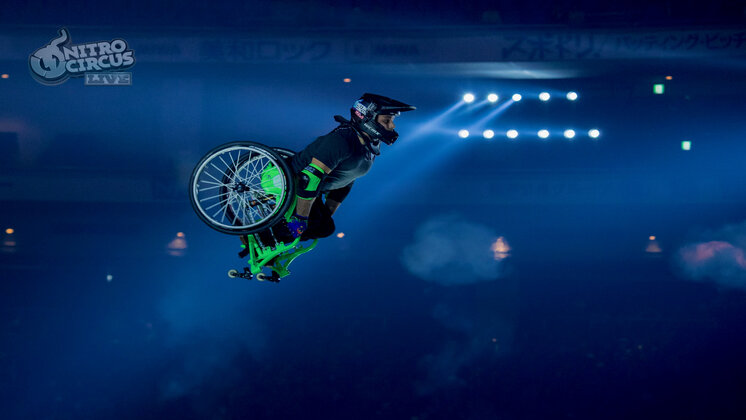
From there, everything opened up. Megaramps, 40-foot gaps, touring the world alongside riders pushing their own limits. What he was doing finally had a name—WCMX, or wheelchair motocross—and he was the one who defined it.
Built to take the hit
None of it works without the chair. His setup is heavily customised, built to take impacts most wheelchairs were never designed for, and tuned to respond the way a rider needs it to. Every adjustment is about control, durability, and making sure nothing gets in the way once he's in the air.
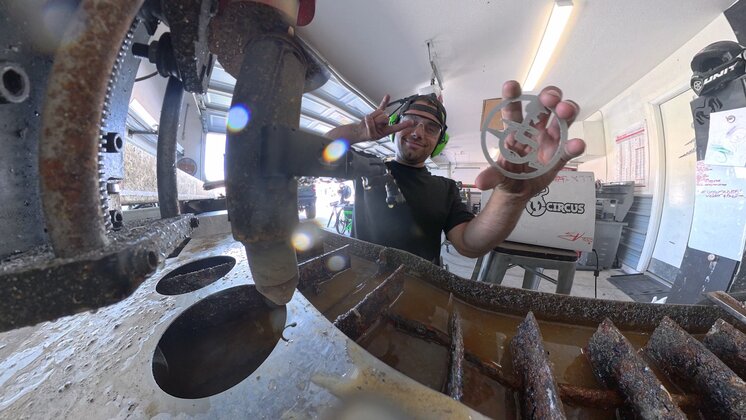
He also started building and refining parts himself, focusing just as much on how it looked as how it performed. One of his signatures is the Rolly Chair 3000, a huge metal wheel that allows him to rotate a full 360 degrees. And look cool doing it.
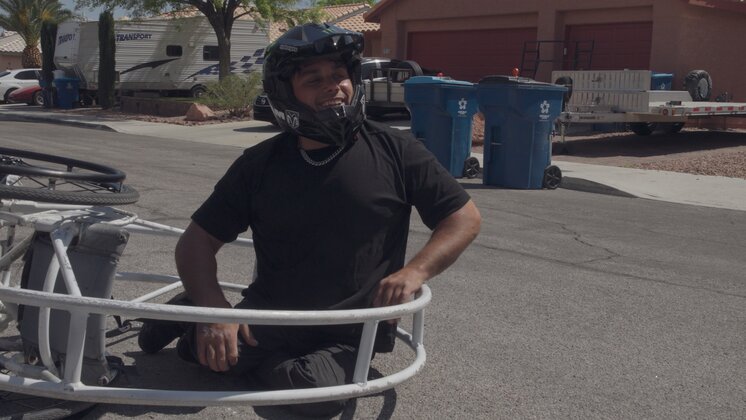
"If people are going to stare, might as well make it look sick."
Filming without slowing down
When you're trying something no one's done before, there isn't always a second attempt. You either land it or you don't.
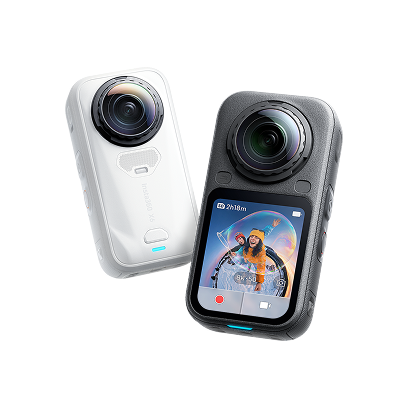
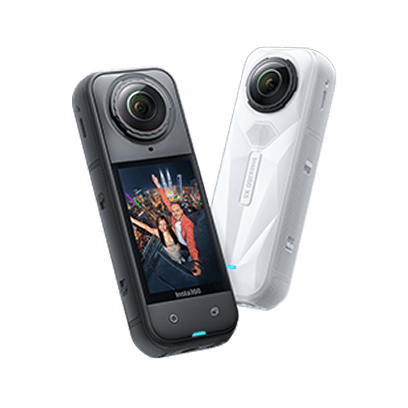
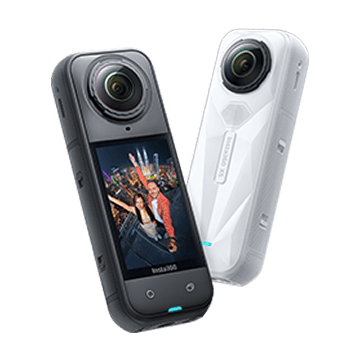
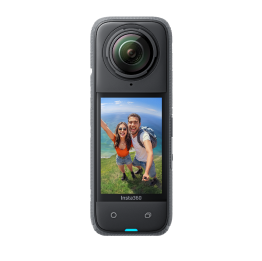
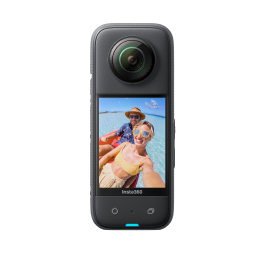
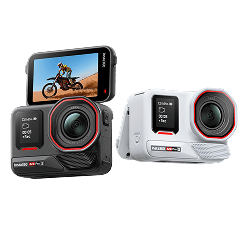
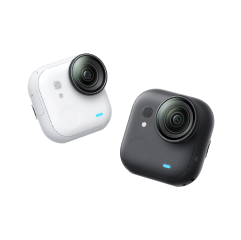
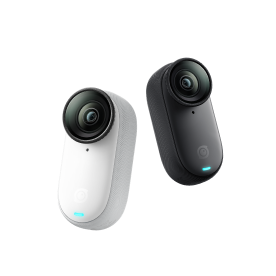
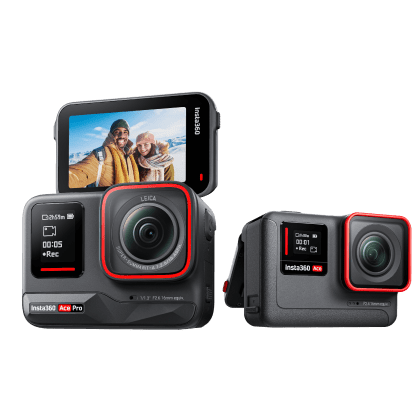
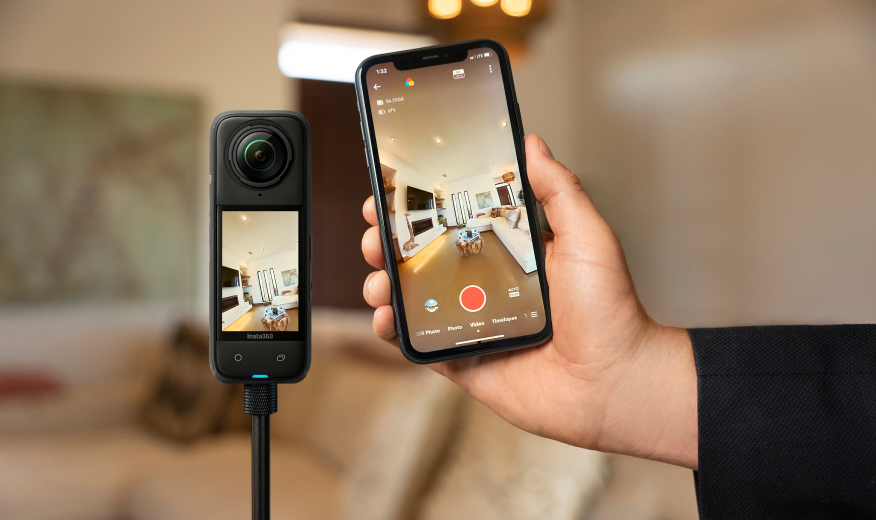
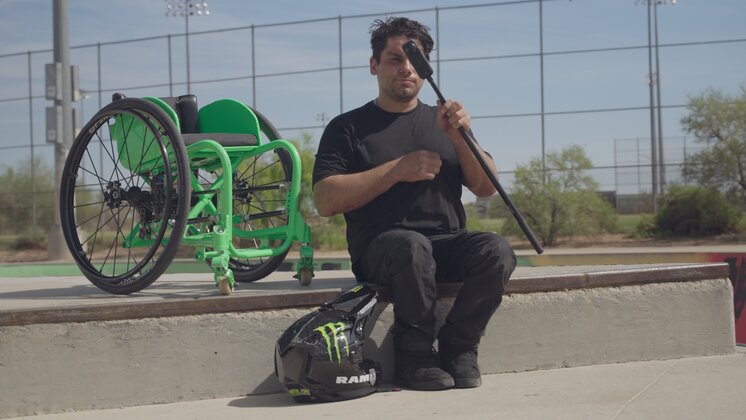
That same approach carries into how he films—set it up, let it run, don't overthink it. Insta360 X5 fits into that naturally. It can take the hits, and because you can swap the lenses, not just protect them, it opens up more ways to shoot without changing how he rides.
Still riding
Wheelz didn't start out trying to invent anything. He just wanted to ride, and kept going long enough that something grew out of it.
"When life gives you a wheelchair, find a skatepark."
The Insta360 Vision Awards supported by Leica are now open. Join creators worldwide for a chance to win from an US$80,000+ prize pool, including Leica cameras and Insta360 gear. Got a story to share? Email yours to communitystories@insta360.com and win up to US$50.





%20(1).svg)


%20(1).svg)

.svg)