




















Key Takeaways
The right audio setup depends on your production needs. Mic Pro is the flagship choice for professional workflows and multi-cam setups, while Mic offers the best balance of performance and value with unique expandable storage. For creators who want maximum portability and simplicity, Mic Air offers an ultra-light, plug-and-play solution.
Insta360 Mic Pro vs Mic vs Mic Air
The main differences between these three models lie in their storage options, display features, and intended use cases. Mic Pro focuses on professional versatility, Mic emphasizes expandable memory and advanced features, and Mic Air prioritizes everyday ease of use.
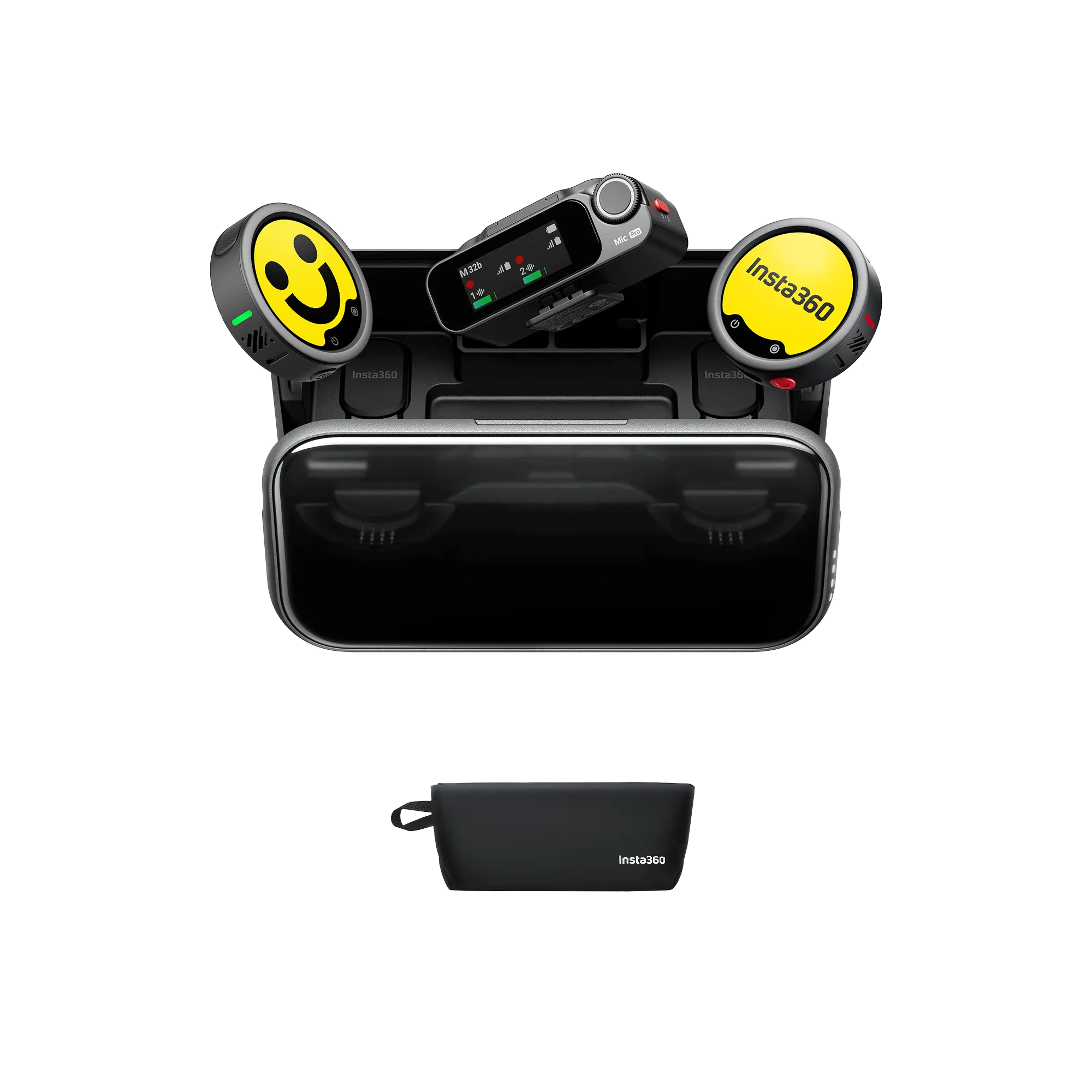
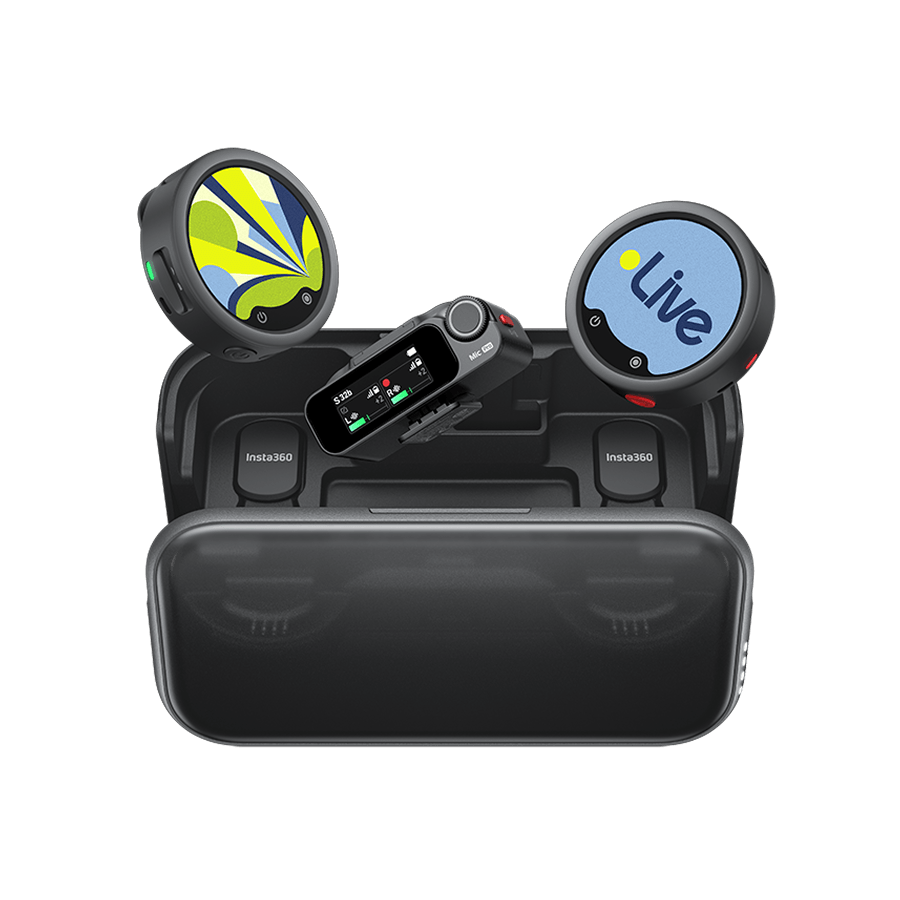
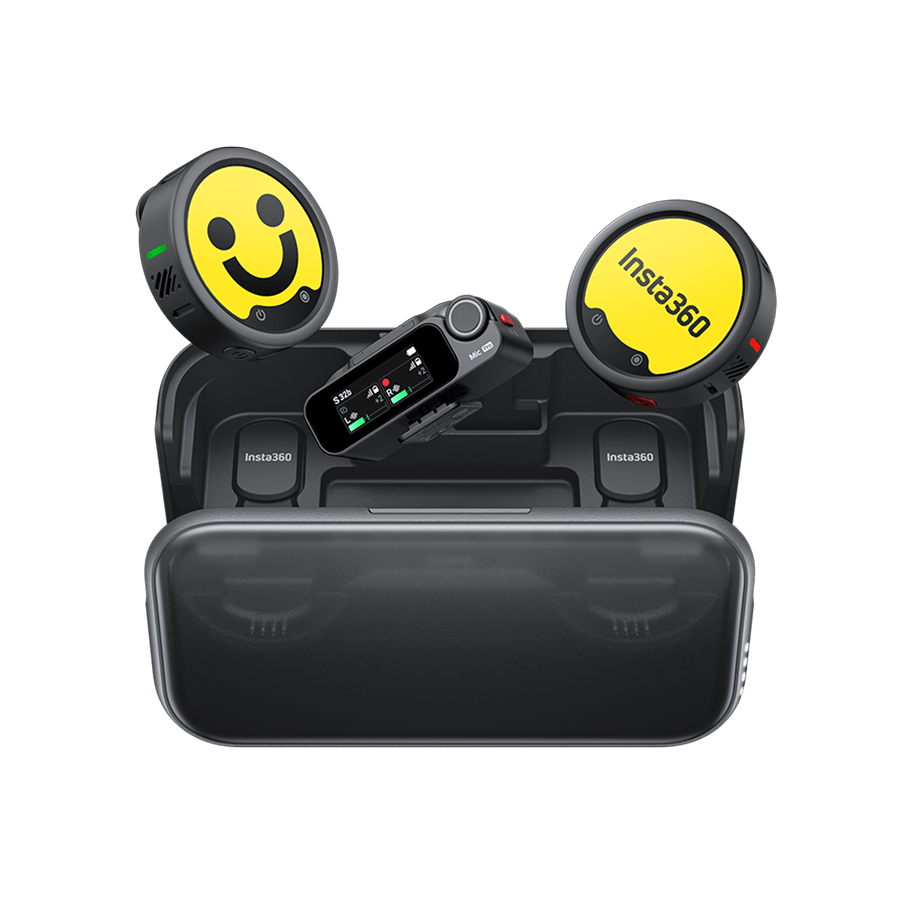
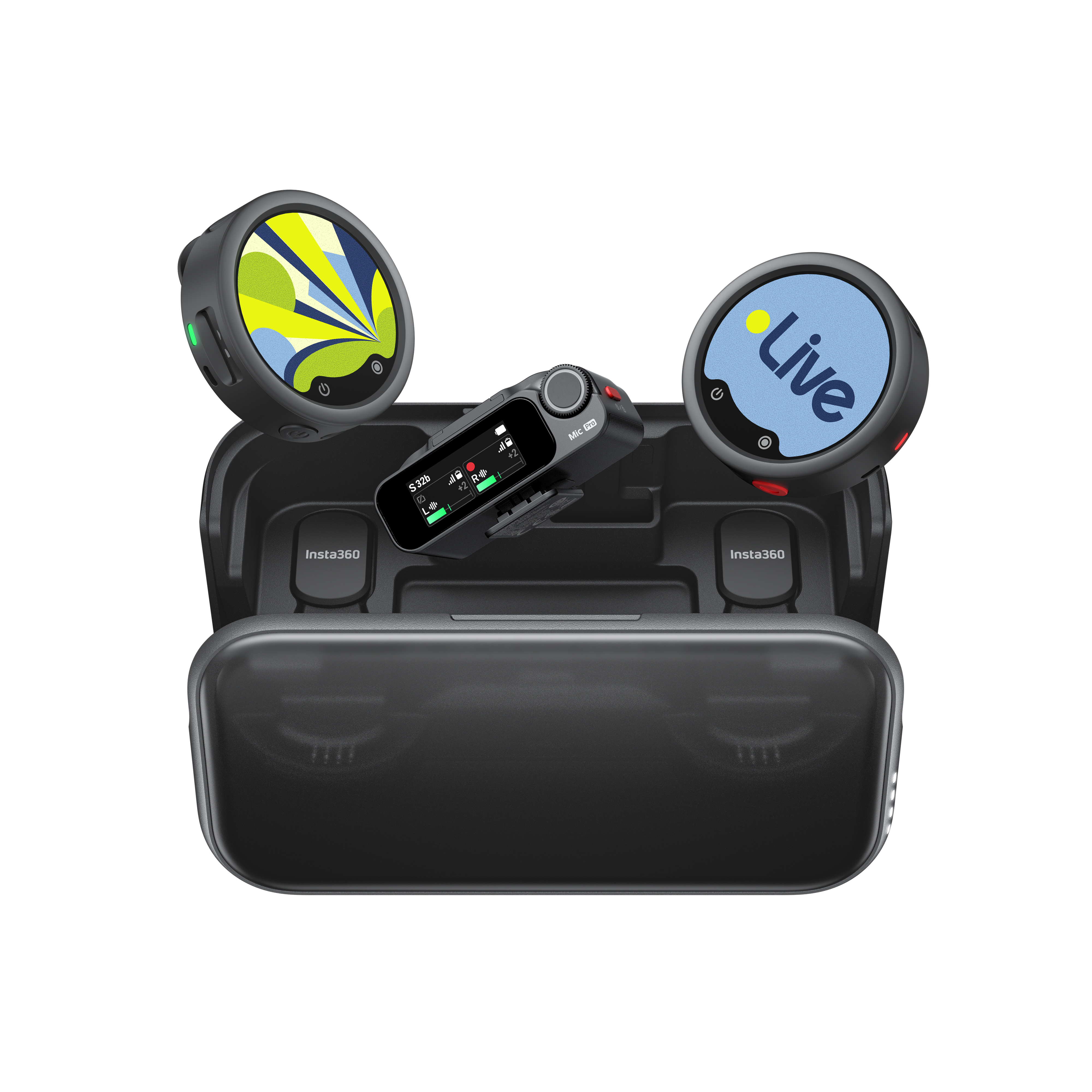
Insta360 Mic Pro (2TX + 1RX + Charging Case)
The professional flagship.
Built for demanding productions that need flexible, reliable multi-person audio.
Best for
Professional creators, commercial productions, interviews, and more complex multi-person or multi-camera workflows.
Pros
- Individual audio capture for each speaker
- Customizable E-Ink display
- Charging case improves portability
Cons
- More than the average solo creator typically needs
Insta360 Mic (2TX + 1RX)
The advanced all-rounder.
A flexible wireless system that balances creator-focused features, ease of use, and price.
Best for
Content creators, vloggers, and solo creators looking for high-quality wireless audio, flexible recording options, and strong value.
Pros
- microSD-enabled internal recording, including 32-bit float with a compatible card
- Flexible connectivity across phones, cameras, and compatible Insta360 cameras
- Strong balance of creator features, ease of use, and price
Cons
- Lacks some of Mic Pro's advanced professional production features
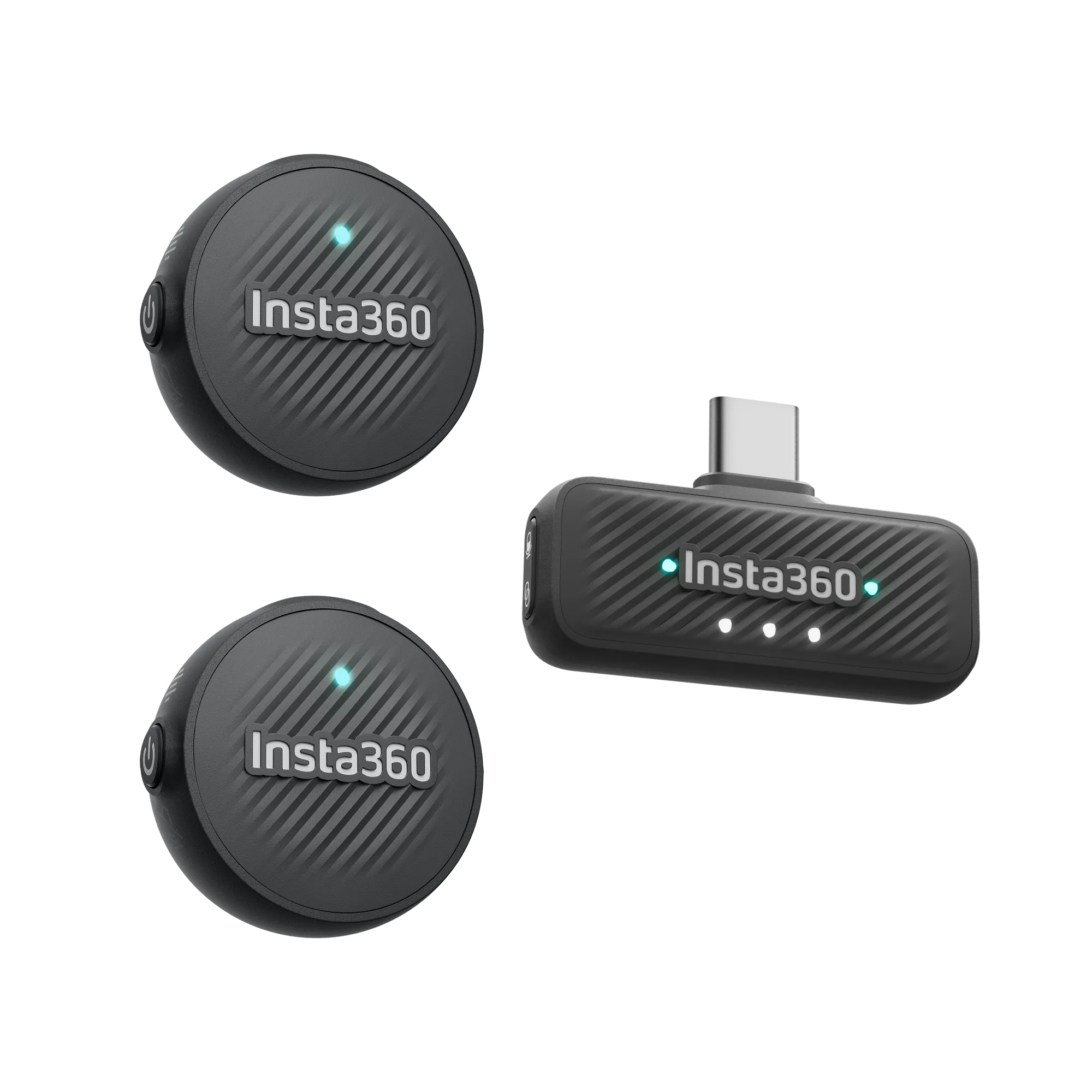
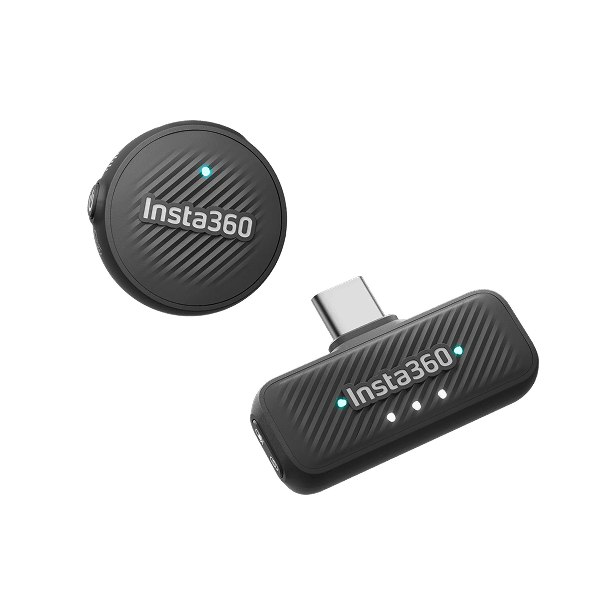
Insta360 Mic Air (2TX + 1RX)
Simple and ultra-light.
A compact, easy-to-use wireless system for everyday mobile recording.
Best for
Entry-level creators and mobile vloggers seeking maximum simplicity in everyday recording.
Pros
- Compact and lightweight
- Great value
- Easy to use
Cons
- No E-Ink display
Key Specs Compared
Mic Pro and Mic share many flagship features like 32-bit float recording and AI noise canceling, while Mic Air is a streamlined version designed for mobile-first workflows. The most significant hardware differences include the E-Ink display on Mic Pro and the microSD slot on Mic.
| Insta360 Mic (2 TX + 1 RX) | Insta360 Mic Pro (2 TX + 1 RX) | Insta360 Mic Air (1 TX + 1 RX) | |
| Transmitter Display | 1.2" 6-Color E-Ink Display | 1.22" 6-Color E-Ink Display | - |
| Transmitter Weight | 19.4g | 19.7g | 7.9g |
| Operating Time | Up to 34 hours (with charging case) | Up to 30 hours (with charging case) | Up to 10 hours |
| Pickup Modes | Omnidirectional | Omnidirectional/ Super-directional/ Cardioid/Figure-8 | Omnidirectional |
| Internal Storage | Depends on microSD card size | 32GB | - |
| Internal Recording | 32-bit float/24-bit (Insert microSD card to enable) | 32-bit float/24-bit | - |
| Fast Charging | TX: 80% in 22 mins RX: 80% in 30 mins | TX: 80% in 24 mins RX: 80% in 30 mins | - |
In practice, the choice between Mic Pro and Mic often comes down to storage preference. Mic Pro offers the security of built-in memory, whereas Mic allows you to swap cards for unlimited recording time. Mic Air removes these complexities to offer the lightest possible footprint for creators on the move.
Insta360 Mic
Mic is the ideal choice for YouTube collaborators, podcasters, and vloggers who need high-end audio without the flagship price tag. This model excels in scenarios where you need long-form recording, as the microSD slot allows you to expand storage indefinitely without offloading files mid-shoot.
Users will benefit from the same NPU-powered AI noise canceling found in the Pro model, ensuring clean vocals even in busy environments. While it lacks the customizable E-Ink display, Mic remains a powerful, scalable solution that supports cross-generation connectivity with Mic Pro.
Insta360 Mic Pro
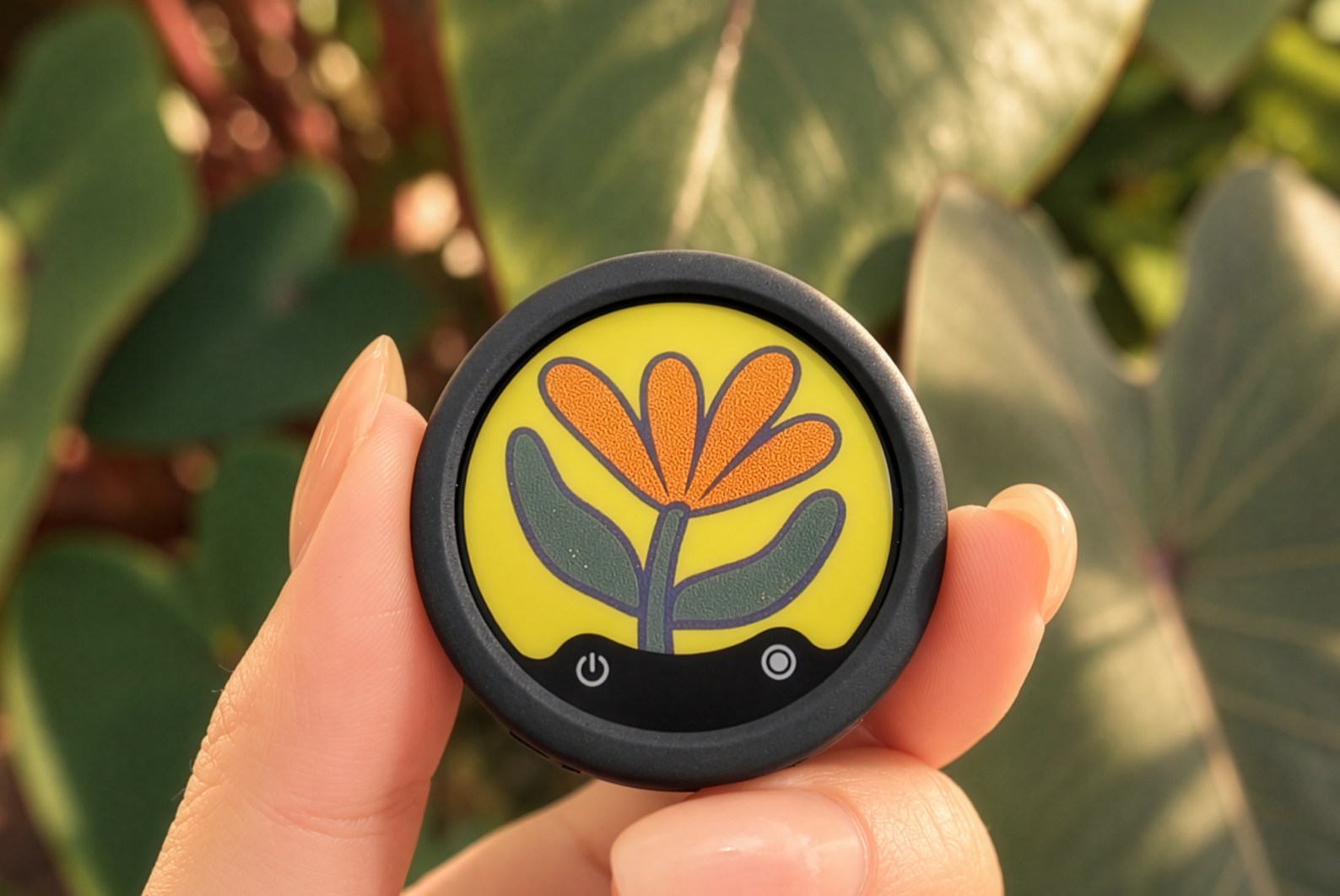
Mic Pro is designed for creators who require a highly flexible and visual audio workflow. The customizable E-Ink display is a standout feature, allowing you to monitor status or show a brand logo even when the unit is powered off, which is particularly useful for professional street interviews and trade shows.
With 32GB of built-in storage and the ability to pair four transmitters to a single receiver, Mic Pro earns its place in commercial productions. The main trade-off is the higher price point, which is justified for those who need the most robust, feature-rich system Insta360 offers.
Insta360 Mic Air
Mic Air is the best fit for mobile vloggers and entry-level creators who want to improve their audio quality without managing complex settings. This model prioritizes speed and portability, making it perfect for "run-and-gun" social media content where a heavy setup would be a hindrance.
By focusing on a USB-C workflow and removing internal recording, Mic Air stays incredibly light and simple. It is the perfect choice for someone who wants to plug a receiver into their phone or camera and start recording immediately, though professionals may miss the 32-bit float backup options found on the higher-end models.
Which Insta360 Wireless Microphone Should You Choose?
The best microphone for you depends on your primary shooting environment and how much control you need over your audio files.
- For Everyday Vlogging & Travel: Mic Air offers the best portability and ease of use.
- For YouTube Collaborations & Podcasts: Mic is the top choice due to its expandable storage and dual-speaker support.
- For Professional Interviews & Multi-Cam Shoots: Mic Pro is the essential tool for its E-Ink monitoring and 4-to-1 configuration.
- For Insta360 Camera Users: All three models support Insta360 Direct Connect, but Mic Pro and Mic offer the most advanced integration.
Insta360 Mic vs Mic Pro vs Mic Air FAQs
What is the main difference between Insta360 Mic and Mic Pro?
The primary difference is storage. Mic Pro features 32GB of built-in memory and Mic uses a microSD card slot for expandable storage.
Which Insta360 microphone is best for vlogging?
For most vloggers, Mic offers the best balance of features. However, if you prioritize a lightweight setup for mobile vlogging, Mic Air is the most convenient option.
Which Insta360 microphone is best for travel?
Mic Air is best for travel due to its ultra-light design and simplicity. If you are a travel filmmaker who needs backup audio, Mic is a better choice because of its internal recording capabilities.
Which Insta360 microphone is best for interviews?
Mic Pro is the best for interviews, especially group setups, as it allows you to connect up to four transmitters to one receiver and features an E-Ink display to represent your personal brand.
Are Mic, Mic Pro, and Mic Air compatible with my Insta360 camera?
Yes, all three models feature deep integration with the Insta360 ecosystem. They support Insta360 Direct Connect for high-quality wireless audio with compatible cameras like Luna Series, X6, X5, X4 Air, Insta360 Ace Pro 2, GO Ultra, and others.
Keen to keep up to date on Insta360 stories? Keep an eye on our blog and sign up for our mailing list. Got a story to share? Email yours to communitystories@insta360.com and win up to US$50.
Your shot. Your world. The Insta360 Global Awards 2026 supported by Leica are officially open. Join creators worldwide and compete across six categories (Street, Travel, Life, Portrait, Sports, and Night) for your share of a US$150,000+ prize pool, including cash prizes and Insta360 gear. Submit your best video or photo at insta360.com/awards.