















































There are some sports that test our mettle more than others. Some that strike fear into us, leaving us shaking and wondering why we ever began in the first place. But these sports are also those that bring us closer to something more elusive—that feeling of being on the edge of danger, of knowing that your fullest concentration is required, otherwise something could go catastrophically wrong. These are sports that can leave us feeling sick to our stomachs but which also make us feel more alive than ever.
1. Skydiving
Is there anything more extreme than hurling yourself out of an airplane? The plane door opens, and you inch towards it, take a gulp, desperately try to steady your nerves—and go. Skydiving is the purest form of free-fall, launching from altitudes that can exceed 10,000 feet before a parachute slows the descent. For roughly 30 to 60 seconds, you’re suspended between sky and earth, accelerating toward the ground at over 100mph. It’s controlled chaos—and one of the most extraordinary things that a human can do.
2. BASE Jumping
OK, there is something more extreme than skydiving, and it’s BASE jumping. Athletes leap from fixed objects like buildings, antennas, spans (bridges) and Earth (cliffs), which form the acronym “BASE.” It was popularized in 1979 when a California skydiver, Carl Boenish, and four other jumpers successfully jumped in Yosemite National Park. With far lower launch points than skydiving, there’s little room for error and only seconds to deploy a parachute. It’s simple, raw—still technically illegal in many spots—but what a ride.
3. Wingsuit Flying
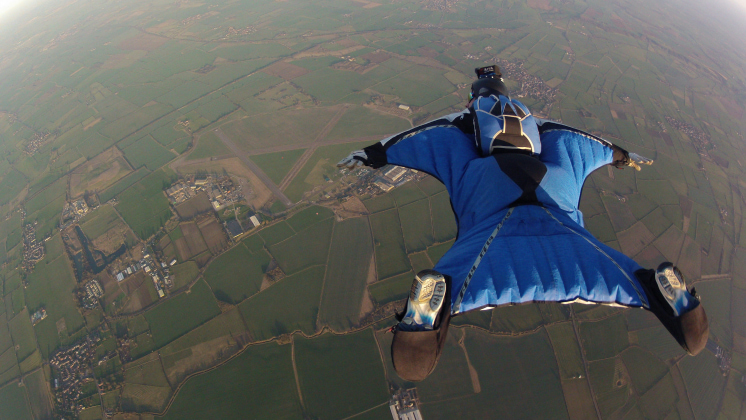
If you thought things couldn't possibly go any further, Wingsuit BASE jumping involves specially designed suits that can glide through canyons, mountain ridges and valleys, more like a missile than a human being. Here, athletes can travel at speeds in excess of 120mph through terrain where one false move can be deadly. It is one of the most mentally demanding sports on the planet. This one isn’t for the novice or the faint of heart.
4. Big Wave Surfing
From big air to big waves—this is surfing at its most terrifying and awe-inspiring. Big wave surfing began, as the story goes, at Waimea Bay in Hawaii in the 1950s when a group of tenacious surfers began taking on waves sometimes 25–30 feet. Fast-forward to the 1990s, and surfers like Laird Hamilton upped the game and took on 50+ foot waves. The world record is currently 86 feet surfed by Sebastian Steudtner at Nazaré in Portugal.
5. Rock Climbing
For something slower, more earthbound and yet still extreme to the max, rock climbing has become akin to a religion to many. Whether scaling towering outdoor cliffs or tackling overhanging sport routes, climbers rely on technique as much as muscle. It looks so much easier when you’re not on the rock, and for those with a severe fear of heights, this might have to be a pass. It’s thought that rock climbing goes back to the late 19th century in Europe, but it’s safe to say a few things have changed.
6. Ice Climbing
Why climb rocks when you can climb ice? Ice climbing is one of those sports that seems to defy the rules of basic common sense. Ice is horribly slippery, so why attempt to climb it? And yet, the purest adore it. Athletes ascend frozen waterfalls and icy faces using crampons and ice tools, carefully anchoring each movement into brittle terrain. Conditions shift constantly—melting edges, cracking surfaces, falling fragments—making it a nerve-wrangling but deeply rewarding experience.
7. Downhill Mountain Biking
Loose gravel. Blind turns. Gravity pulling you faster with every second. Are those brakes working OK? Downhill mountain biking is all about speed and precision over rugged terrain. Riders launch off drops, carve through tight switchbacks and navigate roots, rocks and steep descents at high velocity. There’s no pause button—momentum is constant, and reaction time is everything. Chaos and control are sometimes edges of the same sword. Wild, thunderous and great fun.
8. Backcountry Skiing & Snowboarding
You could take the ski lift to the top of the mountain and ski or snowboard down the carefully manicured run. It’s the fun and easy way. Or you take the lift as high as it goes and then trudge out into the wilderness; away from the groomed runs, away from people, away from civilization. Welcome to the backcountry, where the powder is deep, and the descents are epic. It demands technical skill, physical endurance and constant awareness of the mountain environment, with avalanches a deadly possibility. But for the brave, the rewards are astonishing.
9. Whitewater Rafting
Don’t confuse this with the gentle paddling you might see on docile rivers. Whitewater rafting is fast and furious. Classified from gentle Class I flows to violent Class V torrents, these rivers demand strength, comm…” with “From gentle Class I flows to violent Class V torrents, these rivers demand strength, communication and split-second reactions. One wrong paddle stroke can spin the raft sideways into churning water. It’s unpredictable, powerful and fueled by the raw force of nature.
10. Motocross
The engine howls, mud flies and wheels power through the dirt. Motocross is high-speed racing over rough, purpose-built courses packed with jumps, berms and sharp elevation changes. Riders launch into the air, land hard and power through tight corners inches from competitors. It’s explosive and unforgiving—where balance, throttle control and reaction time must align perfectly. Dating back to the UK in the early 1900s and originally called “Scrambles,” motocross has stormed around the world.
Filming Extreme Sports: 5 Tips
1. Use the Right Camera for the Environment
Extreme sports live in extreme environments, so you want to make sure you have a camera that withstands anything but also gets the shots that you’re looking for. Cameras like Insta360 X5 and Insta360 X4 deliver 360 recording, which means you can record from all angles and then choose what’s best after. Sports videography is complicated, but add in high speed and gnarly angles, and you’ll need the very best to keep up.
2. Shoot at High Frame Rates
Cameras that have a wide variety of frame rates give you the best flexibility. As a general rule, film most action at 60FPS, but then, for dramatic slow motion—big jumps, crashes avoided by inches, water exploding off a board—switch to 120FPS or even 240FPS if your camera has it. For high-impact clarity that can shoot at 1080p at 240FPS for ultra-slow motion, Insta360 Ace Pro 2 is a phenomenal camera that also works well in low-light situations.
3. Stabilization Is Non-Negotiable
Movement in extreme sports is inevitable, but don’t accept stomach-turning jerking. Built-in stabilization helps maintain clarity even on rough terrain. If you’re filming with a smartphone, tools like Insta360 Flow 2 Pro keep footage fluid while tracking fast-moving subjects.
4. Plan Your Shot Before the Drop
When there’s only one run, one jump, one descent, it can be infuriating if your chosen angle doesn’t work out and that action shot falls flat. This is where plenty of planning and careful consideration pays off. If you can, scout the terrain beforehand, study the light and think carefully about the whole movement from start to finish. Great sports photography doesn’t appear like magic. The pros take their time to achieve those astonishing shots.
5. Never Compromise Safety for a Shot
Safety before the shot—never the other way around. If you don’t live to bring the footage back, then who cares how extreme it was? No clip is worth risking injury or worse, so secure mounts properly and stay clear of active lanes, landing zones and unstable terrain. Plan your angles before the action begins and don’t be scared to turn back if something just doesn't feel quite right. If you want something that you can just set and forget, try Insta360 GO Ultra or Insta360 GO 3S, both small, lightweight and remarkably easy to record outstanding footage.
Frequently Asked Questions
What Are the Top 10 Hardest Sports?
It’s difficult to define the “hardest” sports, but those that combine extreme physical and mental effort, like martial arts, ice hockey, rock climbing, gymnastics and boxing would be in there. However, what is “hard” for one person might be easy for another.
Which Extreme Sport Is the Most Popular?
Skiing, snowboarding and surfing consistently rank among the most popular extreme sports worldwide with millions who do them.
What Are Some Extreme Water Sports?
Extreme water sports range from big wave surfing and whitewater rafting to kite boarding and cliff diving. Each is technically demanding and dangerous when not done properly, but a lot of fun when you know how to do them.
Ready To Capture Your Extreme Moments With Insta360?
There are sports—and then there are extreme sports. They might not be for everybody, but for the select few who choose to walk on the wild side, the thrill simply can’t be matched. Whether it’s hurtling through a canyon in a wingsuit, ascending a giant slab of ice or paddling out to meet waves higher than a two-story house, these are the sports that require a gulp of bravery before starting.
If you’re going to do extreme things, you want to have it all on camera, but this is where things can get tricky. Bulky gear is impractical. You need minimal size, minimal weight but maximum performance. And this is where Insta360 action cameras come in to help you capture it all. Whatever your extreme, these cameras capture every inch in all their wild, crazy, “I can’t believe you’re doing that” glory.






%20(1).svg)


%20(1).svg)

.svg)