

















There’s nothing quite like those early hiking mornings, when the air is still cold, but that coffee sends a shiver of excitement through you. You pack everything, check, then re-check. Then it’s time to go. You swing the backpack onto your shoulders, tighten the straps, and step outside.
The adventure begins.
Maybe you’re venturing into the mountains with a distant peak as your final destination. Perhaps it’s a coastal route with the raging ocean battering the cliffs. Wherever your hiking and backpacking takes you, these are the moments to savor.
But they’re also the kind of moments you wish you could capture exactly as they happened; the sweeping views, the quiet forests, the feeling of standing on a summit after hours of climbing. For hikers and backpackers, gear needs to be lightweight, durable, and versatile enough to handle unpredictable conditions. Bulky equipment slows you down, while fragile setups struggle with rain, dust, and rocky terrain. The best cameras for the trail balance powerful image quality with portability, letting you focus on the journey instead of your gear.
How to Choose the Best Camera for Hiking and Backpacking
When you’re out on the trail, the best camera isn’t always the one with the biggest sensor or the highest resolution. This is where the normal rules don’t always apply. Instead, you want to think about weight, portability, durability, and ease of use.
Weight & Portability
Who cares how great the camera is if it feels like you’re carrying a small child in your backpack. What starts out as “this is a little heavy” eventually morphs into you staggering along cursing your enormous, heavy camera. Many outdoor experts recommend keeping your loaded backpack under roughly 20% of your body weight to maintain comfort on long hikes, and keep in mind food, water, gear, etc. Go for a small, lightweight camera if possible.
Durability & Weather Resistance
When you’re out walking you are very much at the mercy of the elements. One moment you’re hiking in sunshine, the next you’re dealing with wind, rain, or blowing dust. Rugged cameras built for outdoor use make a huge difference when conditions turn unpredictable. Go for something that can withstand rain or splashes, dirt, dust, temperature changes, and the odd bang or drop.
Ease of Use
You can get lost in camera features, but when you’re out hiking, ideally you want something that you can reach for quickly, start shooting, and not have to worry too much. This ease of use might include a mount where your camera is attached to your backpack, making life even more straightforward.
Why Weight Matters More Than Megapixels on the Trail
Let’s get back to weight. When you drive somewhere to shoot some footage, you have the luxury of being able to pile as much as you need into your vehicle. Traditional photography setups, such as large camera bodies, multiple lenses, and tripods, can quickly add several pounds to your pack, but you can afford to go heavy because you have the convenience of transportation.
However, with hiking, things are very different. When you’re combining hiking with photography or videography, it’s not entirely about the image and video quality; it’s also about the quality of the hike. It’s about the experience of being out in the wild, living life, roaming freely. The moment that you start cramming heavier cameras or more weight into a backpack, you risk jeopardizing your entire experience.
So what’s the magic formula? Unfortunately, there isn’t one. Each person can handle a different amount of weight, so it’s up to the individual to assess what they can carry for 10 or 20 miles. All we’ll say is choose a camera that doesn’t impact your hike. It should be there to complement your experience, not weigh it down.
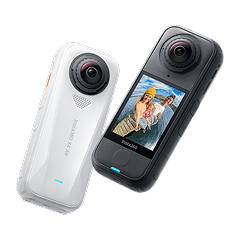
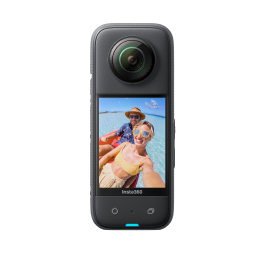
Best 360 Camera for Hiking: Insta360 X5
There are some moments on the trail that are impossible to shoot with a traditional camera. It doesn’t matter what angle you shoot from; you can never quite capture the full glory of that sweeping valley.
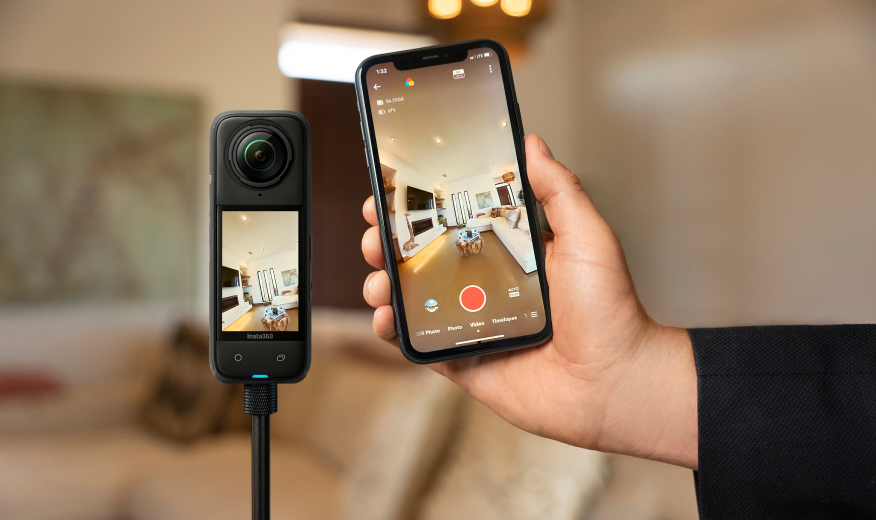
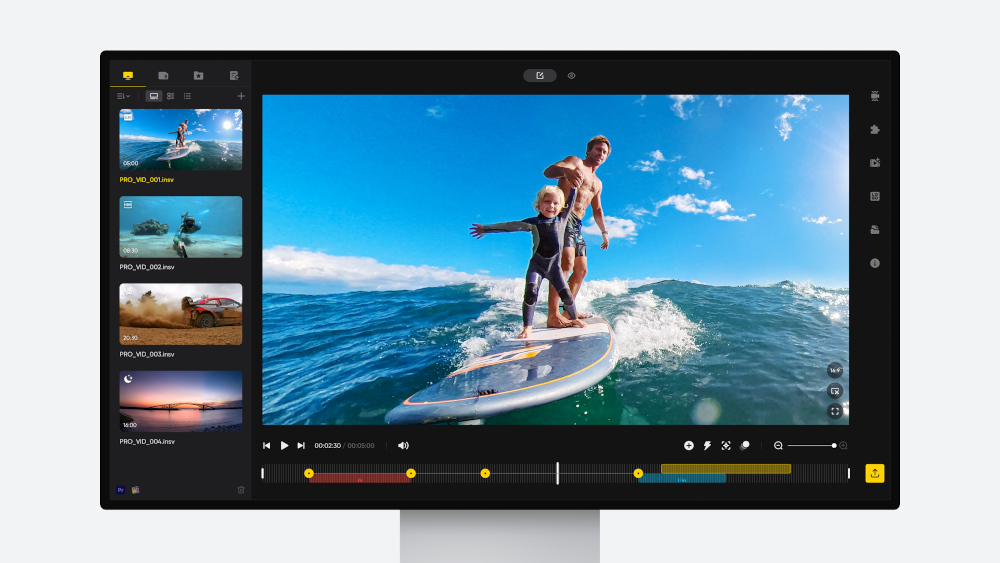
That’s where a 360 camera completely changes the experience. Insta360 X5 is built for hikers who want to capture everything around them without constantly adjusting angles or stopping to set up shots. With 360 capture, the camera records the entire environment at once, meaning you can reframe the footage later while choosing the best shots.
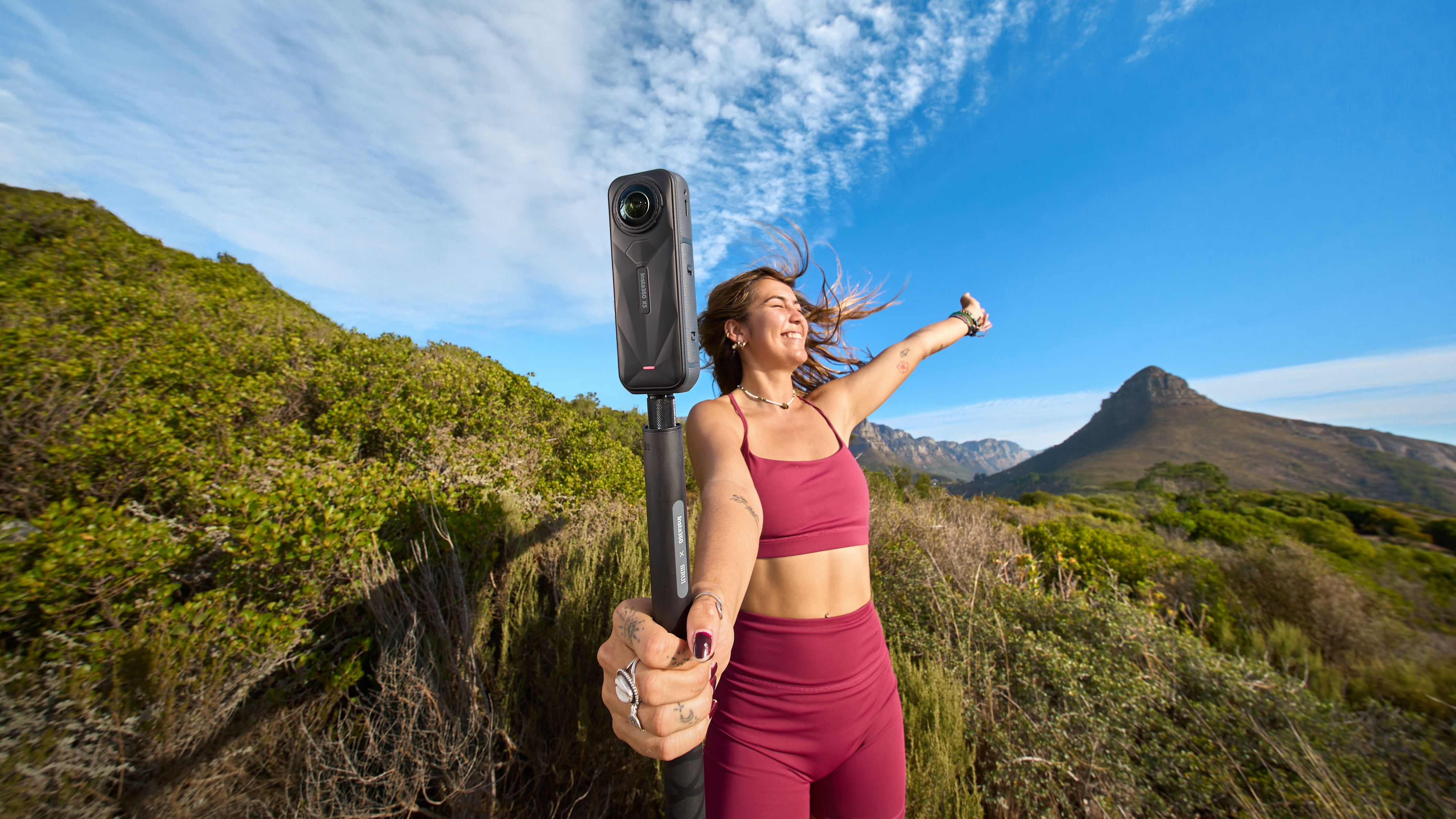
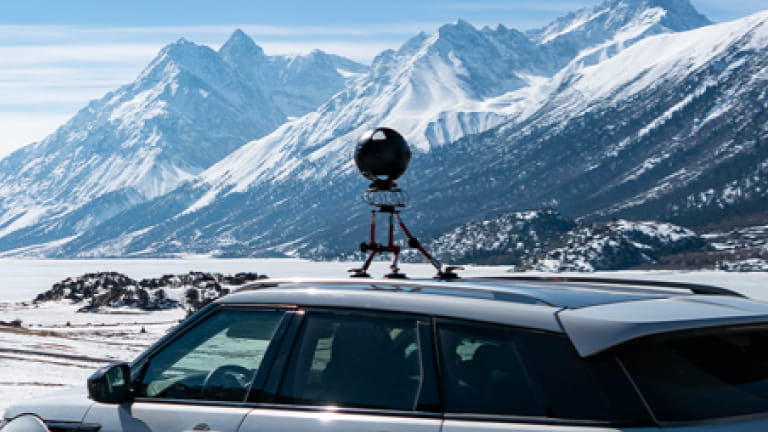
Mounting options also make the camera easy to integrate into your setup. A backpack strap mount or hiking pole mount allows you to film hands-free while hiking, while an extended selfie stick opens up creative angles for wide landscape shots. If you want to expand your filming possibilities on the trail, exploring different action camera mounts can unlock new perspectives that traditional cameras simply can’t capture.
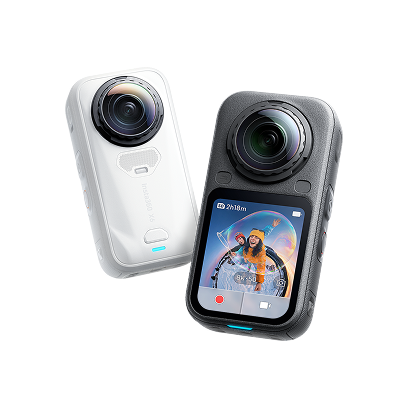
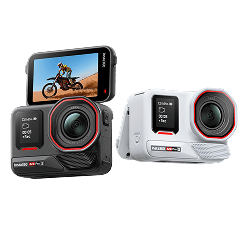
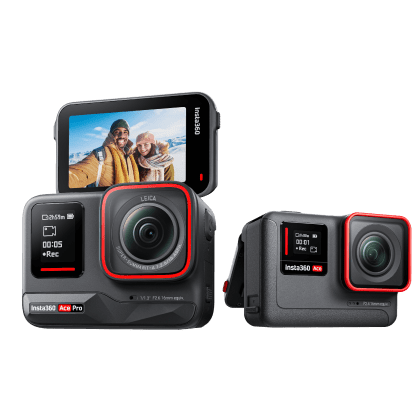
Best Lightweight Action Camera for Backpacking: Insta360 Ace Pro 2
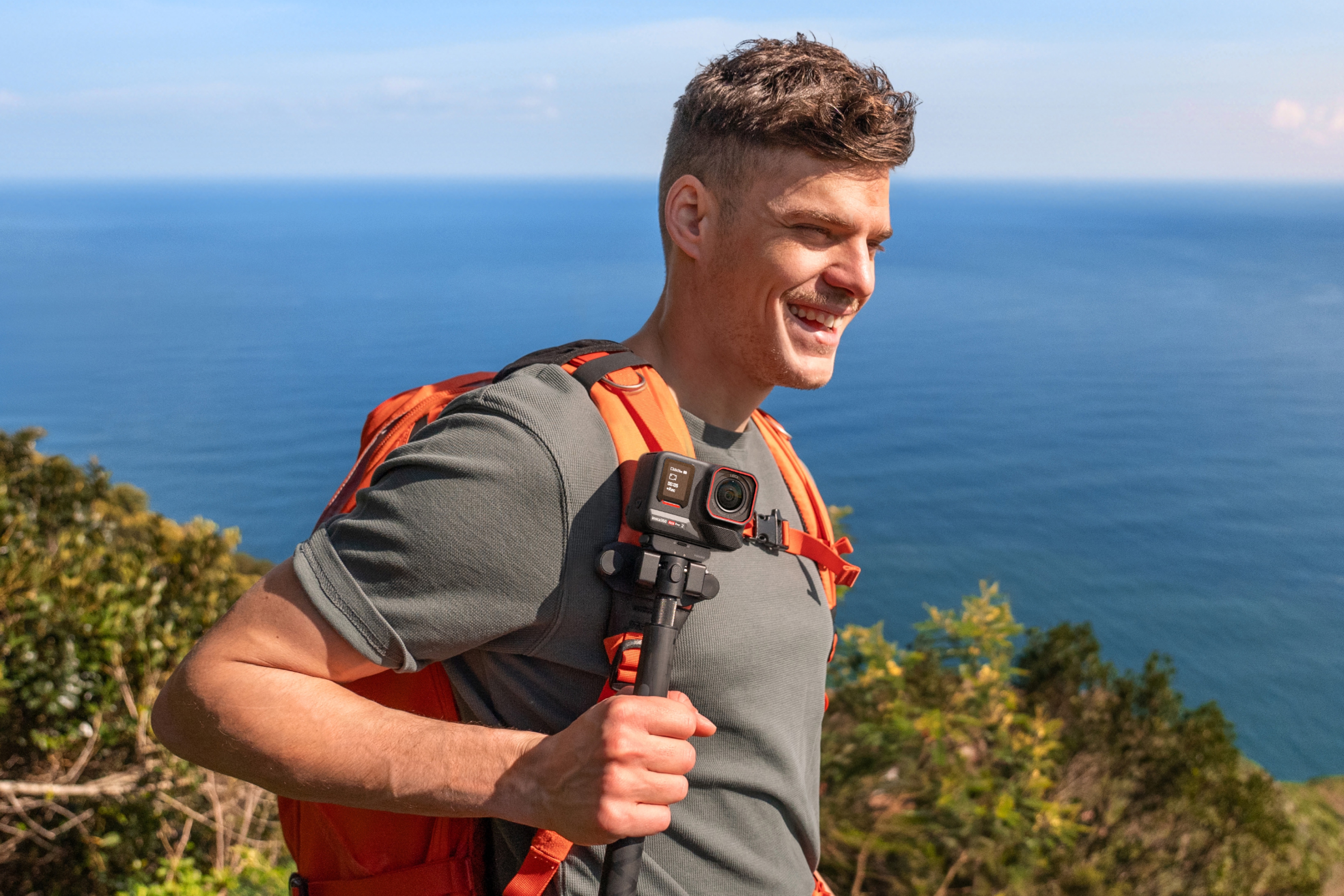
It used to be a case of trading weight for quality, but now there’s a camera that sits perfectly in the middle. Insta360 Ace Pro 2 is designed for creators who want powerful image quality in a compact, trail-ready body. It delivers the kind of performance outdoor adventurers need without adding unnecessary bulk to a backpack. It’s as close as you’re going to get to having the best of both worlds.
For backpackers covering long distances, that balance between performance and portability is crucial. One of the biggest advantages of Insta360 Ace Pro 2 is its ability to capture high-quality footage while you’re constantly moving. Advanced stabilization keeps shots smooth even while hiking over uneven terrain, scrambling up rocky sections or hiking downhill on loose gravel.
The stats here are impressive for a lightweight action camera. Insta360 Ace Pro 2 comes with a f2.6 aperture lens that was co-engineered with legendary camera manufacturer Leica, as well as providing stunning 8K high-definition footage. It’s an absolute monster of a camera, all with a convenient, lightweight size perfect for a backpack.
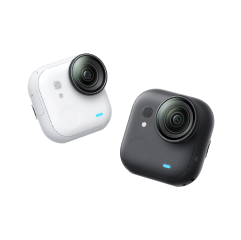
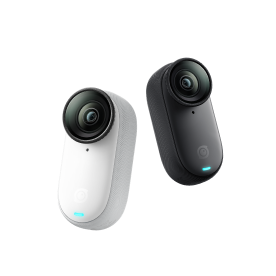
Best Ultra-Compact Camera for Minimalist Hikers: Insta360 GO 3S
Some hikers count every ounce in their pack. Ultralight tents, compact stoves, carefully planned gear lists; everything is chosen to reduce weight without sacrificing the experience. If you’re one of these minimalist hikers, we’ve got just the camera for you.
Insta360 GO 3S is built for hikers who want to capture the adventure without carrying bulky equipment. Small enough to fit in the palm of your hand (think of it as the size of a generous adult thumb that weighs just 39 grams), it’s one of the easiest cameras to bring along on long-distance hikes or minimalist backpacking trips. Instead of stopping to pull out a camera, you can simply keep moving while Insta360 GO 3S captures the journey from your perspective.
Despite its tiny size, this small camera unlocks a surprising range of creative perspectives on the trail. It’s wearable and easy to mount, meaning you can capture unique point-of-view footage that traditional cameras struggle to achieve. Attach it to your hat for an immersive hiking perspective, mount it to your chest for natural trail footage, or clip it to your backpack strap for hands-free filming throughout the day. If you’re looking for something to capture an adventure with minimal effect on your experience, you can’t go wrong with Insta360 GO 3S. The perfect compact travel camera.
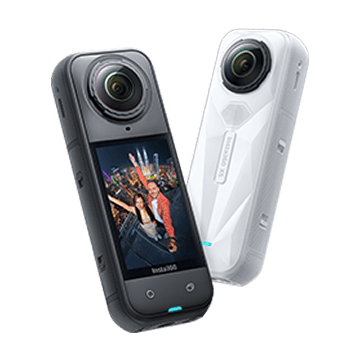
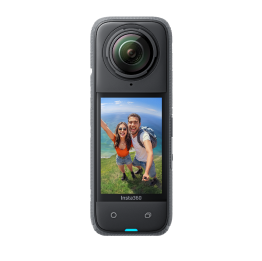
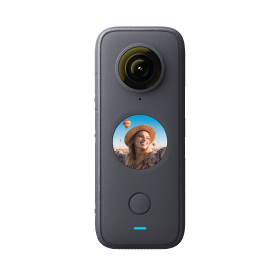
Best Camera for Solo Hikers and Vloggers: Insta360 X4
Solo hiking can be different. Not better or worse, but different. There’s nobody with you to capture those epic poses as you stand on a mountaintop, and nobody around for that B-roll footage. If you want to document the journey, your camera has to do the work of an entire crew. And vlogging can be exactly the same.
That’s where Insta360 X4 comes in. This is one of the most versatile tools for solo hikers who want to film their adventures without constantly stopping to reposition a camera. By capturing everything around you at once with its 360 capture, Insta360 X4 lets you focus on the trail while the camera records every angle.
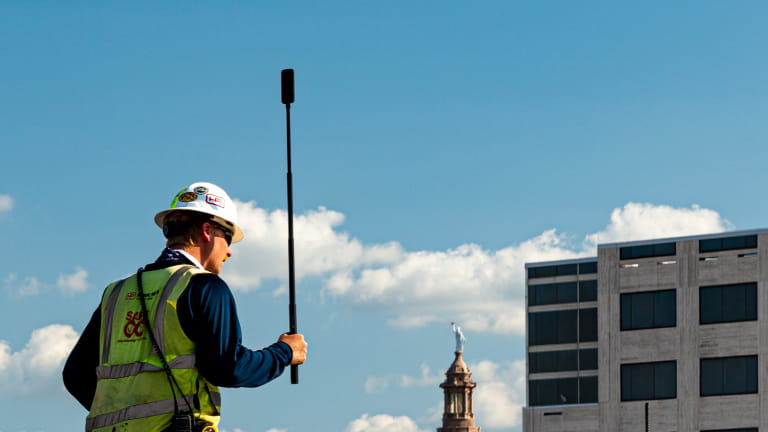
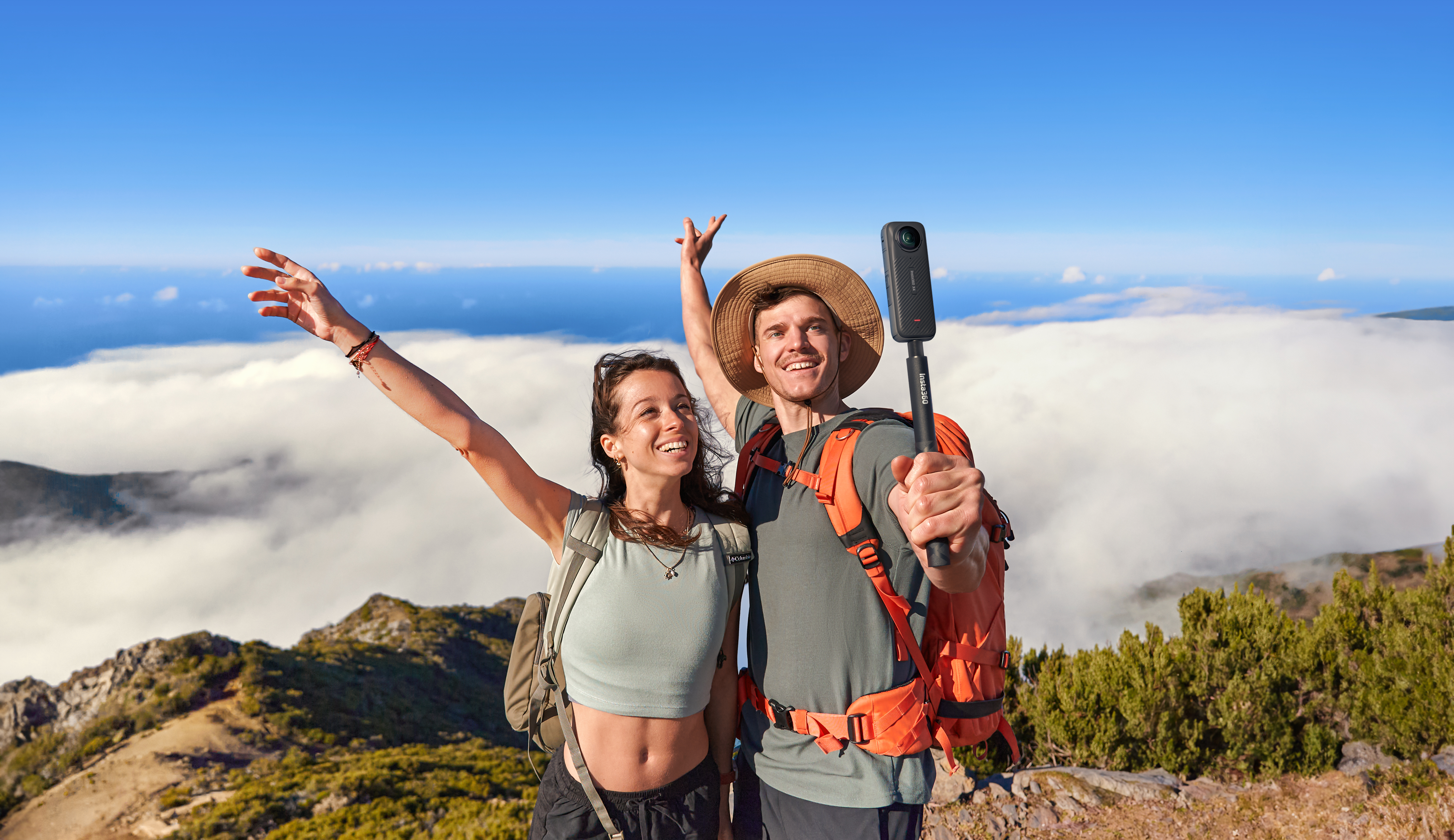
Instead of setting up a tripod every few minutes, Insta360 X4 allows you to create immersive shots while walking. Extend a selfie stick and Insta360 X4 automatically removes it from the footage, creating a floating third-person perspective that looks like a drone following you along the trail — and yes, it’s as cool as it sounds.
Later, you can reframe the footage to create dynamic shots; wide landscape views, cinematic follow angles, or classic vlog-style framing. Simple, easy, exactly how things were supposed to be. For solo adventurers, this flexibility lets you do away with all of those constraints that come with traditional cameras.
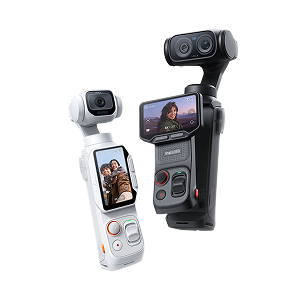
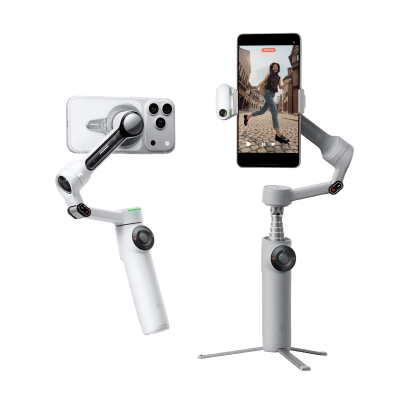
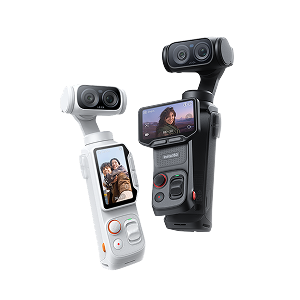
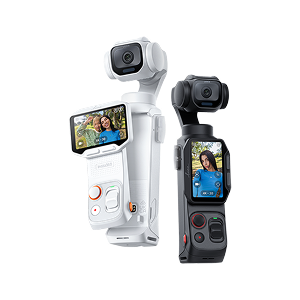
Best Smartphone Setup for Hiking Videos: Insta360 Flow 2 Pro
Who says you even need a separate camera? Modern smartphones are capable of capturing stunning photos and videos, which is why many hikers prefer to keep their setup simple and use what they already have in their pockets. But filming while walking down uneven trails can leave you with shaky footage that nobody in their right mind would watch for an extended period.
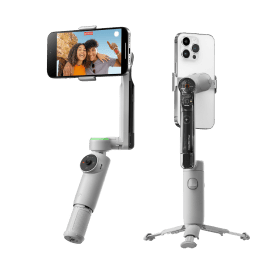
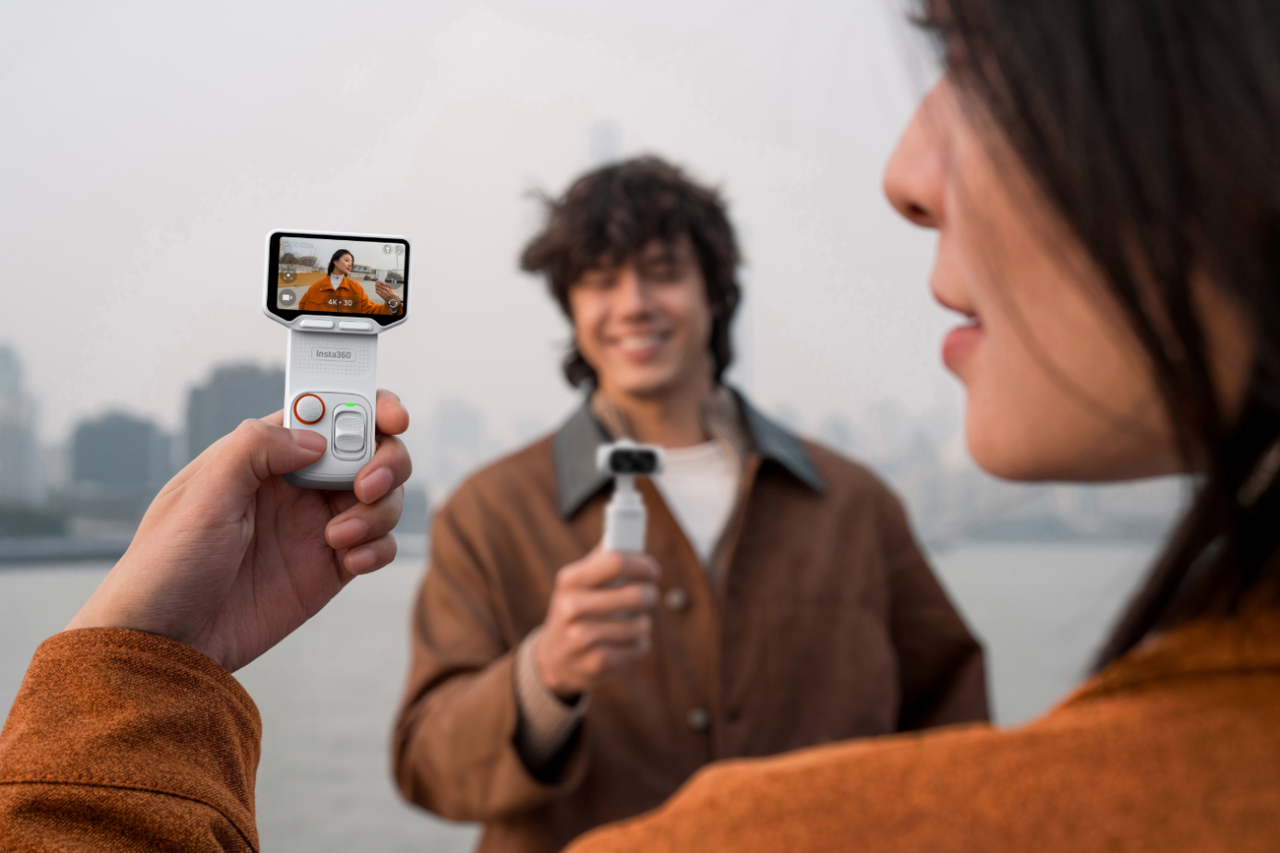
That’s where a smart stabilizer makes all the difference. Insta360 Flow 2 Pro turns your smartphone into a powerful mobile filming system designed for creators on the move. Built-in stabilization keeps your footage smooth while hiking, allowing you to record cinematic shots even while navigating rocky trails or steep climbs.
For hikers who enjoy creating travel videos, reels, or vlog-style content, Insta360 Flow 2 Pro adds a level of polish that handheld phone footage often lacks. It also comes with full 360 rotation so you’re not limited to what’s directly in front of you, and AI subject tracking that keeps the most important elements in your shot at all times. And when you’re done? Fold it up into a surprisingly small size, slip it into your backpack, and forget that you’re even carrying a pocket AI filmmaker.
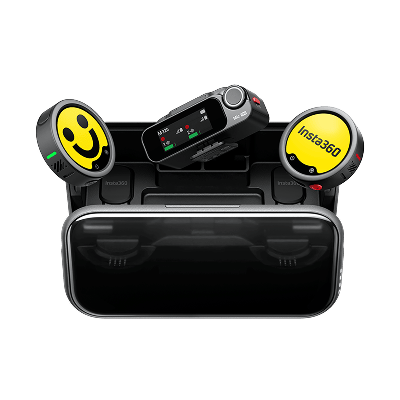
Best Audio Setup for Hiking Content Creators: Insta360 Mic Air
Visuals are only part of the story. Part of the magic on that hiking excursion is the sounds that drift down to you as you put one foot in front of the other. The crunch of your footsteps on the rock. The bird orchestra in the canopy above you. The deep booming sound of waves crashing into rocks in a way they’ve done for thousands of years.
Clear sound is one of the most overlooked parts of outdoor filmmaking. Whether you’re recording a hiking vlog, narrating a trail experience, or explaining gear along the way, good audio helps your audience feel like they’re right there with you.
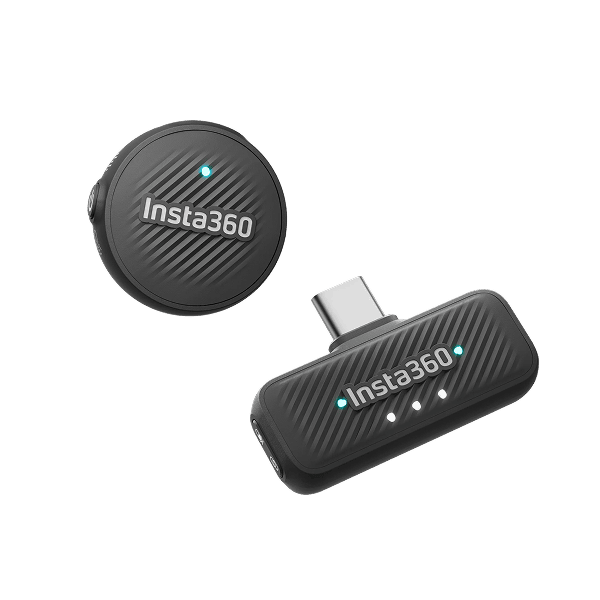
Insta360 Mic Air is designed to solve that problem for creators filming outdoors. A compact wireless microphone system that allows you to capture clean, clear voice recordings while keeping your setup lightweight and portable, two things that matter a lot on long hikes. It’s capable of picking up sound from 16 feet away, but also uses built-in noise reduction technology to filter out those background noises you don’t want to pick up.
The Insta360 Mic Air is often used for interviews, presentations, and professional recording setups. But, for filmmakers out hiking who want the option of superb audio, should you come across something or somebody you want the camera to linger on, it is an outstanding lightweight option.
Mounting Options for Hiking and Backpacking Cameras
If you want that really immersive footage, it normally comes when your hands are occupied: gripping onto a rock and pulling yourself up, vaulting over a fallen tree, or simply trekking hard with those poles with that ascent that feels like it will never end.
That’s why mounting options make so much sense when hiking and backpacking. Having a camera attached to you, filming everything while you experience your adventure will always look so much better than footage that requires you to stop and take out a camera.
Some of the most popular mounting options for hiking include:
Backpack Strap Mounts
Attach your camera directly to your shoulder strap for a natural point-of-view perspective. This is one of the easiest ways to record your entire hike without holding a camera.
Chest Mounts
Chest-mounted cameras create immersive POV footage that closely matches what you see while walking. They’re particularly useful on steep trails or technical sections.
Helmet Mounts
Ideal for hikers who also climb, scramble, or explore via ferratas. Helmet mounts capture dramatic perspectives during more technical adventures.
Trekking Pole Mounts
Mounting a camera to a trekking pole allows you to capture forward-facing shots or sweeping landscape views as you move along the trail.
Selfie Sticks for Third-Person Shots
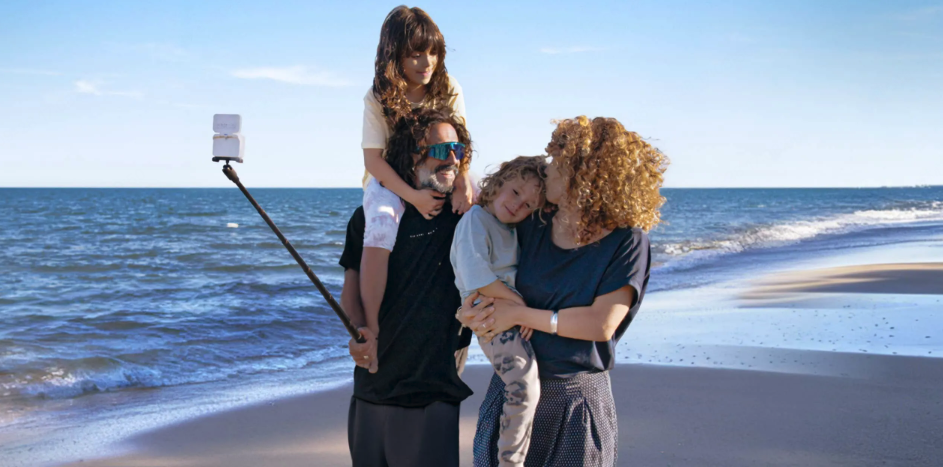
Extended invisible selfie sticks are popular with 360 cameras because they create cinematic follow shots that look like a drone flying behind you.
Battery Life and Charging Strategies for Multi-Day Hikes
Battery life and where and how to charge them are a near constant concern for content creators on multi-day hikes. When it’s a single day, you might not think too much about it, as long as you remember to charge that battery the night before. But as soon as you stretch into several days, you’ll want to implement some charging strategies.
Bring Spare Batteries
We’ll start with the most obvious. Swappable batteries are the simplest way to extend filming time, but that does, of course, mean a little more weight.
Lightweight Power Banks
This is probably your best option for charging on the go. Depending on the size of the bank, you might be able to get two or three separate charges during your trip. And if you bring the charger, you can always recharge it somewhere you stop.
Turn off Features You’re Not Using
Features like Wi-Fi and Bluetooth are great, but it all adds to the energy drain on the camera’s battery. Strip it all back and only use the features that you need while out hiking.
Plan Your Filming Moments
Instead of filming everything all the time, pick your moments. This doesn’t mean you risk missing the best parts; it just forces you to think ahead about what might be most worthwhile, worthy of your limited battery life.
Frequently Asked Questions
What’s the Difference Between Backpacking and Hiking?
These terms are often interchangeable, but if we want to be specific, hiking generally refers to single-day excursions while backpacking refers to multi-day trips that usually require a bigger backpack.
What’s the Best Compact Camera for Hiking?
The best camera for hiking really depends on what kind of adventure you’re looking to have and how involved you want to be with the camera. You could choose something like Insta360 GO 3S that attaches to a hat, simple, easy. You could choose something bigger with better quality, like the Insta360 Ace Pro 2, which delivers cinematic quality.
Capture Your Next Adventure the Right Way
Summer will be here before you know it. Long days on the trail. Multi-day backpacking journeys. Punishing climbs that end in breathtaking views. Dense forests glowing green in the sunlight. Coastal paths, desert trails, rolling hills. Adventure everywhere you look.
But the adventure is only half of it. Today’s adventure-ready cameras make it easier than ever to document those experiences, and with Insta360 cameras, you’ve got plenty of choice. Whether it’s something that's small enough to clip on your hat, that delivers astonishing 360 footage, or captures the world in astonishing cinematic video, it’s time to live those experiences. And then relive them over and over.
Keen to keep up to date on Insta360 stories? Keep an eye on our blog and sign up for our mailing list. Got a story to share? Email yours to communitystories@insta360.com and win up to US$50.




%20(1).svg)


%20(1).svg)

.svg)